
Your tools don’t talk to each other. Customer data lives in three different systems. Your team copies information between platforms by hand, and things fall through the cracks every week. Sound familiar? Custom API development connects your systems so data flows automatically, accurately, and in real time.
At MakeAutomation, we build custom APIs and integrations for businesses that have outgrown off-the-shelf connectors. With 16+ years in IT operations and DevOps, we design integrations that handle edge cases, scale with your growth, and don’t break when vendors change their endpoints.
What Is Custom API Development?
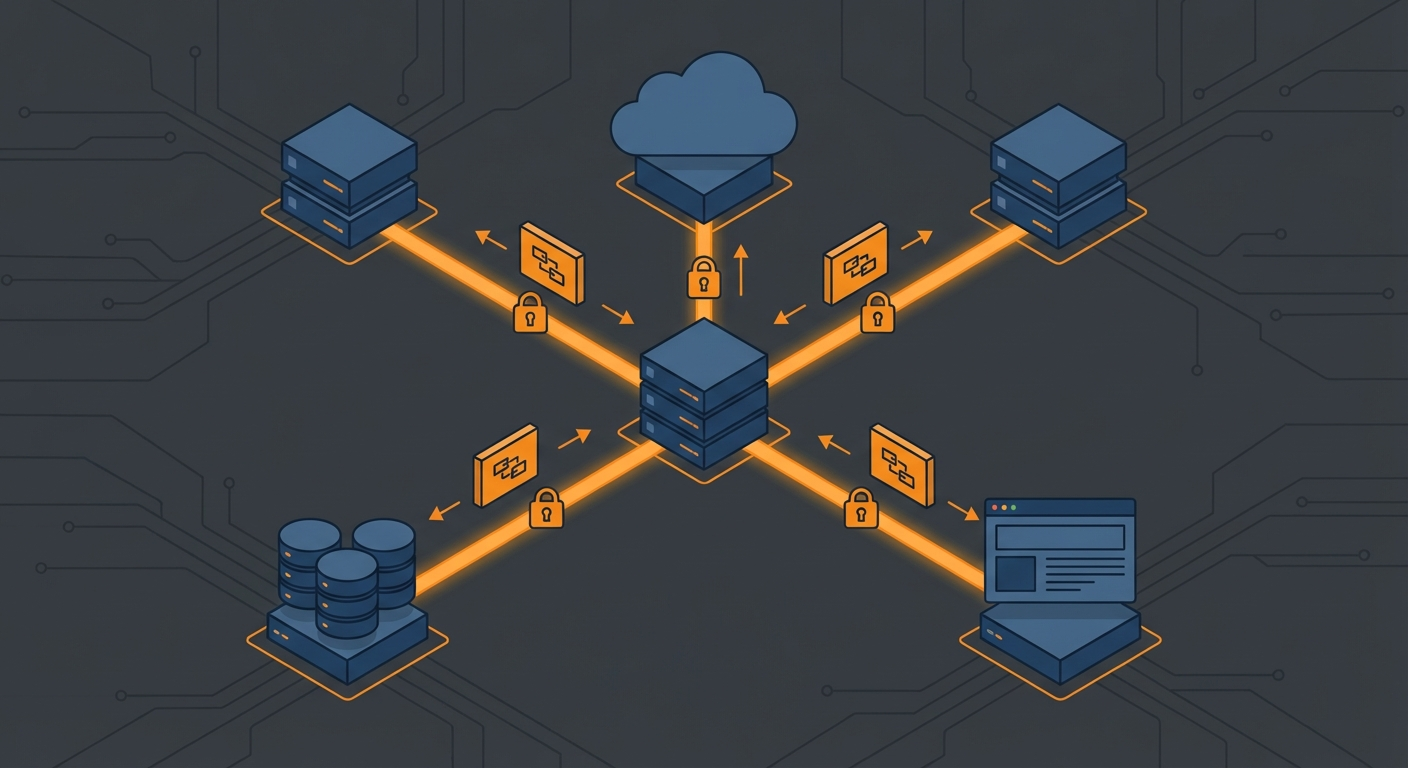
An API (Application Programming Interface) is how software systems communicate with each other. When you connect your CRM to your email marketing tool, there’s an API making that happen. Custom API development means building these connections from scratch when pre-built integrations don’t exist, don’t work well enough, or can’t handle your specific requirements.
This includes:
- Custom REST and GraphQL APIs that expose your data to other systems in exactly the format you need
- Third-party integrations connecting platforms that don’t have native connections
- Data transformation layers that translate between incompatible systems
- Webhook endpoints that trigger workflows when events happen in external systems
- API middleware that adds authentication, rate limiting, caching, and logging to existing APIs
When Do You Need Custom API Development?
Native integrations are too limited. Most SaaS platforms offer basic integrations, but they only sync a fraction of your data. If you need custom fields, conditional logic, or bi-directional sync, you need a custom solution.
You’re hitting Zapier/Make limits. Low-code platforms work great for simple automations, but they struggle with complex data transformations, high-volume operations, or workflows that need sub-second response times. A custom API handles all of this without per-execution pricing.
You need to expose your data to partners. If clients, vendors, or partners need programmatic access to your systems, you need a well-documented, secure API with proper authentication and rate limiting.
Your internal tools don’t connect. Legacy systems, custom databases, industry-specific software. If it has data and any kind of interface (even a database connection), we can build an API around it.
You’re building a product that needs an API. SaaS products, marketplaces, and platforms all need APIs for their customers. We design and build APIs that are clean, documented, and ready for public consumption.

Our API Development Process
1. Requirements and Architecture
We start with your free 15-minute discovery call to understand what you’re connecting and why. Then we map the data flow: what goes where, in what format, how often, and what happens when something fails. We document the API specification before writing any code.
2. Design the Contract
Every API starts with a contract: endpoints, request/response formats, authentication, error handling, and rate limits. We write this in OpenAPI (Swagger) format so it’s machine-readable and generates documentation automatically. You review and approve before we build.
3. Build and Iterate
We develop in short cycles, delivering working endpoints within days, not months. Each endpoint gets automated tests, error handling, and logging from the start. You can test against a staging environment as we build.
4. Security and Performance
Every API we build includes: OAuth 2.0 or API key authentication, input validation and sanitization, rate limiting to prevent abuse, request logging for debugging and compliance, and load testing to confirm it handles your expected volume.
5. Documentation and Handover
You get complete API documentation (auto-generated from the OpenAPI spec), example requests for every endpoint, a Postman collection for testing, deployment guides, and runbooks for common issues. Your team can maintain and extend the API independently.
Types of API Projects We Build
System Integration
Connect CRMs, ERPs, marketing platforms, payment systems, and custom databases into a unified data flow. We’ve built integrations between HubSpot, Salesforce, Stripe, Shopify, QuickBooks, Xero, and dozens of other platforms.
Data APIs
Expose your internal data through clean, documented endpoints. Useful for reporting dashboards, mobile apps, partner integrations, or any system that needs structured access to your data.
Webhook Processing
Build reliable webhook receivers that process events from third-party services: payment notifications, form submissions, CRM updates, shipping status changes. Includes retry logic, dead letter queues, and monitoring.
API Middleware
Add a layer between your systems and external APIs: transform data formats, add caching, implement rate limiting, handle authentication, or aggregate multiple API calls into a single endpoint.
Technology Stack
We pick the right tool for each project, but our core stack includes:
- Languages: TypeScript/Node.js, Python, Go
- Frameworks: Express, Fastify, FastAPI, Hono
- API standards: REST, GraphQL, WebSocket, gRPC
- Authentication: OAuth 2.0, JWT, API keys, HMAC signatures
- Databases: PostgreSQL, MySQL, MongoDB, Redis, Supabase
- Infrastructure: Docker, Kubernetes, AWS Lambda, Google Cloud Functions, Vercel
- Documentation: OpenAPI/Swagger, Postman, Redoc
- Monitoring: Prometheus, Grafana, Sentry, custom health checks
If you need help figuring out which tools can connect, try our free integration compatibility checker. For a broader view of how automation fits into your business, explore our automation consulting services.
Why Choose MakeAutomation for API Development?
We’ve been doing this for 16+ years. Our founder built APIs and integrations in IT operations long before “API-first” was a trend. That means we understand not just how to write endpoints, but how to make them reliable, secure, and maintainable over years of production use.
We think in systems, not just code. An API is only as good as the architecture around it. We consider error handling, retry logic, data consistency, monitoring, and scaling from the start. Not as afterthoughts.
We document everything. You’ll never be stuck with an undocumented API that only the original developer understands. Every project includes auto-generated docs, example requests, and deployment guides.
Fixed pricing, no surprises. We scope and price every project upfront. Use our cost estimator for a ballpark, then we’ll give you an exact quote after the discovery call.
How Custom APIs Compare to No-Code Tools
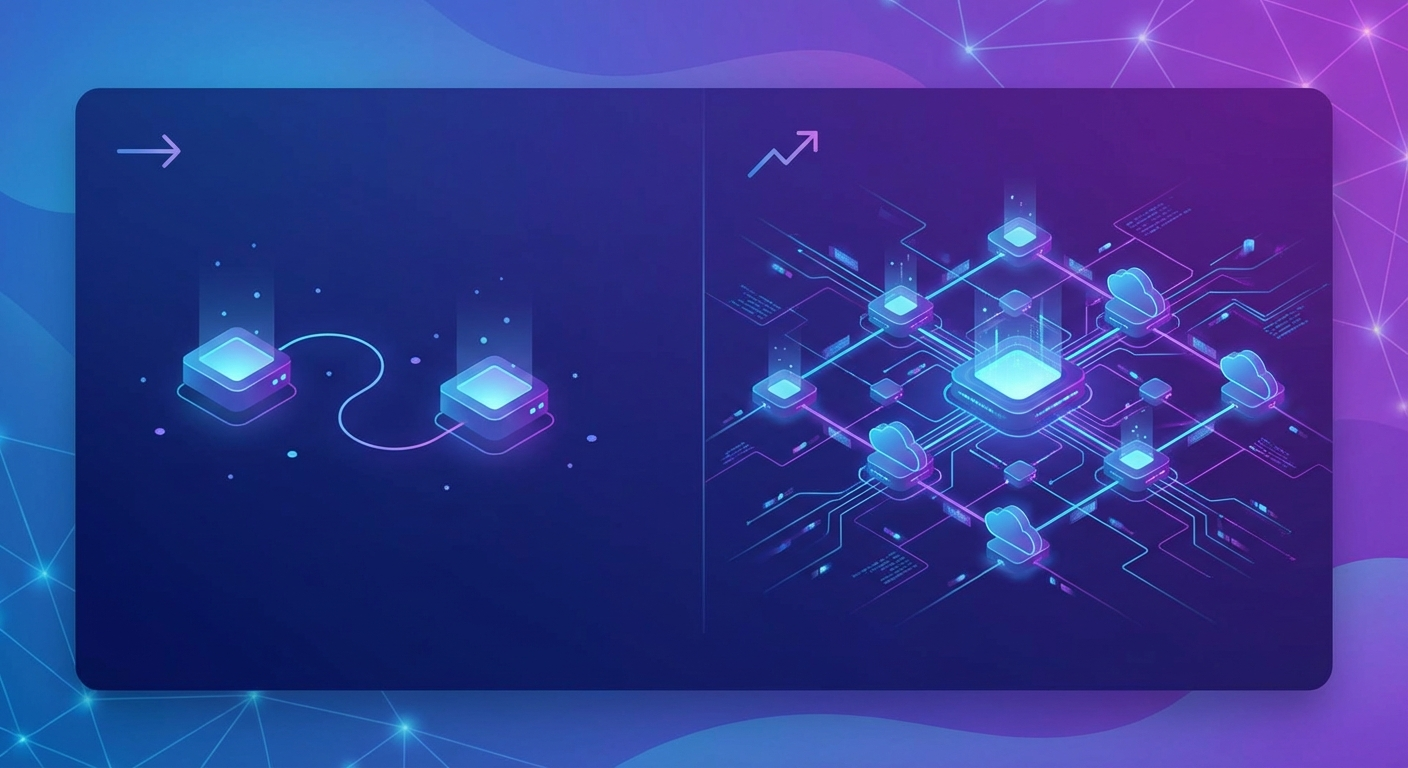
Platforms like Zapier, Make, and n8n are great for simple automations. But there’s a clear point where custom APIs make more sense:
No-Code Works When
- Simple data moves between 2-3 systems
- Low volume (under 10,000 operations/month)
- Standard data formats, no transformation needed
- Non-critical workflows where occasional failures are acceptable
Custom API Works When
- Complex logic, conditional routing, data transformation
- High volume or real-time requirements
- Need for custom authentication or security
- Mission-critical workflows where reliability matters
- Cost optimization at scale (no per-execution fees)
Many of our clients start with no-code tools and graduate to custom APIs as they scale. We can help with both approaches, and often recommend a hybrid: no-code for simple flows, custom APIs for the heavy lifting. Take our readiness assessment to find out which approach fits your situation.
Frequently Asked Questions
How long does it take to build a custom API?
A simple integration between two systems typically takes 1-2 weeks. A full-featured API with multiple endpoints, authentication, documentation, and monitoring takes 3-6 weeks. We deliver working endpoints incrementally so you can test as we build.
How much does custom API development cost?
Pricing depends on complexity, number of endpoints, and integrations involved. Simple integrations start around a few thousand dollars. Complex multi-system APIs with custom business logic cost more. We provide exact quotes after the discovery call, and our cost estimator gives you a rough range.
Will I own the code?
Yes. Every line of code, every configuration file, every piece of documentation. We don’t use proprietary frameworks or lock you in. You can modify, extend, or hand the project to another developer at any time.
Can you maintain the API after launch?
We offer ongoing maintenance retainers for clients who want us to handle updates, monitor performance, and respond to issues. But every API we build is designed so your team can maintain it independently if they prefer.
What if a third-party API changes?
API changes are inevitable. We build with this in mind: versioned endpoints, abstraction layers between your code and external APIs, and monitoring that alerts you when responses change unexpectedly. When vendors update their APIs, the fix is usually a small change in the abstraction layer, not a rewrite.
Do you work with legacy systems?
Yes. We regularly build APIs around legacy databases, SOAP services, FTP-based data exchanges, and systems with no existing API. If data exists somewhere accessible (even a database or file export), we can build a modern API around it.
Start Your API Project
Book a free 15-minute discovery call. Tell us what systems you need to connect, and we’ll give you an honest assessment of the best approach: no-code, custom API, or a combination. No commitment required.