
12 Best AI Tools for Business Growth to Scale in 2026
Navigating the crowded market of AI tools for business growth can be a significant challenge. Countless platforms promise to automate tasks, generate leads, and scale operations, but how do you determine which solutions are genuinely effective and which are just marketing hype? This guide cuts through the noise. We provide a detailed, pragmatic breakdown of the essential AI tools that actually drive tangible results across your entire organization, from sales and marketing to project management and recruitment.
Instead of generic feature lists, you will find an in-depth analysis of each platform. We cover specific use cases, honest pros and cons, and clear pricing signals to help you make informed decisions. Each entry is designed to show you not just what the tool does, but how it can be implemented into your daily operations for maximum impact. To begin exploring how AI can transform your lead acquisition strategy, you can review the top AI tools for lead generation in 2026.
This resource is built for founders, department heads, and operations leaders who need to move beyond theory and start executing. We detail how platforms like MakeAutomation can connect these powerful tools, creating scalable workflows and standardized operating procedures (SOPs). You will discover how to automate complex processes, from enriching CRM data with platforms like ZoomInfo SalesOS to streamlining client communication with voice AI like PolyAI. This article serves as your practical playbook for deploying AI to achieve sustainable business growth.
1. MakeAutomation
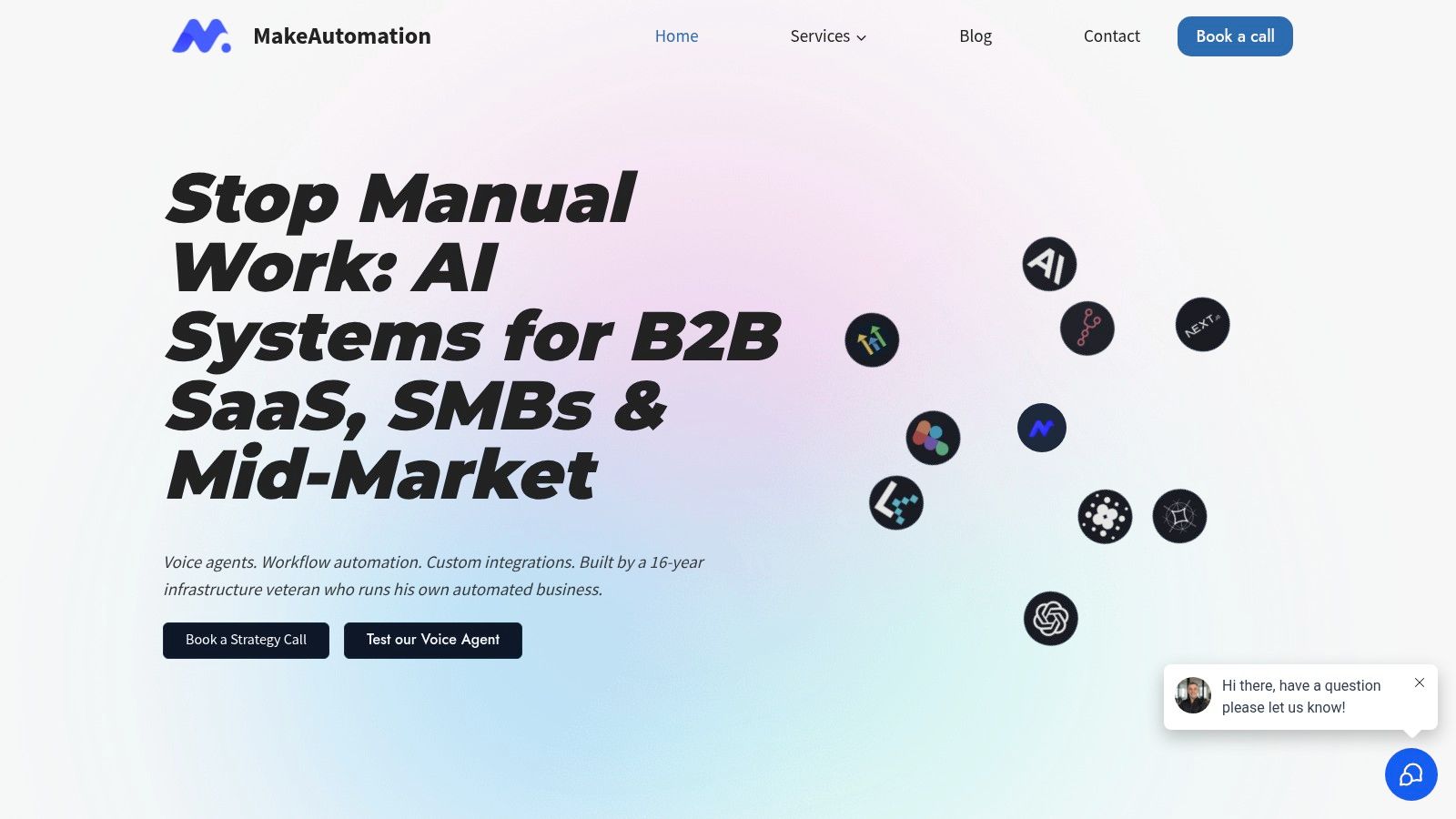
While many AI tools for business growth offer do-it-yourself platforms, MakeAutomation provides a distinct, high-touch service model. It operates as a dedicated AI and automation optimization partner, designing and implementing end-to-end systems for B2B and SaaS companies struggling with repetitive, manual workflows. This approach moves beyond simple software, delivering a fully managed solution built by an infrastructure expert to drive measurable revenue and efficiency gains.
For businesses where teams are bogged down by copy-pasting between apps or managing complex spreadsheets, MakeAutomation offers a direct path to reclaiming that lost time. Its core value is providing on-demand access to senior automation specialists through a subscription model, which is often more cost-effective and delivers faster results than hiring a full-time employee.
Key Features and Service Highlights
MakeAutomation excels in turning fragmented processes into cohesive, automated systems. The service is built around a hands-on, co-building philosophy, ensuring your team understands and can manage the new workflows.
- Custom Workflow Automation: They specialize in using n8n and custom API integrations to connect your entire tech stack, from lead generation and CRM management to project operations.
- AI-Powered Agents: The service includes the deployment of Voice AI agents for tasks like client outreach or initial qualification, adding a layer of sophisticated automation.
- Full System Handoff: Unlike a black-box solution, you receive complete documentation, SOPs, and ongoing support via a shared ClickUp board, empowering your team for the long term.
We found Quentin’s teaching and co-building approach incredibly helpful. He’s a true problem solver who not only builds the solution but makes sure you understand it.
Practical Implementation and Use Cases
The firm's impact is quantified with proven metrics, including achieving a 97.8% open rate and a 7.35% reply rate on automated outreach campaigns. On the operational side, clients report an average team efficiency improvement of around 22%. Before committing, businesses can use free resources like an ROI calculator and a readiness assessment to gauge potential impact. For a deeper dive into strategy, their guide on how to implement AI in business provides a solid foundation.
| Pros | Cons |
|---|---|
| Subscription access to senior automation specialists at a fraction of the cost of a full-time hire. | Premium pricing (starts at $6,200/month) may not fit the budgets of very early-stage startups. |
| End-to-end service includes custom integrations, AI agents, documentation, and ongoing support. | Complex, custom projects require significant onboarding time and a 50% down payment before work begins. |
| Proven ROI with public metrics on outreach, efficiency, and cost savings. | The service is focused on B2B/SaaS, so it may be less suitable for B2C or e-commerce-heavy businesses. |
| Free evaluation tools (ROI calculator, readiness quiz) help validate the need before you invest. |
Pricing and Access
MakeAutomation offers transparent pricing with two main options:
- Subscription: A monthly plan at $6,200/month or a quarterly plan at $5,200/month (paid quarterly) for ongoing automation development and support.
- Project-Based: Traditional terms with 50% down at proposal acceptance and 50% upon delivery after user acceptance testing (UAT).
Best For: B2B/SaaS founders, sales and marketing leaders, and operations heads at agencies aiming to scale efficiently and automate core business functions from lead generation to project delivery.
Learn More: Visit MakeAutomation
2. HubSpot
HubSpot stands out not as a single-purpose AI tool, but as a complete CRM platform where AI is woven directly into core business functions. This makes it an exceptional choice for companies wanting to deploy AI tools for business growth without managing a dozen disconnected applications. Its AI assistants are embedded across the Marketing, Sales, Service, and Operations Hubs.
You can use the AI to generate blog post ideas, draft entire articles, create social media copy, and write marketing emails. For sales teams, it helps craft personalized outreach messages and summarizes call recordings with its conversation intelligence features. The system’s main advantage is its unified nature; the AI draws context from your central CRM data, leading to more relevant and effective outputs. This integration simplifies workflows, as teams can create content, automate outreach, and analyze performance all within one ecosystem.
Key Details & Analysis
| Category | Analysis |
|---|---|
| Best For | B2B companies looking for an all-in-one platform with embedded AI to reduce tool sprawl and unify sales, marketing, and service data. |
| Pros | Broad coverage: Simplifies the tech stack by offering a wide range of functions in one place. Mature ecosystem: Extensive integrations and a large library of templates speed up implementation. |
| Cons | Cost: Pricing can increase significantly as you add contacts or move to higher tiers. AI Quality: While convenient, some AI-generated content still needs significant human editing for quality and tone. |
| Pricing | Starts with free tools; paid plans scale from around $20/month for Starter plans to thousands for enterprise-level hubs with advanced AI features. |
Implementation Tip: Connect HubSpot to a data enrichment tool via a workflow automation platform. This ensures your CRM contacts are always up-to-date, providing the HubSpot AI with higher-quality data for personalizing outreach emails and segmenting audiences, which directly improves campaign effectiveness.
Website: https://www.hubspot.com
3. Salesforce Agentforce
Salesforce Agentforce represents a significant move by the CRM giant to embed autonomous AI agents and copilots directly within its Customer 360 platform. Rather than being a separate application, Agentforce is built into the fabric of Sales Cloud and Service Cloud, blending CRM data with the power of Data Cloud and automation. This makes it a formidable choice for enterprises seeking powerful AI tools for business growth that operate within a trusted and secure ecosystem.
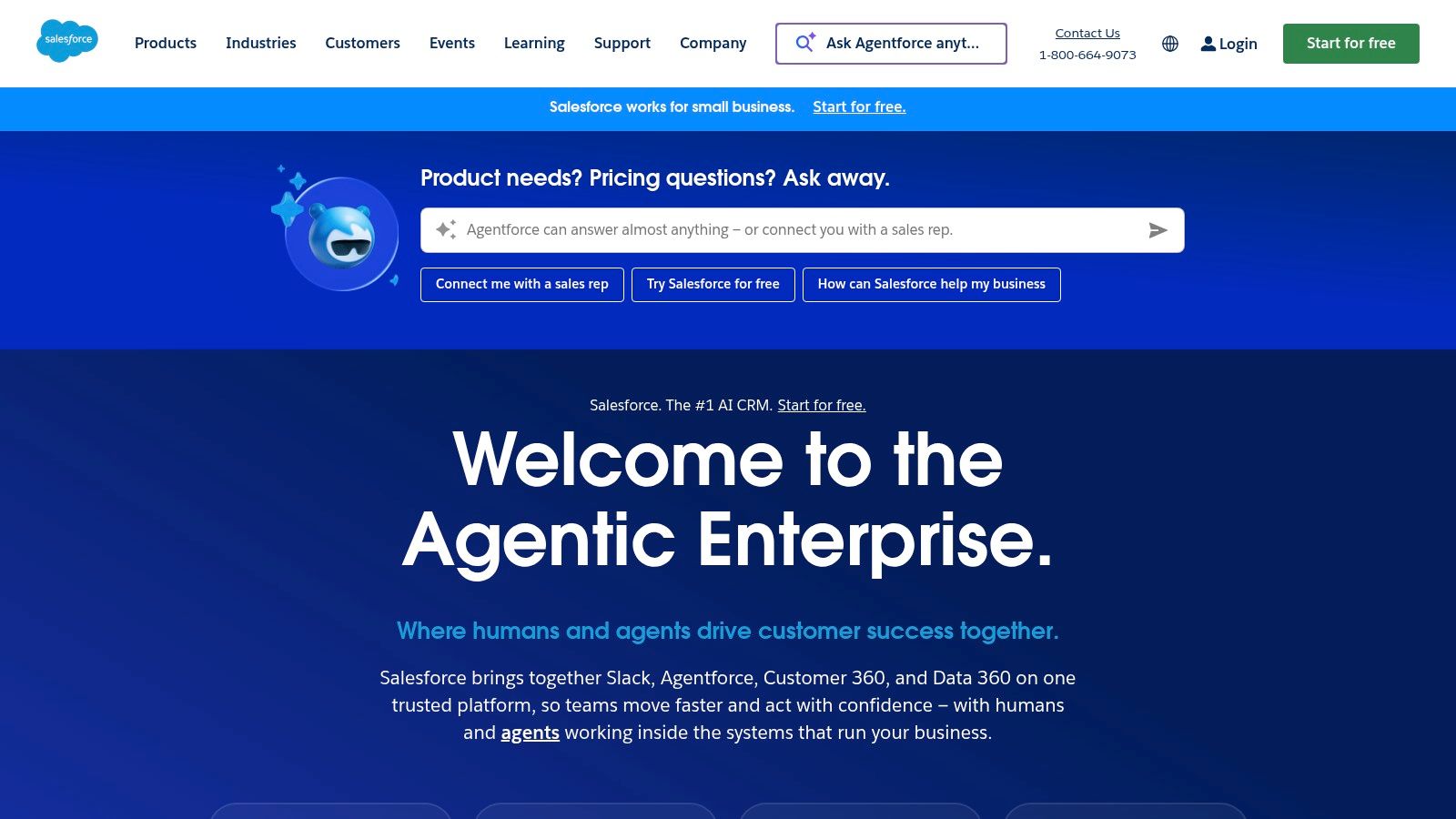
With Agentforce, sales teams can automate prospecting, data entry, and meeting scheduling, while service agents can resolve customer issues faster with AI-driven guidance and automated case summarization. The key distinction is its deep integration; the AI agents act on your core CRM data, enabling agentic workflows where tasks are completed autonomously based on real-time business context. This native embedding ensures that AI assistance is always available right where your teams work, reducing friction and boosting productivity without needing to switch between different systems.
Key Details & Analysis
| Category | Analysis |
|---|---|
| Best For | Large enterprises that use Salesforce as their central system of record and need deep governance, security, and extensibility for their AI initiatives. |
| Pros | Enterprise-grade governance: Offers robust security and control over AI usage. Native workflow integration: AI tools are directly embedded into daily Salesforce activities, improving user adoption. |
| Cons | Complex pricing: Packaging and consumption-based models can be difficult to navigate. High configuration effort: Requires significant setup and is most valuable for organizations operating at a larger scale. |
| Pricing | Available as add-ons to Sales Cloud and Service Cloud. Pricing is often consumption-based and tailored to enterprise agreements, requiring direct sales contact. |
Implementation Tip: Begin by identifying a high-impact, low-complexity use case, such as AI-powered case classification for your service team. Use Salesforce's automation tools to create a flow where Agentforce categorizes incoming support tickets and routes them to the correct queue. This provides an immediate win and demonstrates value before tackling more complex agentic sales workflows.
Website: https://www.salesforce.com
4. Apollo.io
Apollo.io serves as an end-to-end sales engine, consolidating a massive B2B contact database with a full suite of engagement tools. It's a powerful choice for businesses that want to operationalize their outbound sales motion within a single platform, making it one of the most practical AI tools for business growth. The platform integrates AI across its core functions, from prospecting to outreach and analysis.
You can use its AI Assistant to research prospects, generate personalized outreach emails, and even summarize key account information to prepare for calls. The core value lies in connecting a high-intent database directly to sequencing and communication tools like a built-in dialer and email automation. This tight integration allows sales teams to rapidly build targeted lists, enroll them in multi-channel sequences, and execute outreach without juggling separate data providers and sales engagement software. It is particularly effective for teams looking to scale their outbound efforts quickly and efficiently.
Key Details & Analysis
| Category | Analysis |
|---|---|
| Best For | SMBs and mid-market growth teams needing an all-in-one platform to quickly build and execute an outbound sales motion. |
| Pros | All-in-one outbound motion: Reduces the need for separate tools for data, sequencing, and dialing. Rapid deployment: Popular with growth teams for its ability to spin up outbound campaigns very quickly. |
| Cons | Credit/usage model: The credit-based system for data and emails requires careful budgeting to avoid overages. Tiered features: The international dialer and other key functions are gated behind more expensive plans. |
| Pricing | Offers a free plan with limited credits; paid plans start around $49/user/month and scale up with more features and higher usage limits. |
Implementation Tip: Use Apollo's Chrome extension to enrich leads directly from LinkedIn Sales Navigator. This allows your team to find ideal prospects on LinkedIn and, with one click, pull their verified contact data into an Apollo list. From there, you can immediately add them to a personalized email and call sequence, shortening the time from discovery to first contact.
Website: https://www.apollo.io
5. ZoomInfo SalesOS
ZoomInfo SalesOS operates less as a creative AI assistant and more as a foundational data intelligence engine that fuels a go-to-market strategy. It is an enterprise-grade B2B data platform that provides the raw material – accurate contact information, firmographics, technographics, and buying intent signals – necessary for any high-performing sales or marketing campaign. Its power comes from making this data accessible and actionable, serving as one of the most critical ai tools for business growth for teams focused on outbound prospecting and account-based marketing (ABM).
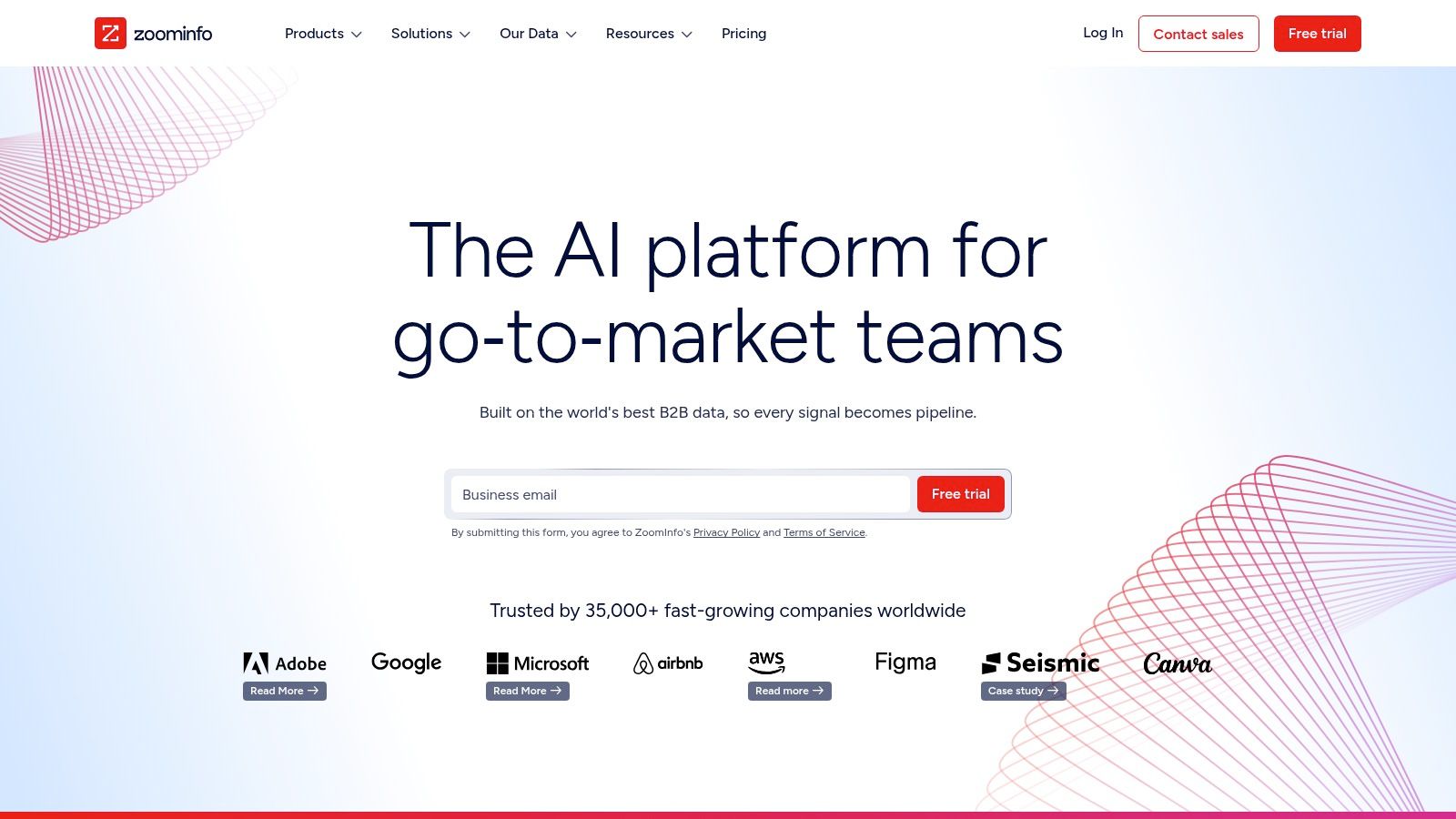
The platform uses AI-driven processes to gather and verify its immense dataset of contacts and companies. You can identify ideal customer profiles, find direct dials and verified email addresses, and monitor intent signals that indicate when a company is actively researching solutions like yours. A key feature is its website visitor de-anonymization, which identifies companies visiting your site even if they don't fill out a form. This information allows revenue teams to orchestrate targeted outreach campaigns, enrich their CRM data automatically, and ensure their sales force is working with the most accurate information available, directly impacting pipeline generation and sales velocity.
Key Details & Analysis
| Category | Analysis |
|---|---|
| Best For | Sales and marketing teams in mid-market to enterprise companies that need a scalable, high-quality data source to power outbound prospecting and ABM. |
| Pros | Deep data coverage: Widely considered an industry standard for B2B contact and company data, including direct dials. Strong integrations: Connects seamlessly with major CRMs and marketing automation platforms for easy data sync. |
| Cons | Opaque pricing: Requires a custom quote and typically involves a significant annual contract. ROI is not automatic: Value depends heavily on strong data governance, team adoption, and a clear outbound strategy. |
| Pricing | Custom enterprise pricing; expect a five-figure annual investment for meaningful access and features. |
Implementation Tip: Use a workflow automation tool to create a process where new leads identified by ZoomInfo's intent signals are automatically pushed to your CRM. The workflow can then assign the lead to a sales rep and simultaneously add them to a specific warm-up sequence in your marketing automation platform, ensuring timely and relevant follow-up.
Website: https://www.zoominfo.com
6. Gong Revenue AI OS
Gong is a revenue intelligence platform that captures and analyzes all customer-facing interactions, including calls, emails, and meetings. It goes beyond simple transcription by using AI to surface deal risks, provide real-time coaching for sales reps, and generate more accurate forecasts. This makes it one of the most powerful ai tools for business growth, especially for B2B sales teams managing complex, high-value deals.
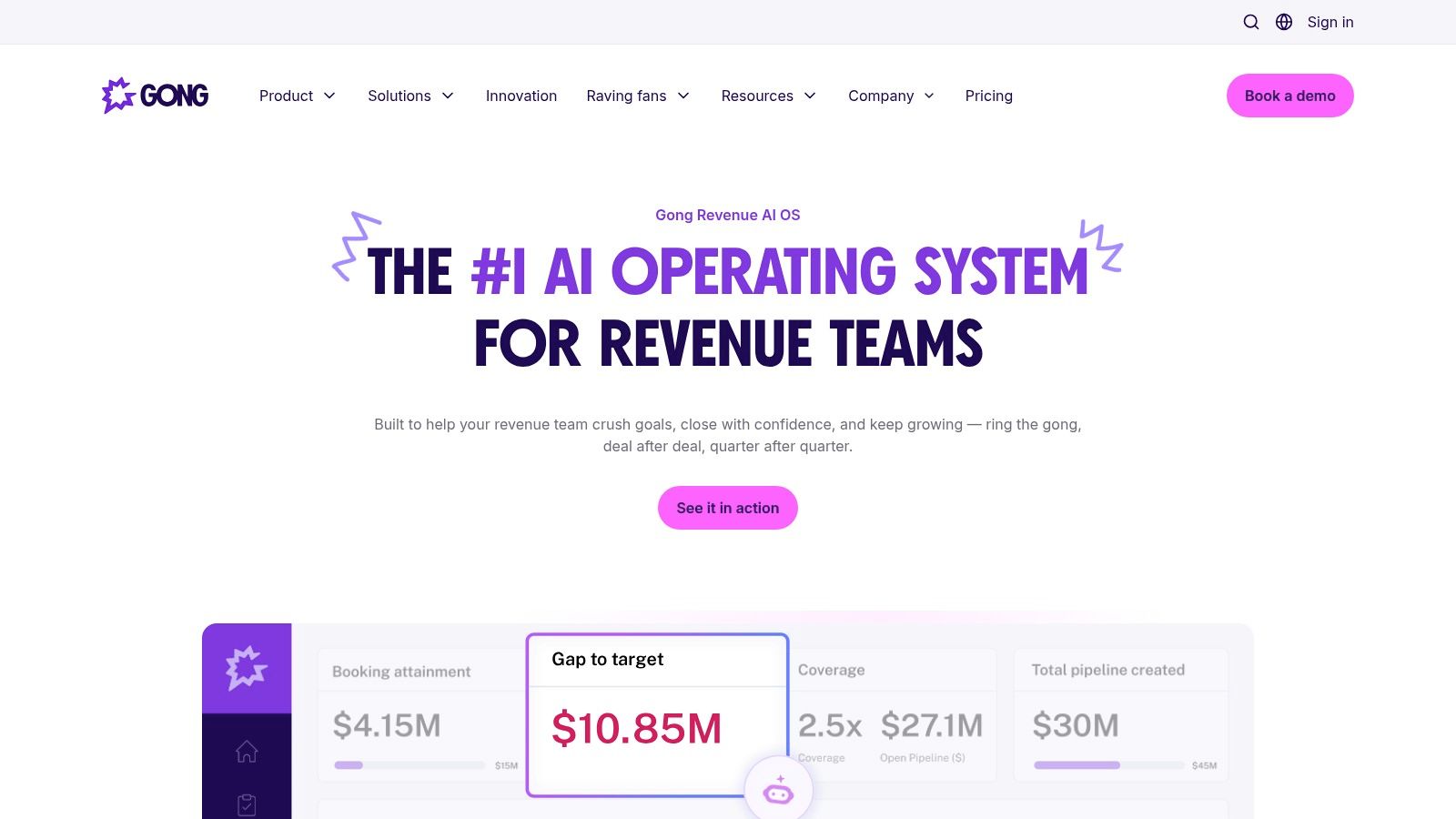
The platform’s core strength is its ability to turn unstructured conversation data into actionable insights. Gong can pinpoint which competitor mentions are impacting deals, identify the behaviors of top-performing reps, and flag accounts that need immediate attention. For sales leaders, this provides a clear, data-backed view of pipeline health and team performance. Emerging features like AI agents and multilingual support are expanding its ability to guide reps during live calls, making it an indispensable co-pilot for closing more business.
Key Details & Analysis
| Category | Analysis |
|---|---|
| Best For | B2B sales organizations with complex sales cycles that need to improve win rates, forecast accuracy, and team coaching at scale. |
| Pros | Strong analytics: Deep insights into sales conversations and deal health. Measurable impact: Directly links coaching and process improvements to revenue outcomes. |
| Cons | High cost: Quote-based pricing includes a per-user fee and a platform fee, making it a significant investment. Requires discipline: Gains depend on consistent call hygiene and adherence to sales processes. |
| Pricing | Quote-based. Pricing is customized based on the number of users and specific platform needs, typically starting in the tens of thousands annually. |
Implementation Tip: Integrate Gong with your CRM (like Salesforce or HubSpot) to automatically associate call data with specific deals and accounts. This creates a complete picture of every interaction, allowing your AI-powered sales automation to trigger follow-up tasks or alerts based on conversation topics, such as a competitor mention or a pricing discussion.
Website: https://www.gong.io
7. Outreach
Outreach is an enterprise-grade sales execution platform designed for large, sophisticated sales organizations. While other tools focus on isolated tasks, Outreach provides a complete system to orchestrate and govern sales engagement, making it one of the most powerful AI tools for business growth for companies standardizing on robust pipeline creation and management. Its AI capabilities are built to guide representatives through complex sales cycles, from initial contact to closing the deal.
The platform’s core is its sequencing engine, which allows managers to build and enforce multi-channel outreach strategies combining emails, calls, and social touches. The AI assistant, Kaia, provides real-time guidance during live meetings, surfaces relevant content, and automates note-taking. For leadership, its deal intelligence and forecasting modules use AI to analyze pipeline health and predict revenue with greater accuracy. This focus on governance and analytics makes it ideal for scaling revenue operations while maintaining control.
Key Details & Analysis
| Category | Analysis |
|---|---|
| Best For | Enterprise B2B companies with large SDR and AE teams that need a governed, data-driven platform for sales execution and forecasting. |
| Pros | Deep governance: Advanced permissions and analytics provide control for multi-team, multi-region rollouts. Strong integrations: Connects seamlessly with Salesforce, Microsoft Dynamics, and other key revenue stack tools. |
| Cons | Enterprise focus: No public pricing, requiring annual contracts and a significant investment. High complexity: The extensive feature set comes with a steeper learning curve compared to SMB-focused tools. |
| Pricing | Pricing is not public. It is sold on an annual contract basis and is geared toward mid-market and enterprise customers. |
Implementation Tip: Use Outreach’s analytics to identify the top-performing sequences and rep behaviors. Codify these findings into a "master playbook" that becomes the default for new hire onboarding. This turns individual successes into a scalable, repeatable process, ensuring consistency and accelerating the ramp-up time for new sales team members.
Website: https://www.outreach.io
8. Intercom
Intercom solidifies its position as a premier AI-first customer service platform, shifting the focus from manual agent responses to automated, intelligent support. Its primary function is to resolve customer inquiries instantly with its custom-trained AI chatbot, Fin, making it one of the most effective AI tools for business growth focused on user satisfaction and operational efficiency. By answering questions across chat, email, and social media, Fin deflects a significant portion of incoming support tickets.
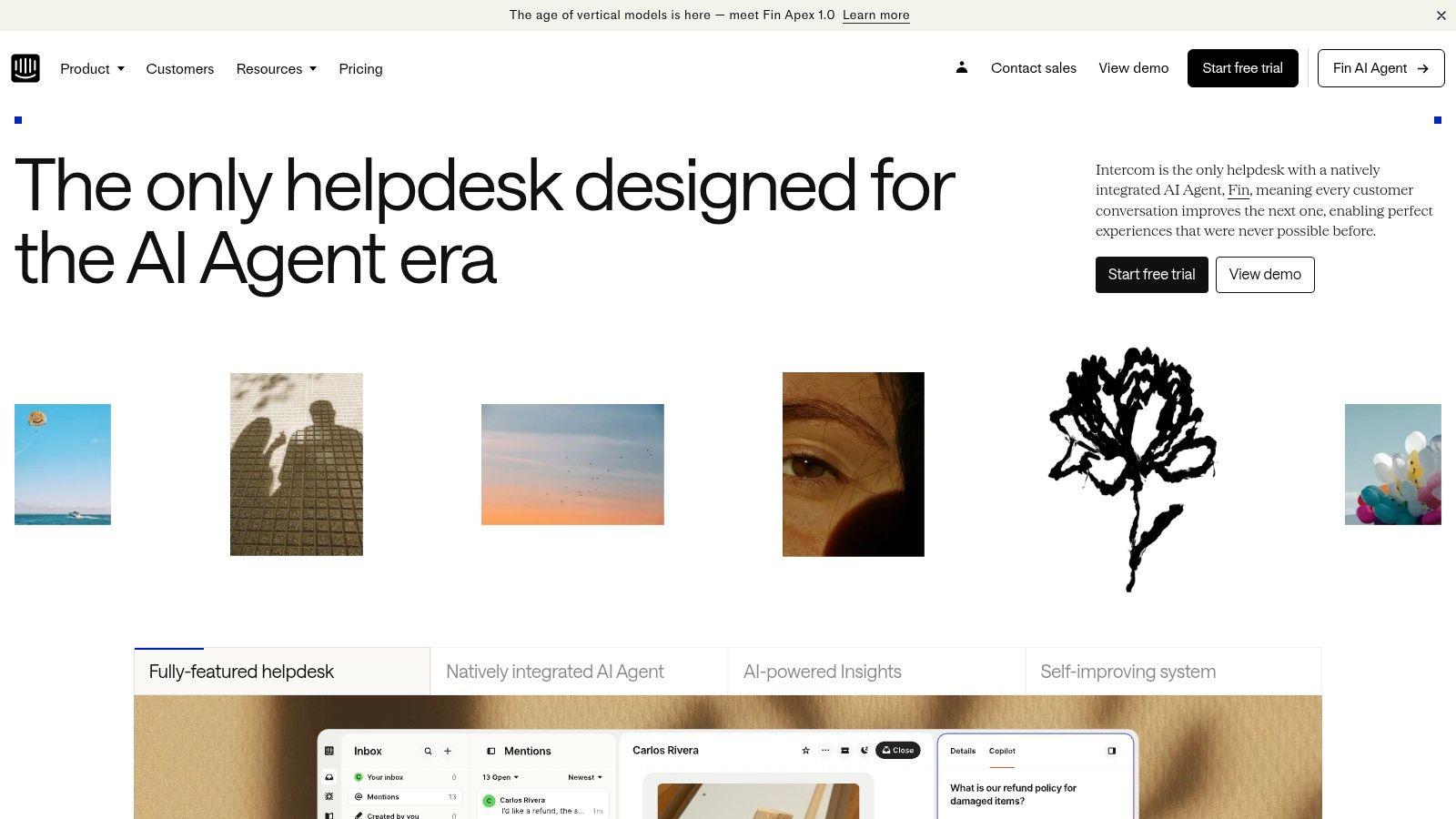
This allows human agents in the shared Inbox to concentrate on complex, high-value conversations, assisted by an AI copilot for summarizing threads and composing replies. Beyond reactive support, Intercom enables proactive engagement through in-app product tours, surveys, and targeted messages. This combination helps businesses not only reduce support costs but also improve user onboarding and drive expansion revenue by identifying upsell opportunities directly within the customer journey. The platform’s main strength is its swift time-to-value, driven by an intuitive interface for support teams and transparent, outcome-based pricing for its AI agent.
Key Details & Analysis
| Category | Analysis |
|---|---|
| Best For | SaaS and B2B companies aiming to scale customer support, reduce response times, and improve user onboarding with a dedicated AI agent. |
| Pros | Fast time-to-value: Strong UI/UX means support teams can get started quickly. Transparent AI pricing: Fin's per-resolution pricing is clear and predictable. |
| Cons | Costly add-ons: Features like product tours and advanced analytics are add-ons that increase the total cost. Tier-based limitations: Support for multiple brands or advanced features requires higher-priced plans. |
| Pricing | Starts at $39/seat/month for the Essential plan. Fin AI Agent is priced per resolution, starting from $0.99 per resolution. |
Implementation Tip: Integrate Intercom with your product analytics tool (like Mixpanel or Amplitude). This allows you to trigger proactive messages based on specific user behaviors, such as when a user tries a new feature for the first time or shows signs of potential churn. This turns your support tool into a proactive growth engine.
Website: https://www.intercom.com
9. 6sense Revenue AI
For businesses running account-based marketing (ABM) strategies, 6sense Revenue AI acts as a command center, using predictive intelligence to solve the fundamental challenge of knowing which accounts to target and when. Instead of casting a wide net, this platform analyzes anonymous buying signals across the web to identify companies actively researching solutions like yours. It’s one of the best AI tools for business growth for B2B organizations looking to align their sales and marketing efforts around high-intent accounts.
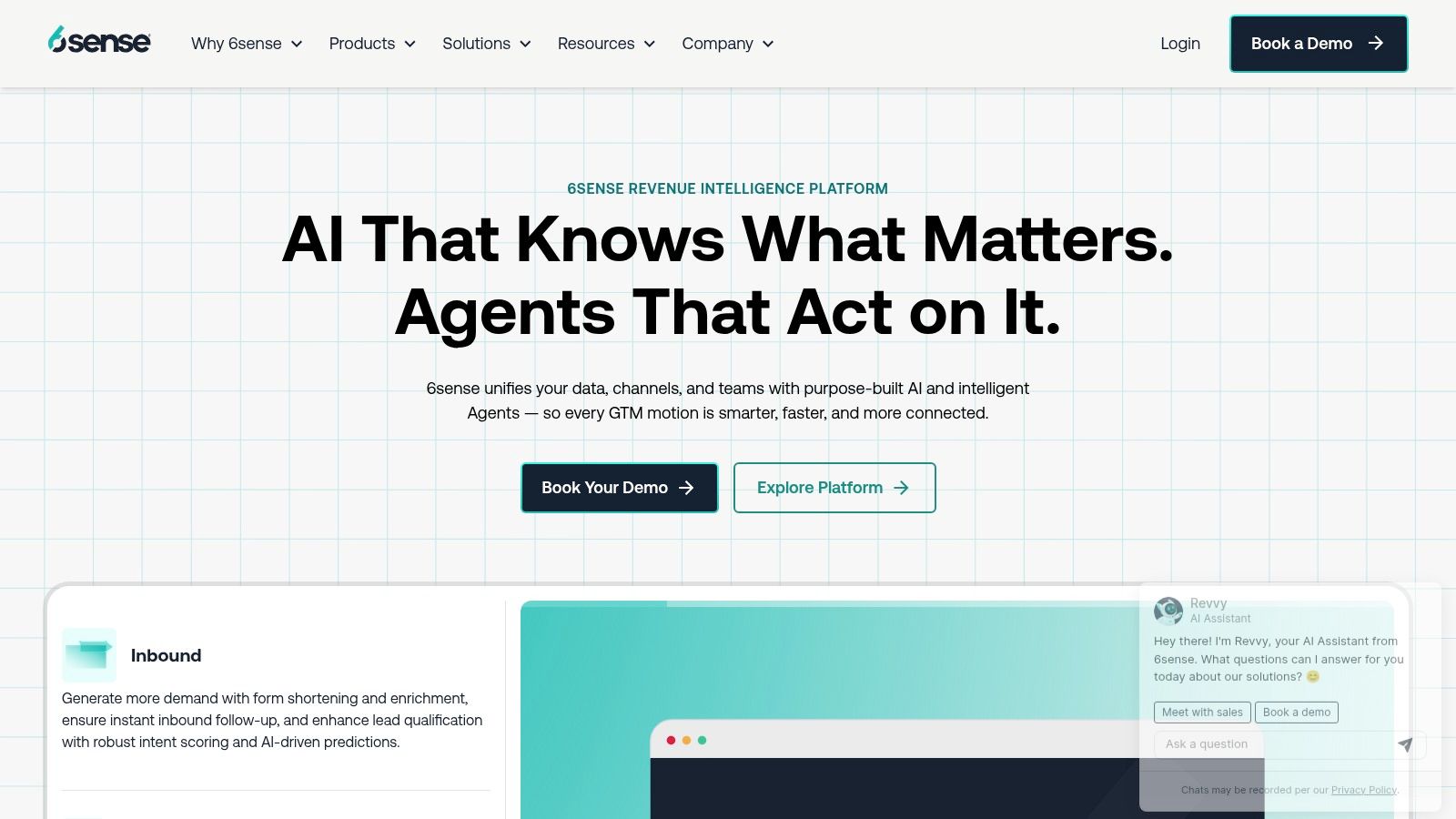
The platform goes beyond simple identification by scoring accounts based on their position in the buying journey, from awareness to decision. This allows marketing to deliver targeted ads and personalized website experiences, while sales receives prioritized lists of accounts showing strong purchase intent. By orchestrating actions based on real-time data, 6sense helps teams focus their resources on opportunities with the highest probability of closing, effectively eliminating guesswork and improving pipeline quality.
Key Details & Analysis
| Category | Analysis |
|---|---|
| Best For | B2B companies with a mature ABM strategy that need to prioritize high-value accounts and align sales and marketing teams on shared data. |
| Pros | Superior targeting: Offers clear guidance on which accounts are in-market, improving marketing ROI and sales efficiency. Sales & Marketing alignment: Provides a single source of truth that both teams can use to coordinate outreach and campaigns. |
| Cons | Enterprise focus: Primarily built for larger organizations, with custom contracts and pricing that may be prohibitive for smaller businesses. Data dependency: Its effectiveness hinges on having quality first-party data and a well-defined ideal customer profile. |
| Pricing | Pricing is not publicly listed and is provided via custom quotes based on company size, usage, and required features. |
Implementation Tip: Use a workflow automation platform to create an "intent spike" alert system. When 6sense flags an account as showing a significant increase in buying intent, trigger an automated workflow that notifies the account owner in Slack, creates a high-priority task in your CRM, and adds the key contacts to a targeted outreach sequence. This ensures no high-value signal is missed.
Website: https://6sense.com
10. Jasper
Jasper is a dedicated AI content creation platform built specifically for B2B marketing and sales teams that need to produce high-quality, on-brand material at scale. Unlike general-purpose writing assistants, Jasper is one of the most effective AI tools for business growth because it focuses entirely on the content funnel, from initial blog concepts to final sales enablement documents. Its standout feature is its ability to learn and apply a company’s specific brand voice and style guide across all generated text.
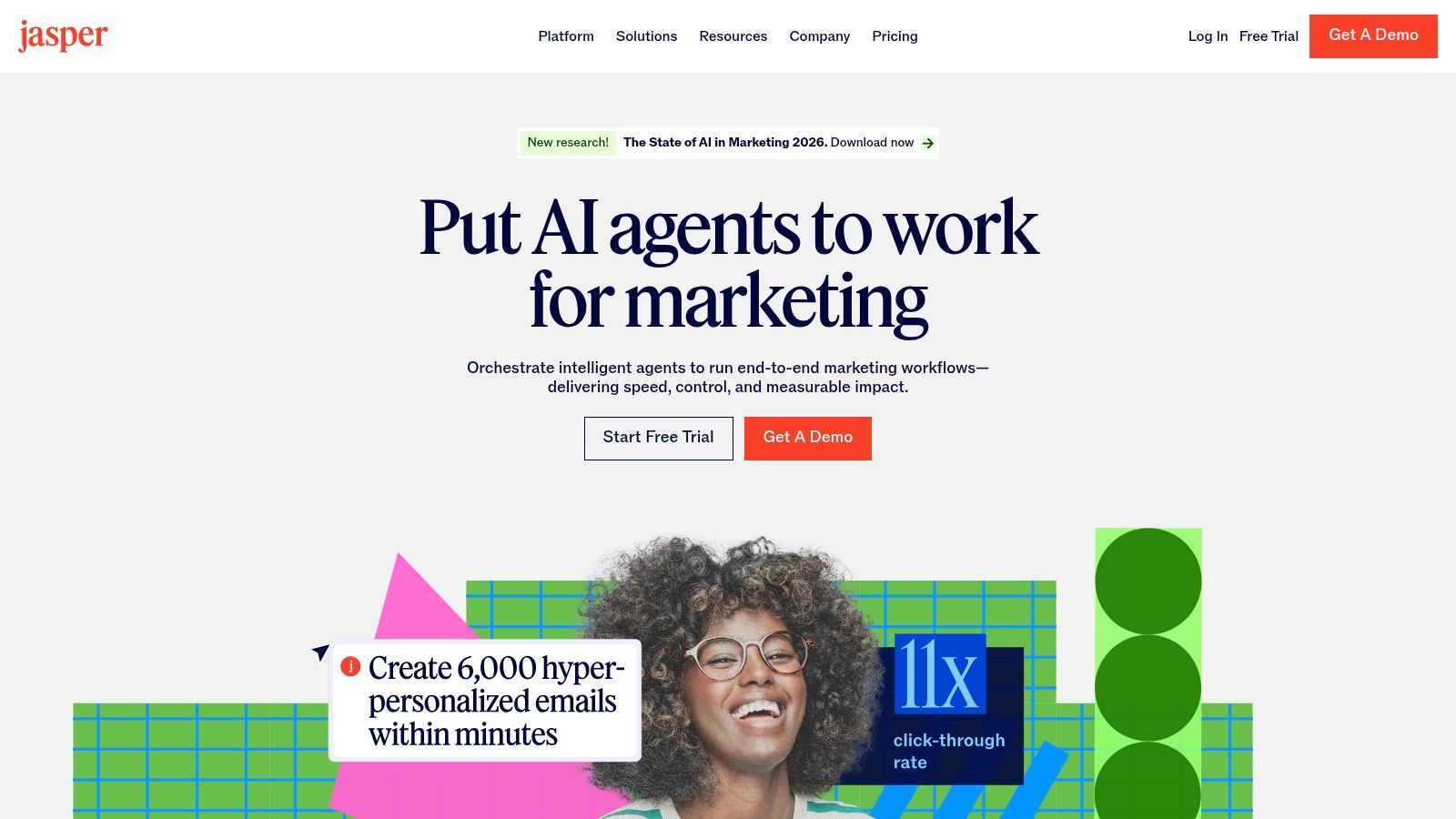
This tool offers a wide array of templates designed for the entire customer journey, including ad copy, social media posts, landing page text, and detailed articles. Teams can work together within the platform, create campaign assets, and use its built-in workflows for approvals, ensuring consistency before anything goes live. The main advantage of Jasper is its focus on producing brand-safe, ready-to-use content that significantly reduces the time from idea to publication, allowing marketing teams to scale their output without sacrificing brand integrity.
Key Details & Analysis
| Category | Analysis |
|---|---|
| Best For | B2B marketing teams that need to scale content production across multiple channels while maintaining a consistent and specific brand voice. |
| Pros | Marketing-oriented workflows: Templates and features are built for practical marketing and sales use cases. Content repurposing: Excels at transforming one piece of content (like a blog post) into multiple formats (social posts, emails). |
| Cons | Editorial oversight needed: AI-generated content still requires human review for factual accuracy and nuanced tone. Plan limitations: API access and advanced team collaboration features are often restricted to higher-tier plans. |
| Pricing | Plans start around $39/month for individual creators; business and enterprise tiers with advanced voice and collaboration features are priced higher. |
Implementation Tip: Use Jasper’s Brand Voice feature by feeding it your best-performing blog posts, landing pages, and marketing emails. This trains the AI on your specific tone, style, and messaging. You can then automate the creation of first drafts for new campaigns, connecting Jasper to your project management tool to create tasks for human review, ensuring a steady and on-brand content pipeline.
Website: https://www.jasper.ai
11. Zapier
Zapier is the connective tissue of the modern tech stack, an automation platform that allows businesses to link thousands of applications without writing code. While not an AI tool in itself, it has become essential for deploying AI tools for business growth by integrating them into practical business processes. Its system lets you build automated workflows, or "Zaps," that trigger actions between apps, effectively eliminating manual, repetitive tasks.
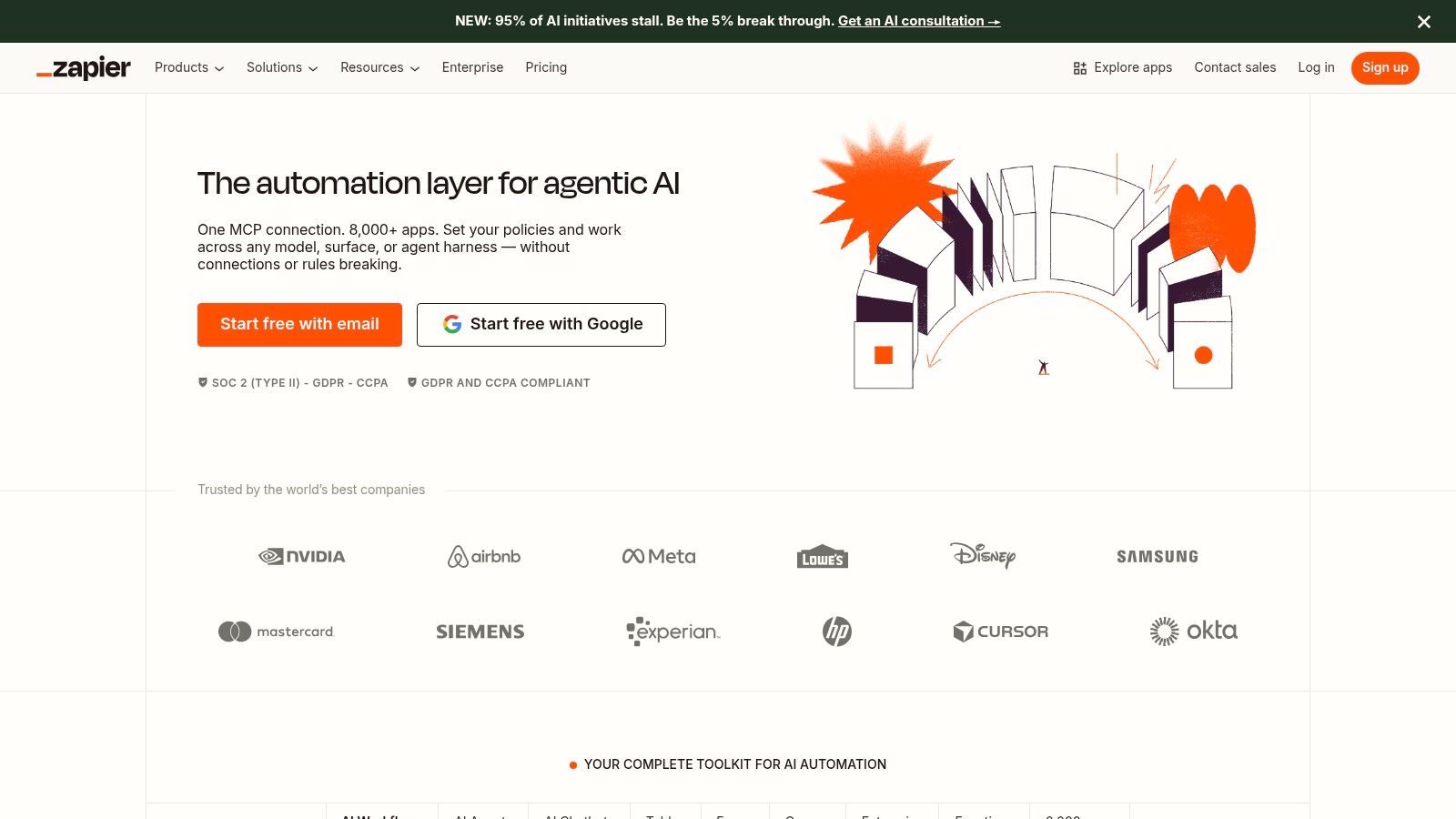
You can use Zapier to connect a lead form on your website to your CRM, automatically create a task in your project management tool, and then use an AI step to draft a personalized follow-up email. With its built-in "AI by Zapier" actions, you can summarize text, extract data, or generate content directly within a workflow. This makes it a powerful force multiplier, stitching together your CRM, marketing, and support tools into a cohesive, automated system. Learn more about the potential of AI-powered workflow automation to see how these integrations can transform operations.
Key Details & Analysis
| Category | Analysis |
|---|---|
| Best For | Operations teams and founders needing to rapidly connect disparate apps and automate processes without relying on developer resources. |
| Pros | Rapid time-to-value: Its massive connector library and intuitive interface allow for quick setup. Scalability: Grows with your business, from simple two-step Zaps to complex, enterprise-grade automations with governance. |
| Cons | Cost monitoring: The task-based pricing model can lead to unexpected overages if not managed carefully. Complexity: Intricate workflows require proper documentation and testing to ensure reliability and prevent errors. |
| Pricing | Offers a free plan with limited tasks; paid plans start around $20/month (billed annually) and scale based on task volume and features. |
Implementation Tip: Use Zapier's "Tables" feature as a simple, intermediate database for your workflows. For example, when a new lead comes in, save their details to a Zapier Table first. This creates a central log and allows you to run other Zaps from that table, such as enriching the data with Clearbit before adding the complete record to your CRM.
Website: https://zapier.com
12. PolyAI
PolyAI provides enterprise-grade voice AI agents that deliver remarkably human-like conversations for both inbound and outbound calls. For businesses where the phone is a critical customer interaction channel, it offers a powerful way to scale operations 24/7 without sacrificing quality. This makes it one of the most effective AI tools for business growth for service-heavy industries.
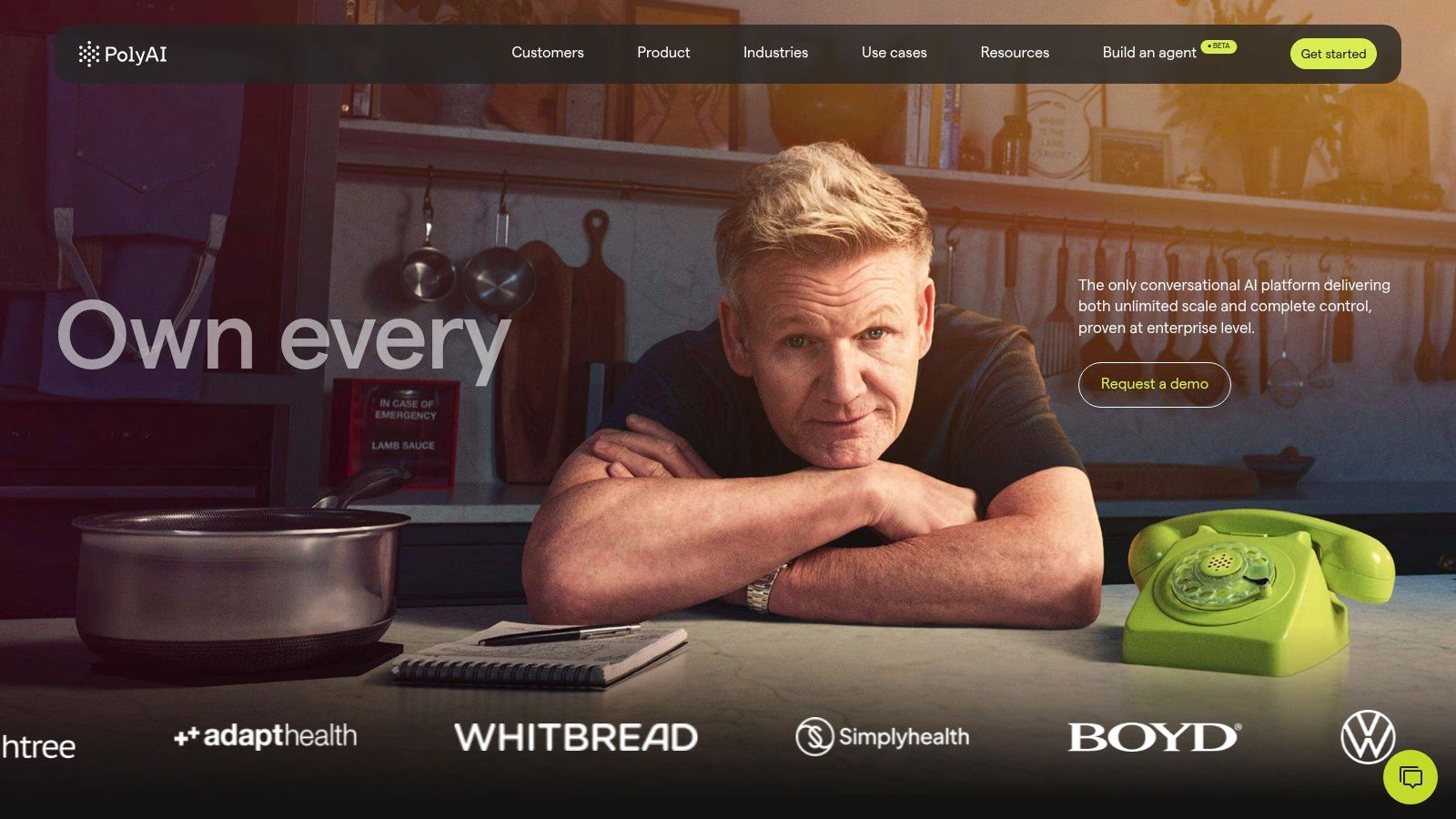
The platform’s agents can handle complex tasks like intelligent call routing, answering frequently asked questions, processing transactions, and scheduling appointments. Its main strength lies in the natural-sounding voice and conversational intelligence, which avoids the robotic feel of traditional IVR systems. PolyAI is built for reliability, offering service level agreements (SLAs), enterprise security, and deep integrations with existing contact center software and CRM systems. This allows companies to deploy sophisticated voice automation that feels like an extension of their human team.
Key Details & Analysis
| Category | Analysis |
|---|---|
| Best For | Enterprise-level companies in sectors like hospitality, retail, and financial services that rely heavily on voice channels for customer service and sales. |
| Pros | Natural-sounding voice: Agents deliver a high-quality, human-like conversational experience. Enterprise reliability: Comes with 24/7 support, 99.9% uptime SLAs, and robust security compliance. |
| Cons | Enterprise focus: Primarily designed for custom projects that require significant integration and implementation work. Requires expertise: Achieving optimal performance demands careful call-flow design and ongoing iteration. |
| Pricing | Based on a per-minute usage model. Custom enterprise pricing is standard, requiring direct consultation for a quote. |
Implementation Tip: Begin by identifying the top 3-5 highest-volume, most repetitive call reasons your contact center handles. Use PolyAI to build an initial voice agent focused solely on resolving these specific inquiries. This provides a clear ROI and allows your team to master the platform's call-flow design studio on a manageable project before expanding to more complex use cases.
Website: https://poly.ai
Top 12 AI Tools for Business Growth — Comparison
| Solution | Core capabilities | Value proposition / ROI | Target audience | Pricing model | Unique differentiator |
|---|---|---|---|---|---|
| MakeAutomation | n8n + custom API integrations, Voice AI agents, SOPs, ClickUp support | Subscription access to senior automation specialists; proven outreach (97.8% open, 7.35% reply), ~22% efficiency gains | B2B/SaaS founders, sales & ops leaders, agencies, HR teams | Subscription (from $6,200/mo) or project-based (50% down + UAT) | High-touch co-building, on-demand senior specialists, end-to-end docs & ROI tools |
| HubSpot | Unified CRM, AI assistants across marketing/sales/service, CMS, automation | Fast deployment and native integrations to reduce tool sprawl | SMBs to mid-market marketing, sales, support teams | Tiered per hub / contacts (scales by tier) | Broad all-in-one hub with large partner/template ecosystem |
| Salesforce Agentforce | Agentic AI inside Customer 360, Data Cloud integration, voice options | Enterprise-grade automation embedded in CRM; strong governance | Large enterprises using Salesforce as system of record | Consumption/complex packaging; enterprise pricing | Native Salesforce embedding and enterprise controls |
| Apollo.io | B2B database, sequencing, dialer, AI research assistant, Chrome extension | Cost-effective outbound stack for rapid list building and execution | SMBs and mid-market growth/outbound teams | Credit/usage model with tier gates | Large contact database + integrated outbound execution |
| ZoomInfo SalesOS | Contact/firmographics, intent signals, website visitor de-anonymization | Deep dataset for ABM and scaled outbound; strong integrations | Enterprise revenue teams focused on ABM and scale | Opaque, typically annual contracts | Industry-standard enterprise B2B dataset and direct dials |
| Gong Revenue AI OS | Conversation intelligence, deal insights, forecasting, AI agents | Measurable pipeline, win-rate and forecast improvements | Sales leaders in complex, enterprise deals | Quote-based (per-user + platform fees) | Best-in-class analytics and coaching from conversation data |
| Outreach | Sequencing, AI-assisted calls/emails, forecasting, governance | Orchestrates large SDR/AE teams with analytics and compliance | Mid-large SDR/AE teams and revenue ops | Annual enterprise contracts (custom pricing) | Deep governance and multi-team orchestration capabilities |
| Intercom | Fin AI Agent, omnichannel messaging, inbox copilot, in-app guides | Reduce response times, deflect tickets, speed onboarding | Support, customer success, product teams | Seat pricing + per-outcome Fin usage; add-ons available | Strong UX and outcome-based AI agent pricing model |
| 6sense Revenue AI | Predictive account intelligence, intent, personalization, CRM/MAP integrations | Prioritizes in-market accounts to improve pipeline quality | ABM-heavy B2B orgs and enterprise marketing/sales | Enterprise contracts (custom pricing) | Predictive account scoring and ABM orchestration |
| Jasper | AI content generation, brand voice controls, templates, approvals | Scales on-brand content creation across funnel | Marketing and content teams | Tiered SaaS plans (plan-based feature access) | Brand voice ingestion and marketing templates/workspaces |
| Zapier | No/low-code automations, AI steps, Tables, Interfaces, huge connector library | Rapid, low-code automation to eliminate manual swivel-chair work | Founders, ops, GTM teams, enterprises needing integrations | Task-based plans with overage monitoring | Massive connector ecosystem and fast time-to-value |
| PolyAI | Enterprise voice AI agents, studio/APIs, contact center integrations, SLA | 24/7 natural-sounding voice agents for high-volume call channels | Contact centers and enterprises relying on phone channels | Per-minute usage with support SLAs (enterprise engagements) | Human-like voice agents with enterprise security and reliability |
Final Thoughts
We've journeyed through a detailed examination of powerful AI tools for business growth, moving from lead generation giants like Apollo.io and ZoomInfo SalesOS to operational powerhouses such as Jasper and MakeAutomation. The central theme is clear: AI is no longer a futuristic concept but a practical, accessible set of technologies that can fundamentally change how you acquire customers, manage operations, and scale your company. The tools discussed, from Gong's revenue intelligence to HubSpot's CRM automations, offer concrete pathways to more efficient, data-driven, and ultimately more profitable business functions.
The key takeaway is not just the existence of these platforms, but the importance of strategic integration. A single tool, while useful, often creates an information silo. Real growth acceleration happens when these systems communicate. Imagine Apollo.io identifying high-intent leads, which then triggers a personalized outreach sequence in Outreach, with all interactions logged and analyzed in Salesforce Agentforce. This interconnected ecosystem, orchestrated by an automation platform like MakeAutomation or Zapier, is where the magic truly happens. It turns individual points of data into a cohesive, intelligent growth engine.
How to Choose Your AI Growth Stack
Selecting the right tools from this list can feel daunting. The best approach is to start with your most significant business bottleneck. Don't chase the newest, shiniest object; instead, identify the most critical area for improvement.
- If lead generation is your primary challenge: Begin with a platform like Apollo.io or 6sense. Focus on defining your ideal customer profile and leveraging their AI to find lookalike audiences and intent signals.
- If your sales process is inefficient: Look towards Gong or Outreach. Analyzing sales conversations to replicate top-performer behavior or automating follow-up cadences can yield immediate returns on productivity.
- If customer support is becoming a bottleneck: Implementing an intelligent chatbot is a logical first step. These systems can handle a high volume of routine inquiries, freeing up human agents for more complex issues. For those looking for a curated list of top AI chatbot solutions that can significantly contribute to scaling your business, explore the 12 Best AI Chatbot for Business Platforms.
- If your operations are disorganized: A project management tool with AI features or a core automation platform like MakeAutomation should be your priority. Standardizing workflows and automating repetitive tasks provides the stable foundation needed for growth.
A Phased Approach to Implementation
Adopting a suite of AI tools for business growth is a marathon, not a sprint. A successful rollout requires a thoughtful, phased approach to avoid overwhelming your team and budget.
- Start Small: Pick one or two tools that address your most pressing pain point.
- Run a Pilot Program: Test the tool with a small, dedicated team. Document the process, measure the outcomes, and gather feedback.
- Develop Standard Operating Procedures (SOPs): Before a company-wide rollout, create clear documentation and training materials. Show your team how to use the tool within your established workflows.
- Integrate and Automate: Once the initial tool is adopted, identify opportunities to connect it to other systems. This is where you begin to build your automated growth machine.
- Measure and Refine: Continuously track key performance indicators (KPIs). Is the tool delivering the expected ROI? Are there new features you can use? Regular reviews ensure your tech stack evolves with your business.
The journey to integrating AI into your business is one of continuous learning and adaptation. The platforms we've covered represent the current frontier of what's possible, but the field is advancing quickly. By focusing on solving core business problems, starting with a clear strategy, and building an interconnected system, you can position your company to not just compete, but to lead in your market.
Ready to move from theory to action? The key to unlocking the true potential of these AI tools is connecting them into seamless, automated workflows, and that's precisely what MakeAutomation is built for. See how you can use our visual workflow builder to integrate your favorite AI tools for business growth and create scalable processes without writing a single line of code. Start building your automated growth engine with MakeAutomation today.