

10 Actionable Client Relationship Management Tips for B2B Teams in 2026
In the competitive B2B and SaaS landscape, maintaining strong client relationships is no longer just about personalized emails and occasional check-ins. It's about building a scalable, predictable engine for client success. The difference between a loyal, high-value partner and a churn statistic often lies in the systems you build to support them. Traditional, manual approaches are simply failing under the weight of growing client lists and increasing expectations for proactive service.
This guide moves beyond generic advice to provide 10 actionable, system-driven client relationship management tips designed for modern businesses. We will explore how to leverage AI-powered automation, documented Standard Operating Procedures (SOPs), and data-driven strategies to not only retain clients but transform them into your biggest advocates. You will learn how to implement everything from structured onboarding workflows and predictive health scoring to strategic account plans for your most valuable partners.
These aren't just high-level ideas; they are practical blueprints for building a client management machine that drives sustainable growth. By implementing these systems, you can free your team from repetitive, low-value tasks and empower them to focus on strategic, high-impact interactions. Get ready to upgrade your approach from reactive problem-solving to proactive, systemized partnership building that scales with your ambition. The following tips will show you exactly how to get started.
1. Implement AI-Powered CRM Automation for Personalized Client Communication
Gone are the days of manual data entry and generic email blasts. Modern client relationship management tips start with technology, specifically by leveraging artificial intelligence and automation within your CRM. This approach uses AI to analyze client interactions, predict needs, and trigger personalized follow-ups at scale, ensuring no opportunity is missed. For B2B and SaaS companies, it means moving from reactive to proactive engagement.
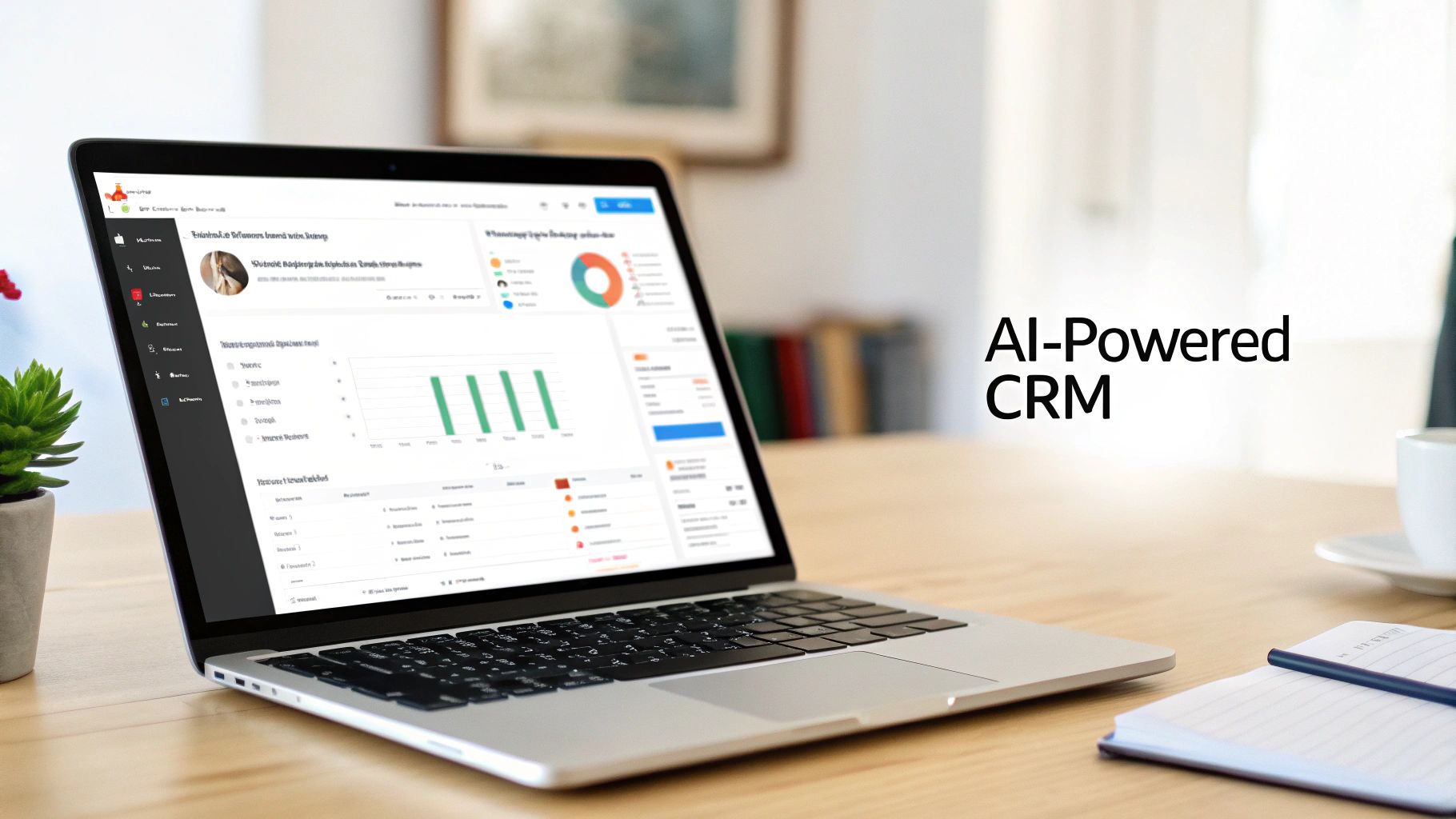
This strategy works by combining machine learning algorithms with your CRM data. The system can intelligently segment clients, send timely communications based on their behavior, and score leads to prioritize your sales team's efforts. The result is a highly efficient, data-driven client management process that scales with your business. To get a deeper understanding of the technology involved, you can explore the fundamentals of CRM automation and how it can be applied to your business.
How to Implement AI-Powered CRM Automation
- Start Small and Scale: Begin with a single, high-impact workflow, such as an automated follow-up sequence for new leads or a re-engagement campaign for dormant clients. Perfect this before expanding to more complex automations.
- Combine AI with a Human Touch: Use automation for routine tasks like logging calls or sending initial outreach. This frees up your team to focus on high-value activities like strategic calls with key accounts or personalized demos.
- Set Up Predictive Lead Scoring: Configure your CRM to automatically score leads based on firmographics, engagement levels, and on-site behavior. This ensures your sales team always focuses on the most promising opportunities first.
- Integrate Your Communication Stack: Connect your CRM with your email, calendar, and call systems (like MakeAutomation's Voice AI Agents) to create a unified view of every client interaction. This centralized data is crucial for the AI to make accurate predictions and trigger relevant automations.
2. Develop a Structured Client Onboarding SOP with Documentation
The first impression is the most lasting, and in B2B relationships, that impression is set during onboarding. A structured Standard Operating Procedure (SOP) for client onboarding ensures every new client receives a consistent, high-quality experience that establishes trust and sets clear expectations from day one. This involves documenting every step, from the moment a contract is signed to the first major milestone.
This strategy formalizes your onboarding into a repeatable, scalable system that reduces churn and accelerates the client’s time-to-value. For SaaS companies, it could be an automated flow guiding users through setup; for digital agencies, it’s a detailed plan covering kickoff meetings, asset gathering, and timeline setting. Effective client relationship management tips often focus on these foundational moments. For a deeper dive, you can explore this detailed client onboarding process template.
How to Implement a Structured Client Onboarding SOP
- Map the Current Process: Before optimizing, document your existing onboarding journey. Identify pain points, communication gaps, and bottlenecks to understand where improvements are needed most.
- Automate the Repetitive, Personalize the Crucial: Use automation for routine tasks like sending welcome emails, sharing resources, or scheduling initial calls. This frees up your team to focus on high-impact, personal interactions like strategic kickoff meetings.
- Create Client-Facing Checklists: Provide clients with a clear roadmap of the onboarding process, including timelines, required inputs from their side, and key milestones. This transparency manages expectations and fosters a collaborative partnership.
- Schedule Regular Check-ins: Implement a cadence of check-in calls or emails at critical points (e.g., Day 1, Week 1, and Day 30). These touchpoints ensure the client feels supported and that any issues are addressed proactively before they escalate.
3. Establish Proactive Communication Cadences with Clients
Effective client relationship management tips often boil down to moving from a reactive to a proactive stance. Instead of waiting for problems to arise, establish a structured communication schedule with regular check-ins, business reviews, and updates. This approach builds trust, uncovers potential issues early, and consistently demonstrates the value you provide, turning a simple vendor relationship into a strategic partnership.

This strategy works by formalizing touchpoints tailored to each client's needs. For instance, a high-value enterprise client might receive quarterly executive business reviews (QBRs) focused on strategic alignment, while a smaller account benefits from automated monthly progress reports. The key is consistency and value, ensuring every interaction reinforces your commitment to their success. Methodologies from leaders like Salesforce have long championed this structured approach to account management.
How to Implement Proactive Communication Cadences
- Align Frequency with Client Value: Not all clients require the same level of attention. High-value enterprise accounts may warrant weekly or bi-weekly check-ins and QBRs, while smaller clients might thrive with a monthly automated update and a quarterly call.
- Structure Calls with a Consistent Agenda: Every scheduled call should have a clear purpose. A great template includes reviewing recent achievements and metrics, discussing current challenges or blockers, and outlining clear next steps.
- Leverage Automation for Efficiency: Use your CRM to automate the logistics. Send agenda and preparation materials 24 hours before a meeting, and use systems like MakeAutomation’s Voice AI Agents for low-touch, automated check-in calls to gauge satisfaction without manual effort.
- Document Everything in Your CRM: Immediately after any call or meeting, log all key discussion points, decisions, and action items in your CRM. This creates a single source of truth and ensures accountability and seamless follow-through from your team.
4. Implement Voice AI Agents for Proactive Client Outreach
Elevating client communication beyond email and text involves embracing the power of voice. Implementing Voice AI Agents allows businesses to automate proactive outreach, such as satisfaction surveys, appointment scheduling, and routine account check-ins. These AI-powered agents manage high-volume, standardized interactions with a conversational touch, freeing up sales and client success teams to concentrate on complex, strategic relationship-building activities.
This approach works by deploying sophisticated conversational AI that can understand intent, respond naturally, and escalate calls to human agents when necessary. For B2B and SaaS companies managing large client portfolios, this technology enables a significant increase in outreach frequency without a proportional rise in headcount. The result is a more engaged client base, improved retention, and a highly efficient communication workflow. Platforms like MakeAutomation's Voice AI Agents are making this one of the most impactful client relationship management tips for scalable businesses.
How to Implement Voice AI Agents
- Start with Low-Stakes Interactions: Begin by deploying Voice AI for simple, high-volume tasks like appointment reminders or post-interaction satisfaction surveys. This builds confidence in the system before you move to more complex conversations like lead qualification or client onboarding check-ins.
- Establish Clear Escalation Paths: Program your AI agent to recognize keywords, frustrated tones, or complex queries that require a human touch. Ensure there is a seamless, pre-defined process for transferring these calls to the appropriate team member without delay.
- Train the AI on Real Conversations: Use anonymized recordings of actual client calls to train your Voice AI model. This helps it learn your industry's specific jargon, common client questions, and conversational nuances, leading to more accurate and natural interactions.
- Monitor and Optimize Early: Manually review the first 50-100 calls handled by the Voice AI to identify and fix any issues in the conversation flow or intent recognition. Use this data to continuously refine scripts and improve performance.
- Maintain Transparency: Always provide a clear, upfront disclosure that the client is speaking with an AI agent. This manages expectations and builds trust, preventing any feeling of deception.
5. Create a Client Segmentation Strategy for Targeted Relationship Management
Not all clients are created equal, and your engagement strategy shouldn't treat them as if they are. A powerful client relationship management tip is to develop a sophisticated segmentation model that categorizes clients based on value, industry, product usage, or other relevant data points. This approach allows you to tailor your engagement, ensuring resources are allocated efficiently and effectively across your entire client base.

This strategy works by moving away from a one-size-fits-all model. For instance, an enterprise SaaS company might segment clients into Strategic accounts receiving quarterly business reviews, Growth accounts with monthly check-ins, and Standard accounts managed through automated support. By creating distinct playbooks for each segment, you can optimize service levels, manage churn risk proactively, and deliver a personalized experience where it matters most, a concept popularized by platforms like Salesforce and Gainsight.
How to Implement a Client Segmentation Strategy
- Base Segments on Quantifiable Data: Use hard metrics like Annual Recurring Revenue (ARR), growth potential, product adoption rates, or support ticket volume. Avoid relying on gut feelings to ensure your segments are objective and scalable.
- Start with 3-4 Core Segments: Begin with a manageable number of segments to avoid overcomplicating your process. For example, you could start with High-Value, Mid-Value, and Low-Value tiers before adding more nuance.
- Develop Segment-Specific Playbooks: Define clear rules of engagement for each group. Specify communication frequency, preferred channels, key messaging points, and escalation protocols. This ensures your team delivers a consistent experience.
- Assign Clear Ownership: Make a specific team or individual responsible for the success of each segment. This accountability drives focus and ensures that no client group is neglected, improving your client relationship management across the board.
6. Develop a Feedback Loop System for Continuous Client Insights
Effective client relationship management tips go beyond initial engagement; they require a commitment to listening and evolving. A structured feedback loop system is the mechanism for this, enabling you to consistently gather, analyze, and act on client insights. This proactive approach transforms client feedback from random comments into a strategic asset that drives product innovation, service improvements, and stronger retention.
This strategy works by formalizing how you collect input across all touchpoints, from support tickets and user behavior data to surveys and interviews. For SaaS companies, this could mean using in-product surveys like Figma or sharing public roadmaps like Notion. The most critical step is "closing the loop" by communicating back to clients how their input led to tangible changes, demonstrating that their voice is valued.
How to Implement a Feedback Loop System
- Formalize Your Intake Process: Don't rely on scattered emails. Use a dedicated tool or a structured process within your CRM to capture all feedback in one place. This ensures no insight is lost and patterns can be easily identified.
- Use a Mix of Metrics: Combine quantitative data like Net Promoter Score (NPS) with qualitative feedback from client interviews. This gives you both a high-level view of relationship health and the deep context needed to understand the "why" behind the numbers.
- Establish a Review Cadence: Create a recurring meeting, perhaps monthly or quarterly, where key stakeholders from product, sales, and support review aggregated feedback. The goal is to identify trends and prioritize action items.
- Assign Clear Ownership: Designate a person or team to manage the feedback loop. Their responsibility is to ensure feedback is tracked, routed to the correct department, and that follow-up actions are completed, including communicating updates back to the clients.
7. Utilize Data Analytics to Predict Client Health and Churn Risk
Relying on intuition to gauge client satisfaction is no longer enough. The best client relationship management tips are rooted in data, which means implementing predictive analytics to forecast client health, identify churn risk, and spot expansion opportunities before they fully emerge. This strategy transforms your approach from reactive problem-solving to proactive, science-based intervention.
This method works by aggregating and analyzing diverse client data points such as feature adoption rates, support ticket volume, engagement metrics, and even payment patterns. Algorithms then identify patterns that signal a client is at risk of leaving or is ready for an upsell. For B2B and SaaS businesses, this means you can prevent revenue loss by intervening with at-risk accounts and strategically prioritize growth conversations with healthy ones. To get a foundational understanding of this technology, you can explore the core concepts of what is predictive analytics and how it drives business decisions.
How to Implement Predictive Client Health Analytics
- Define Clear Health Score Thresholds: Start by creating a basic client health score that combines key metrics. Assign clear thresholds: green for healthy and engaged clients, yellow for those showing warning signs, and red for accounts at high risk of churn.
- Create Proactive Intervention Playbooks: Don't just identify risk; act on it. Develop specific, automated workflows for each health status. A "yellow" client might receive a proactive check-in from their account manager, while a "red" client could trigger an urgent intervention from a senior success leader.
- Set Up Automated Alerts: Configure your CRM or analytics platform to send immediate notifications to your client success team when a client’s health score drops. This ensures timely action before a minor issue becomes a critical problem.
- Combine Quantitative and Qualitative Data: While data provides the "what," direct client feedback provides the "why." Use predictive scores to flag accounts for review, but always combine that data with qualitative insights from calls and surveys to get the full picture.
8. Build Strategic Account Plans for High-Value Clients
To move beyond transactional relationships and cultivate true partnerships, you must treat your most important clients with strategic intent. This means creating formal, documented account plans for your highest-value clients that map out long-term engagement, success goals, growth opportunities, and potential risks over a 12- to 18-month horizon. This practice is one of the most effective client relationship management tips for maximizing lifetime value.
This approach works by forcing your team to deeply understand a client’s business objectives and align your solutions directly to their strategic priorities. Instead of just selling products or services, you become an indispensable partner in their success. For example, a SaaS company might create a plan for a key enterprise client showing how new feature adoption will help them achieve their specific revenue targets for the next fiscal year.
How to Implement Strategic Account Planning
- Focus on the Top Tier: Don't try to create a detailed plan for every client. Reserve this intensive effort for your top 20% of accounts by revenue or strategic potential to ensure a positive ROI on your time investment.
- Make it a Collaborative Process: The most effective plans are built with the client, not for them. Schedule a strategic business review to co-create the plan, ensuring their goals and priorities are accurately represented and securing their buy-in from the start.
- Map Key Stakeholders and Objectives: Identify the key decision-makers, influencers, and champions within the client's organization. Anchor the entire plan to their core business objectives, such as cost reduction, market expansion, or operational efficiency, rather than your product features.
- Define and Track Success Metrics: Establish clear, quantifiable KPIs to measure the partnership's success. These could include revenue growth, client ROI from your solution, product adoption rates, or improvements in their Net Promoter Score (NPS). Review these metrics quarterly with the client and adjust the plan as needed.
9. Implement Customer Success Technology Stack Integration
Effective client relationship management tips extend beyond a single tool; they require a cohesive technology ecosystem. Implementing an integrated tech stack connects your CRM, project management software, communication platforms, and support systems. This strategy breaks down data silos, creating a single source of truth for all client information and ensuring seamless handoffs between sales, success, and support teams.
This approach works by ensuring data flows automatically between the tools your teams use daily. When a sales rep closes a deal in Salesforce, the integration can instantly create a new project in Monday.com and a dedicated Slack channel for the client. This interconnectedness empowers every team member with the full context of the client relationship, leading to faster, more informed, and more effective service delivery.
How to Implement a Customer Success Tech Stack
- Start with Core Systems: Begin by integrating your central CRM (like HubSpot or Salesforce) with your primary communication tool (like Slack or Microsoft Teams). This initial connection provides the biggest immediate win for cross-team visibility.
- Leverage Middleware for Agility: Use platforms like Zapier or Make to build initial integrations without extensive development resources. These tools are perfect for connecting disparate apps and automating workflows quickly, allowing you to test and refine processes before committing to custom API work.
- Establish Data Governance Early: Define a clear data architecture and master data management plan from the outset. Decide which system is the "source of truth" for specific data points (e.g., client contact info in the CRM) to prevent sync errors and data duplication.
- Train Teams on the Integrated Workflow: Technology is only effective if people use it correctly. Conduct thorough training sessions that focus not just on individual tools, but on how the entire integrated system works together to serve the client. Most adoption failures stem from inadequate training.
10. Train and Empower Client-Facing Teams with CRM Best Practices
Even the most advanced CRM platform is only as effective as the people using it. Investing in technology without investing in your team is a recipe for low adoption and poor data quality. One of the most critical client relationship management tips is to develop comprehensive training programs that empower every client-facing employee, from sales to support, to use the CRM effectively and consistently.
This approach ensures that your CRM becomes the undisputed single source of truth for all client interactions. When teams are properly trained, they understand not just how to use the tool but why their contributions matter to the broader goal of building strong client relationships. This strategy moves your organization from viewing the CRM as an administrative burden to embracing it as a strategic asset for growth.
How to Implement Effective CRM Training
- Make Training Role-Specific: Avoid generic, one-size-fits-all training. A sales development representative needs to master lead logging and activity tracking, while a customer success manager needs to focus on account health dashboards and support ticket integration. Tailor training to each role's daily workflows.
- Lead with "What's In It For Them": Frame CRM adoption around personal benefits. Show your sales team how accurate data entry leads to better-qualified leads and faster commission checks. Demonstrate to the support team how a unified client history helps them resolve issues faster and improve CSAT scores.
- Appoint and Elevate Peer Champions: Identify enthusiastic power users within each team and give them a platform to share their successes. Peer-to-peer learning is often more effective and relatable than top-down mandates. These champions can host informal office hours or share tips in team channels.
- Connect CRM Usage to Performance Metrics: Tie CRM adoption directly to key performance indicators. If a salesperson's pipeline isn't accurately reflected in the CRM, it shouldn't count toward their quota. When employees see a direct link between CRM best practices and their personal success, adoption rates will soar.
10-Point CRM Client Relationship Tips Comparison
| Item | Implementation complexity | Resource requirements | Expected outcomes | Ideal use cases | Key advantages |
|---|---|---|---|---|---|
| Implement AI-Powered CRM Automation for Personalized Client Communication | Medium–High (setup, integrations, model tuning) | CRM + AI tools, clean data, engineering & training | Hyper-personalization, major time savings, improved conversion | B2B/SaaS lead qualification, scaled follow-ups | Scales personalization; predictive insights; reduces manual work |
| Develop a Structured Client Onboarding SOP with Documentation | Medium (process mapping & documentation) | Time, cross-functional input, PM/CRM tools | Faster time-to-value, lower early churn, consistent experience | New client onboarding for B2B/SaaS and agencies | Standardization, scalable onboarding, fewer missed steps |
| Establish Proactive Communication Cadences with Clients | Low–Medium (scheduling, templates, discipline) | Calendar/CRM, assigned owners, agenda templates | Higher satisfaction, early issue detection, improved retention | Account management, QBRs, ongoing client relationships | Consistent engagement, uncovers opportunities, accountability |
| Implement Voice AI Agents for Proactive Client Outreach | High (NLP tuning, telephony & CRM integration, compliance) | Voice AI platform, training data, engineers, legal review | 10x outreach scale, lower SDR costs, 24/7 contact & transcripts | High-volume outreach: reminders, surveys, appointment scheduling | Automates calls at scale; rich conversation data; reduces manual calling |
| Create a Client Segmentation Strategy for Targeted Relationship Management | Medium (data modeling, rule design, maintenance) | Clean data, analytics, CRM segmentation tools, playbooks | Optimized resource allocation, targeted messaging, churn prevention | Firms with diverse client value/risk; ABM and tiered support | Prioritizes high-value accounts; enables tailored playbooks |
| Develop a Feedback Loop System for Continuous Client Insights | Medium (survey tooling, analytics, action workflows) | Survey/platform tools, analytics, feedback owner, channels | Informs product/service changes, higher retention, advocacy | Product-led SaaS, CX-driven improvement initiatives | Data-driven prioritization; increases client trust when closed-loop |
| Utilize Data Analytics to Predict Client Health and Churn Risk | High (ML models, data pipelines, validation) | Historical data, data scientists/analysts, BI/CRM integration | Early churn detection, targeted interventions, better expansion targeting | Subscription/SaaS businesses focused on retention | Objective risk signals; enables proactive interventions |
| Build Strategic Account Plans for High-Value Clients | Medium–High (research, stakeholder mapping, collaboration) | Senior time, account managers, workshops, planning tools | Higher LTV, increased expansion, stronger strategic alignment | Enterprise / top-revenue accounts requiring white-glove service | Drives expansion, deepens partnerships, mitigates risk |
| Implement Customer Success Technology Stack Integration | High (API integrations, data governance, middleware) | Integration engineers, middleware/platform licenses, governance | 360° client view, reduced silos, improved team efficiency | Scaling orgs with many tools and complex workflows | Unified data, cross-system automation, faster decisions |
| Train and Empower Client-Facing Teams with CRM Best Practices | Medium (curriculum design, ongoing coaching & audits) | Trainers/enablement resources, time, leadership support | Higher CRM adoption, consistent interactions, better forecasts | Any org deploying CRM or automation needing adoption | Maximizes tool ROI, improves data quality, speeds onboarding |
Building Your Client Relationship Engine, One System at a Time
Mastering client relationship management in the modern B2B and SaaS landscape is not about a single grand gesture; it's about the consistent, strategic execution of interconnected systems. The ten strategies detailed in this article-from leveraging AI-powered CRM automation to establishing proactive communication cadences and building strategic account plans-are not just isolated tactics. They are integral components of a powerful, growth-oriented engine designed to attract, retain, and delight your clients.
The journey from manual, ad-hoc client interactions to a streamlined, predictable, and scalable system can seem daunting. However, the common thread weaving through all these advanced client relationship management tips is a fundamental shift in mindset: moving from reactive problem-solving to proactive value creation. It's the difference between answering a support ticket and using predictive analytics to prevent that ticket from ever being created. It's the difference between a generic check-in email and a hyper-personalized outreach triggered by specific user behavior identified by your integrated tech stack.
Key Takeaways for Building Your System
To distill these comprehensive strategies into actionable next steps, consider these core principles as your guide:
- Systemize Before You Scale: The temptation to grow quickly is immense, but scaling on a foundation of chaos only amplifies inefficiencies. Before you pursue aggressive growth, focus on creating robust Standard Operating Procedures (SOPs) for critical touchpoints like client onboarding and feedback collection. A well-documented process is the bedrock of a scalable client experience.
- Embrace Proactive Automation: The goal of automation is not to replace human connection but to enhance it. By automating routine communications, data entry, and follow-ups, you free up your team’s most valuable resource-their time-to focus on strategic, high-impact activities. Implementing AI-powered agents or automated health scoring allows you to be proactive, addressing needs before they become problems.
- Data is Your North Star: Intuition and experience are valuable, but data-driven decisions are transformational. Implementing a system for tracking client health scores, analyzing feedback, and segmenting your customer base gives you an objective, real-time view of your relationships. This data empowers you to allocate resources effectively, identify at-risk accounts, and uncover new opportunities for expansion.
Your Path to Implementation
The most common mistake is trying to implement everything at once. The most successful approach is incremental and iterative. Start by identifying the single biggest point of friction in your current client lifecycle. Is it a chaotic onboarding process? A lack of consistent communication? High churn rates among a specific client segment?
Once you've identified your starting point, choose one or two of the tips from this article to address that specific challenge. For instance, if onboarding is your pain point, focus exclusively on developing a structured onboarding SOP. If communication is inconsistent, begin by establishing a simple, proactive communication cadence for your key accounts.
By focusing on one system at a time, you create manageable wins that build momentum. Each implemented system reinforces the others. A solid onboarding process makes future communication more effective. A robust feedback loop provides the data needed for accurate client health scoring. This compounding effect is what transforms a collection of good practices into a formidable client relationship engine.
Ultimately, investing in these systems is an investment in sustainable growth. It creates a predictable revenue model, increases client lifetime value, and builds a powerful brand reputation based on trust and excellence. The most effective client relationship management tips are not quick fixes; they are strategic commitments to building a client-centric organization from the ground up, one automated workflow and one documented process at a time.
Ready to stop managing relationships and start engineering them for growth? The strategies outlined here require a deep understanding of process automation and system integration. MakeAutomation specializes in designing and implementing the exact kinds of automated, data-driven workflows that power elite client management. Visit MakeAutomation to see how we can help you build your custom client relationship engine.