
Top 12 Lead Generation Automation Tools to Watch in 2026
In 2026, the B2B market is flooded with companies promising explosive growth. Despite this, most sales and marketing teams find themselves buried in manual work: endless list building, disconnected outreach, and chasing leads that go nowhere. The solution isn't just adding more software; it’s about building a smarter, automated system.
This guide cuts through the noise to analyze the 12 best lead generation automation tools that form the backbone of a modern growth stack. We'll move beyond generic features to give you practical use cases, honest limitations, and clear implementation advice. Our goal is to show you how to construct a reliable engine that produces predictable revenue, not just busywork.
When considering your strategy for building a scalable lead gen engine, it's essential to be aware of the diverse range of solutions, including the comprehensive list of the 12 Best Lead Generation Tools available that can significantly boost your growth. This article, however, focuses specifically on the automation layer that connects and powers your entire stack.
We will explore a curated selection of platforms, from all-in-one data and engagement tools like Apollo.io and ZoomInfo to powerful orchestration and enrichment platforms like Clay and PhantomBuster. You’ll also find specialized cold outreach tools such as Instantly and lemlist. For each tool, we provide screenshots, direct links, and a clear breakdown of:
- Key Features: What sets it apart.
- Best For: The specific use cases where it truly excels.
- Pros & Cons: A balanced view of its strengths and weaknesses.
- Pricing: An overview of their tiers.
By the end, you'll have a clear understanding of which components fit your B2B or SaaS goals, helping you select the right software to build a lead generation machine that actually works. Let’s get started.
1. MakeAutomation
MakeAutomation takes a distinct approach to lead generation automation by offering a hands-on optimization agency model rather than a self-serve software product. This service is built for B2B and SaaS teams that need to replace manual, repetitive workflows with scalable, documented systems but lack the dedicated in-house expertise. It combines subscription-based access to automation specialists with the technical power of platforms like n8n, Voice AI, and custom integrations to build and manage revenue-focused systems.
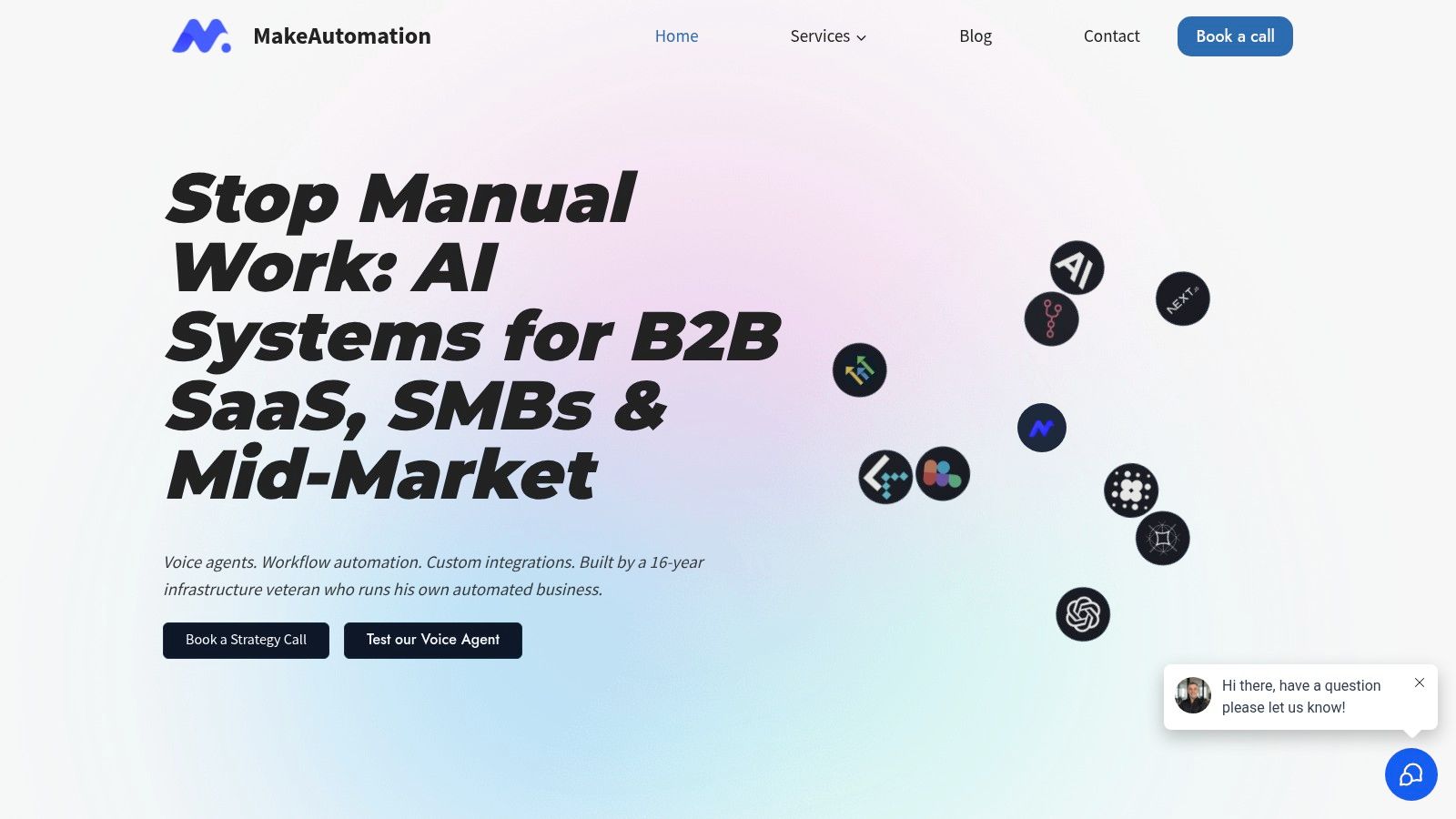
The core value is its end-to-end delivery model. Instead of just providing a tool, the team works directly with clients to scope, build, document, and maintain automations. This co-building process includes creating SOPs and providing hands-on coaching, which helps ensure the new systems are adopted effectively and managed correctly long-term. This makes it a standout among other lead generation automation tools that often require significant internal resources to implement.
Key Benefit: Published client results, such as a 97.8% open rate and a 7.35% reply rate from automated outreach campaigns, provide concrete evidence of the service's effectiveness in driving tangible lead generation outcomes.
This model is particularly effective for growth-stage founders, sales leaders, and operations directors who need to see measurable ROI from their automation investment without the overhead and risk of hiring a full-time automation specialist.
Standout Features & Services
- Expert-Led Implementation: Clients get direct access to automation experts who build custom workflows using n8n, connect disparate systems, and implement advanced solutions like Voice AI agents for qualification or outreach.
- End-to-End System Documentation: Every automated workflow is delivered with complete SOPs and documentation, turning fragile processes into reliable, transferable assets for the company.
- Transparent Performance Metrics: MakeAutomation publishes case studies with specific results, including a 22% improvement in team efficiency and a 7% cost saving per project, giving prospective clients a clear picture of potential returns.
- Free Decision-Making Tools: The website offers a suite of free resources, including an ROI calculator and a readiness assessment, allowing teams to evaluate the potential impact and their own preparedness before committing to a subscription.
Pricing Structure
MakeAutomation operates on a transparent subscription basis with a clear cost structure.
| Plan Type | Price | Billing Cycle |
|---|---|---|
| Quarterly | $5,200 / month | Billed quarterly |
| Monthly | $6,200 / month | Billed monthly |
Projects require a 50% down payment on proposals, with the remainder due upon delivery.
Pros & Cons
| Pros | Cons |
|---|---|
| On-demand expertise at a fraction of the cost of a full-time hire. | Higher price point may not be suitable for very early-stage or bootstrapped startups. |
| Complete delivery (build, docs, coaching) reduces risk and speeds up adoption. | Value is outcome-based, not backed by formal industry awards or certifications. |
| Proven, measurable results are published directly on the site. | Agency model requires collaboration and is not a "plug-and-play" SaaS tool. |
| Free tools and consultations help de-risk the initial investment. |
Website: https://makeautomation.co
2. Apollo.io
Apollo.io serves as an all-in-one outbound platform, combining a massive B2B contact database with a full suite of sales engagement and workflow automation tools. It's designed for teams who want to consolidate their prospecting and outreach stack, eliminating the need to stitch together separate apps for data, email sequencing, and call logging. The platform’s core strength lies in its unified approach to lead generation automation, allowing users to find contacts, enrich data, and launch multi-step outreach campaigns without leaving the ecosystem.
This tool is particularly effective for sales teams that rely heavily on LinkedIn for prospecting. The Apollo.io Chrome extension allows you to pull contact data directly from LinkedIn profiles and Sales Navigator searches, then add prospects directly into automated email and call sequences.
Core Features & Use Case
- Data & Engagement: With over 275 million contacts, Apollo provides the data and the means to act on it. Use it to build highly targeted lists based on firmographics, technographics, and job titles, then immediately enroll them in outreach sequences.
- Automated Sequencing: Create multi-touchpoint campaigns that include automated emails, manual email tasks, phone calls, and LinkedIn connection requests. A/B testing and send-time optimization help improve engagement rates.
- AI Assistant: The platform includes an AI assistant to help research prospects, write personalized emails, and generate follow-up tasks, speeding up the manual parts of the sales process.
Pricing & Implementation
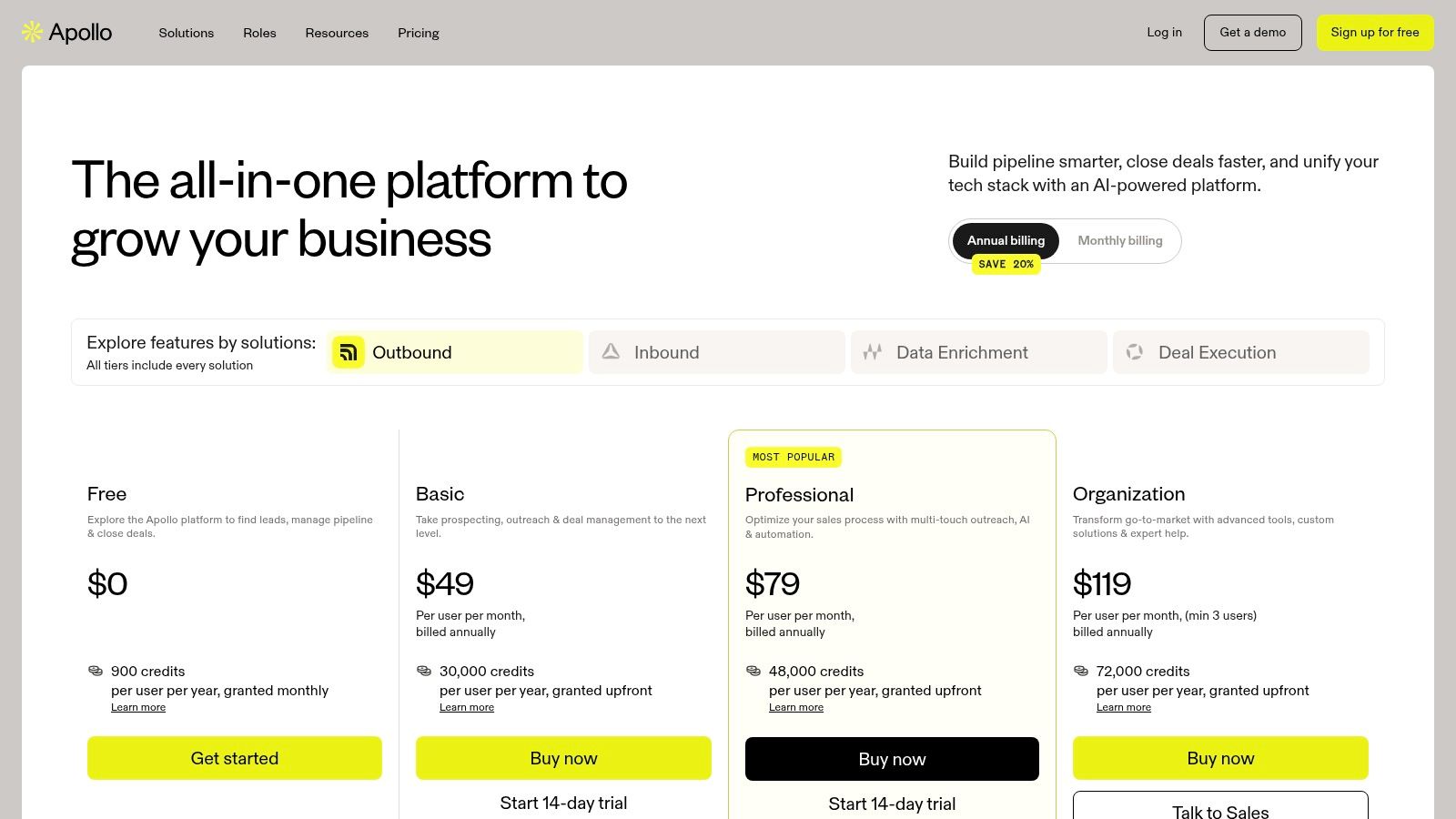
Apollo.io offers a free-forever plan with limited credits, making it accessible for testing. Paid plans are tiered based on credit volume and feature access, starting with the Basic plan and scaling to Professional and Custom options. While the base pricing is competitive, be mindful of the credit-based system; heavy usage or a need for features like direct dials can increase the total cost. Native integrations with Salesforce and HubSpot are straightforward, but more complex workflows can be built using its API or a tool like Make to connect it to your broader tech stack.
- Website: https://www.apollo.io/pricing
- Best For: Sales teams wanting a single platform for prospecting and outreach.
- Limitation: Data quality can be inconsistent for certain industries or regions, and direct dial accuracy varies.
3. ZoomInfo (SalesOS)
ZoomInfo is an enterprise-grade B2B intelligence platform centered around its extensive contact and company database. It’s built for established sales and marketing organizations that require deep data coverage, particularly in North America, and need to integrate this information directly into their core revenue operations. The platform's SalesOS product combines this powerful data with prospecting and outreach workflows, positioning it as a foundational tool for teams executing large-scale lead generation automation.
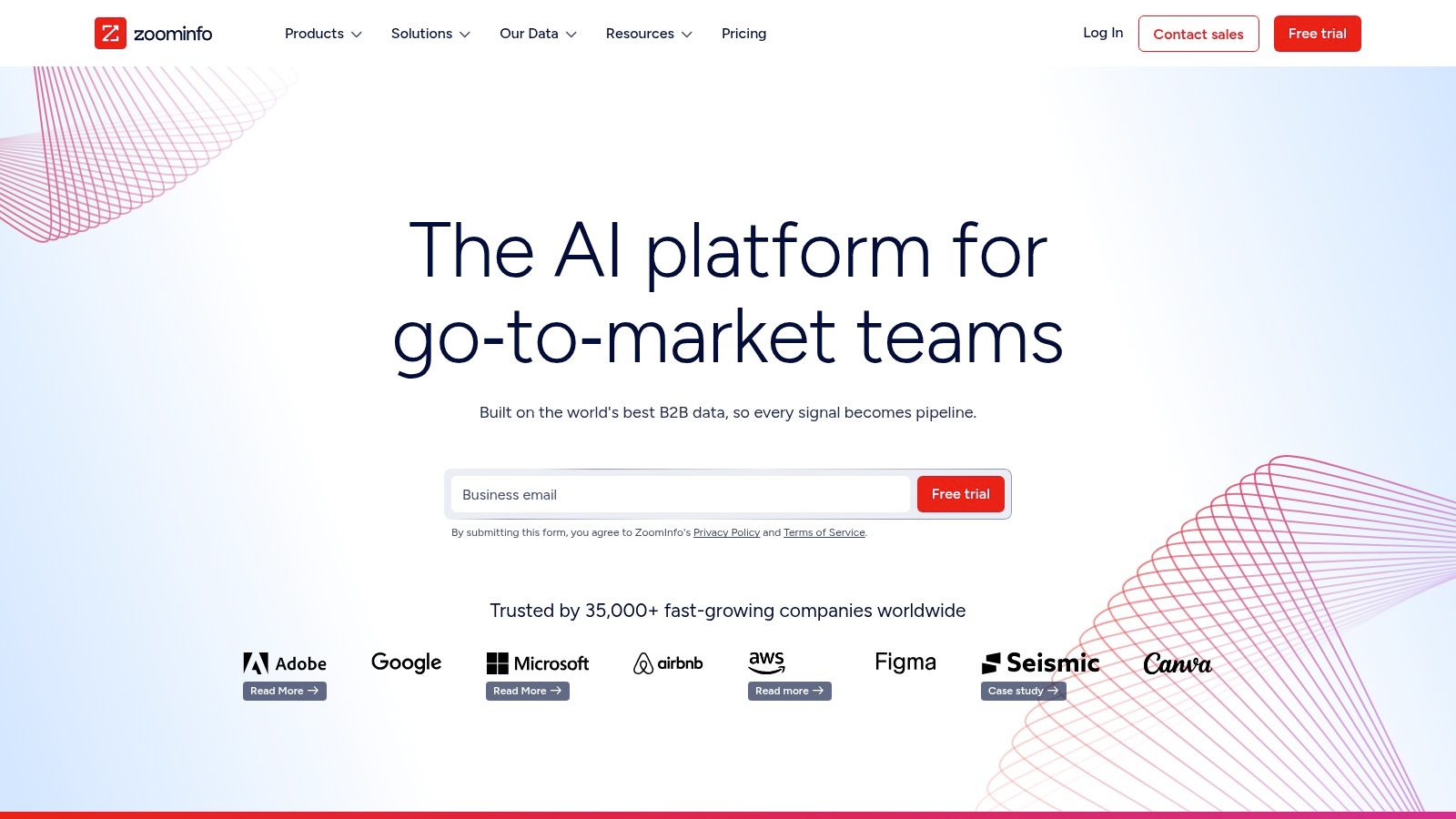
This tool excels at providing not just contact data but also buying intent signals and website visitor identification. This allows teams to prioritize accounts that are actively researching solutions, making outreach more timely and relevant. Its strength is in serving large organizations that can absorb the higher cost for premium data accuracy and native CRM integration.
Core Features & Use Case
- Data & Intent Signals: Access a massive, North America-weighted database with direct dials and verified emails. Use intent data add-ons to identify companies researching specific topics and target them with automated campaigns.
- SalesOS Workflows: Build and manage prospect lists, create outreach cadences, and track engagement directly within the platform. The system is designed to automate the process from list creation to initial contact.
- Data Enrichment: Automatically clean, update, and enrich your CRM and marketing automation platform records. This ensures your data remains accurate and actionable, preventing decay and improving campaign effectiveness.
Pricing & Implementation
ZoomInfo operates on an opaque, contract-only pricing model that typically requires annual commitments. The final cost is highly variable and depends on user licenses, data credit volume, and access to premium features like Intent and website visitor tracking (Chorus). These common add-ons can significantly increase the total cost of ownership, making it a considerable investment. Native, enterprise-grade integrations with Salesforce, HubSpot, and Marketo are a key strength, providing deep and reliable data syncs across your tech stack.
- Website: https://www.zoominfo.com
- Best For: Enterprise sales teams needing premium US data and intent signals at scale.
- Limitation: High cost and rigid annual contracts make it inaccessible for smaller businesses; add-ons are often necessary for full functionality.
4. Cognism
Cognism positions itself as a premium B2B sales intelligence platform with a strong focus on data compliance and accuracy, particularly for mobile phone numbers. Its core value proposition revolves around providing verified, direct-dial numbers, making it a powerful tool for sales teams whose outreach strategies heavily involve cold calling. The platform is especially robust in the EMEA market while steadily growing its US coverage, offering a GDPR and CCPA-compliant database that helps teams prospect with confidence.
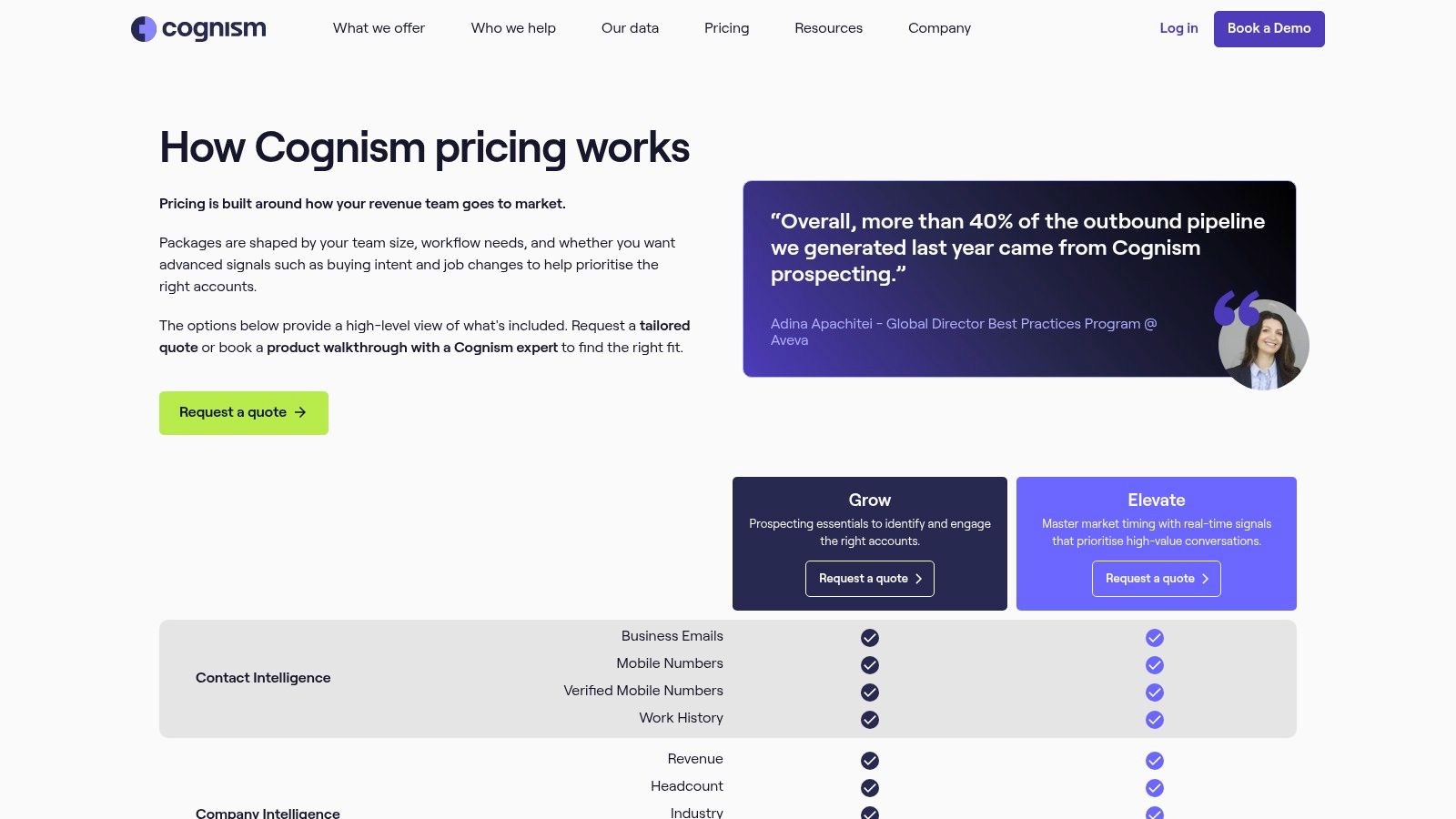
This tool is highly effective for teams that need to prioritize high-intent leads and act on them quickly. The integration of intent data from Bombora and real-time job change alerts gives sales reps a critical timing advantage, allowing them to engage prospects when they are actively researching solutions or settling into a new role with budget authority. Cognism's Chrome extension functions as a sales companion, enabling reps to enrich contacts directly from LinkedIn or company websites.
Core Features & Use Case
- Verified Mobile Data: Cognism’s standout feature is its Diamond Data, a proprietary method for phone-verifying mobile numbers. Use this to build calling lists with higher connection rates, bypassing gatekeepers and reaching decision-makers directly.
- Intent & Event Signals: The platform integrates Bombora’s intent data and tracks job change signals. This helps sales teams automate the prioritization of accounts that are actively in-market, turning a broad prospecting effort into a targeted one.
- CRM Enrichment: Seamlessly enrich and maintain data within Salesforce and HubSpot. This lead generation automation tool works in the background to keep your CRM records accurate and complete, reducing manual data entry and decay.
Pricing & Implementation
Cognism operates on a quote-based pricing model, with packages customized based on data needs, user count, and feature access. This tends to position it as a more premium solution, often better suited for established sales teams rather than early-stage startups. There is no free plan, but tailored demos are available. Implementation is centered on its native CRM integrations, which are straightforward to set up. For more complex automation, its API allows for connections to other systems, and it can be integrated with tools like Make to build custom workflows across your entire sales and marketing stack.
- Website: https://www.cognism.com/pricing
- Best For: Sales teams prioritizing accurate mobile numbers and compliance, especially in EMEA.
- Limitation: The premium, quote-based pricing can be a barrier for smaller businesses, and data coverage for niche US verticals may vary.
5. 6sense
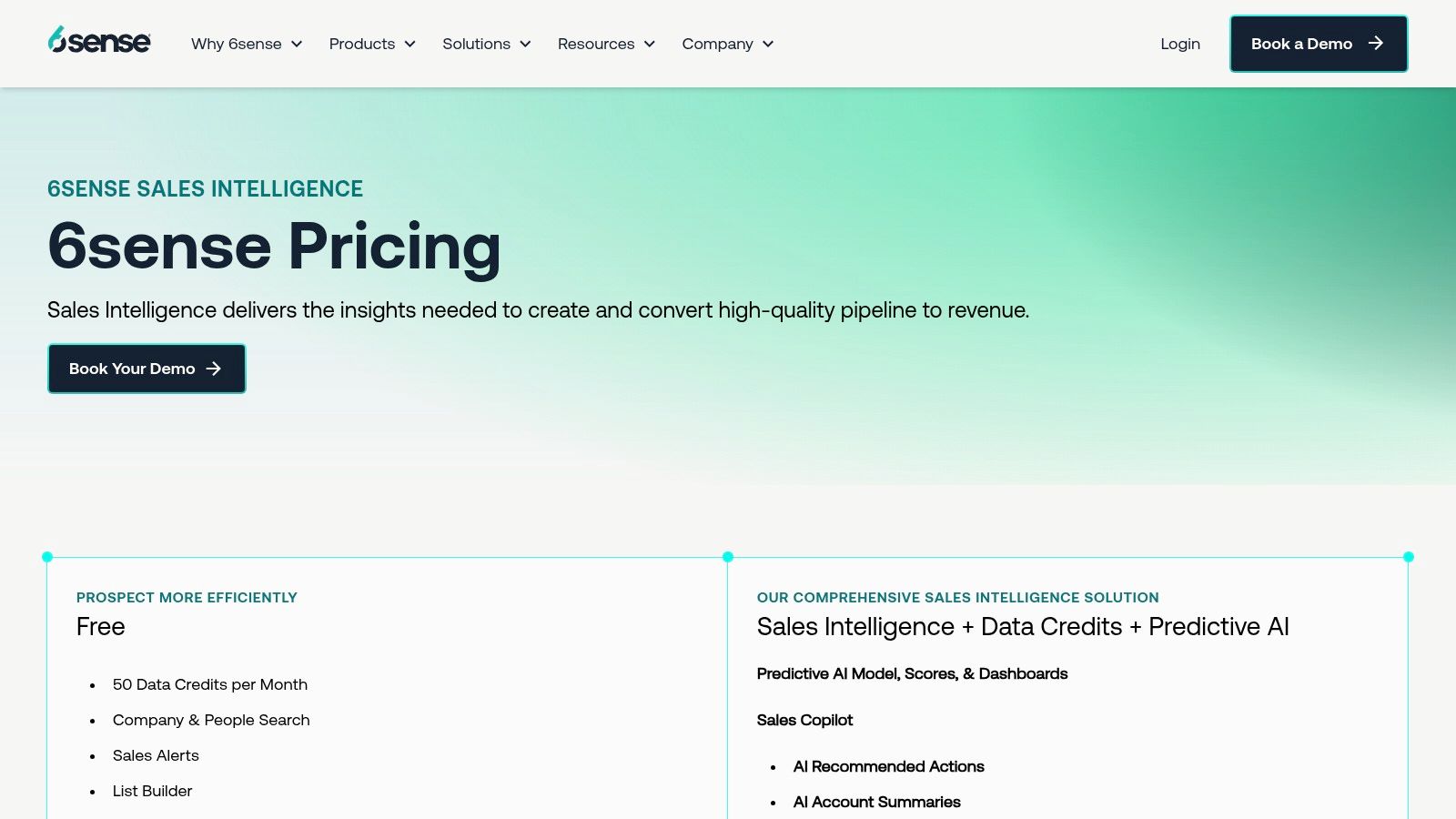
6sense is an advanced Account-Based Marketing (ABM) platform that shifts the focus from individual leads to entire buying accounts. It uses predictive intelligence and intent data to identify which accounts are actively in-market for your solution, allowing marketing and sales teams to prioritize their efforts on prospects that are ready to buy. This makes it one of the most powerful lead generation automation tools for organizations committed to a full ABM strategy, moving beyond simple outreach to orchestrated, multi-channel engagement.
The platform’s strength is in its ability to "un-dark" the funnel by revealing anonymous buying signals from target accounts across the web. It then automates actions, like serving targeted ads or alerting sales reps, based on an account's predicted buying stage. This ensures resources are spent on accounts showing real purchase intent.
Core Features & Use Case
- Account Identification & Predictive Intent: 6sense identifies anonymous web traffic and matches it to specific company accounts. It then applies predictive models to score each account's buying intent and pinpoint where they are in the customer journey.
- Multi-Channel Orchestration: Automate engagement across channels based on account behavior. Use it to launch dynamic ad campaigns, trigger email sequences, and create prioritized task lists for sales reps to engage high-intent accounts.
- Sales Intelligence & Prioritization: Provides Sales Development Representatives (SDRs) and Account Executives (AEs) with a prioritized list of accounts to contact, complete with insights on key topics of interest and relevant personas within the account.
Pricing & Implementation
6sense does not offer public, tiered pricing; instead, it provides custom quotes based on the size of your database, required features, and platform usage. It is a premium-priced solution requiring significant implementation effort, often involving dedicated onboarding specialists. This makes it a better fit for established mid-market and enterprise teams with the budget and resources to support a full ABM motion. Its deep ecosystem integrations with CRMs like Salesforce and marketing automation platforms are a core part of its value.
- Website: https://6sense.com/platform/sales/pricing/
- Best For: Enterprise B2B teams running sophisticated, multi-channel ABM programs.
- Limitation: The custom, premium pricing and extensive implementation make it unsuitable for small businesses or early-stage startups.
6. Demandbase
Demandbase is a unified Account-Based Marketing (ABM) and Go-to-Market (GTM) platform built for teams focused on high-value accounts. Rather than casting a wide net, its strength lies in helping marketing and sales align their efforts to identify, engage, and close specific target companies. The platform combines firmographic data, intent signals, and advertising capabilities, making it one of the core lead generation automation tools for organizations executing a sophisticated ABM strategy.
It excels at uncovering "in-market" accounts that are actively researching solutions like yours, even before they fill out a form. This allows sales and marketing teams to prioritize their resources on accounts with the highest probability of closing, personalizing outreach and ad campaigns based on real-time activity.
Core Features & Use Case
- Account Identification & Intent: Demandbase identifies anonymous website visitors and tracks their on-site and off-site behavior to build an account-level journey. Use it to discover which of your target accounts are showing buying signals and what topics they are interested in.
- Targeted Advertising: The platform includes its own demand-side platform (DSP) to run targeted display ad campaigns aimed exclusively at individuals within your defined target account lists, reducing wasted ad spend.
- Sales Intelligence: It pushes account-level insights directly into your CRM, alerting sales reps when a target account shows a spike in engagement. This provides timely and relevant reasons for reps to initiate contact.
Pricing & Implementation
Demandbase uses quote-only pricing, and costs can be substantial, especially when bundling multiple modules like Advertising, Data, and Sales Intelligence. The platform’s packaging is flexible, and its per-user model for sales seats can be an advantage. However, the initial setup and full adoption require a commitment, as there is a learning curve to connect all its features to your GTM motion. It integrates deeply with major CRMs like Salesforce and Microsoft Dynamics, but connecting its rich data to other tools in your stack often requires an integration platform.
- Website: https://www.demandbase.com/pricing/
- Best For: Growth-stage to enterprise B2B teams aligning marketing and sales around a specific list of target accounts.
- Limitation: The quote-only pricing model can be a barrier for smaller companies, and achieving a positive ROI requires a well-defined ABM strategy before implementation.
7. Clay
Clay positions itself as a data orchestration and enrichment workspace, shifting the focus from simple outreach to building bespoke lead research flows. Instead of providing a closed database, Clay allows you to pull information from numerous sources-APIs, web scrapers, and dozens of enrichment vendors-and chain these steps together in a powerful, spreadsheet-like interface. This makes it one of the most flexible lead generation automation tools for teams that prioritize deep personalization and want to create truly unique lead qualification criteria.
The platform is designed for building programmatic workflows that mimic human research. For instance, you could start with a list of companies, find their key decision-makers on LinkedIn, use AI to check their recent blog posts for specific keywords, and only then push the qualified contact to your CRM.
Core Features & Use Case
- Data Orchestration: Clay's primary function is its ability to combine data from multiple providers. You can build "waterfalls" where if one source fails to find an email, another is automatically queried, ensuring maximum data coverage.
- AI Agents & Integrations: The platform integrates with AI models like GPT-4 to analyze unstructured data, such as summarizing a LinkedIn profile or checking if a company's website mentions a specific technology. This automates the qualitative part of lead research.
- Spreadsheet-Style Interface: Users build their enrichment flows in a table format that feels familiar. You add columns for each new step, making it visual and relatively intuitive for those with a technical or operations background.
Pricing & Implementation
Clay operates on a credit-based model where different actions (like finding an email or running an AI prompt) consume a certain number of credits. It offers a free plan to get started, with paid plans scaling based on the number of credits and team seats. The complexity of its action-based pricing means forecasting costs can be difficult for high-volume campaigns. Implementation requires a "build-and-maintain" mindset; while templates are available, the real power comes from creating custom workflows. It integrates with CRMs and outreach tools natively and through webhooks, making it a powerful "brain" in a modern sales tech stack.
- Website: https://www.clay.com
- Best For: Technical sales/ops teams needing hyper-personalization at scale.
- Limitation: A steeper learning curve and technical overhead compared to all-in-one platforms; pricing can be complex to predict.
8. Instantly
Instantly is a specialized cold email automation platform built for high-volume outreach and maintaining deliverability at scale. It stands out by allowing users on its paid plans to connect an unlimited number of email accounts, making it a go-to tool for agencies managing multiple client campaigns or companies running large-scale, diversified sending operations. The platform is designed around the core belief that successful cold email relies on spreading volume across many inboxes to protect sender reputation.
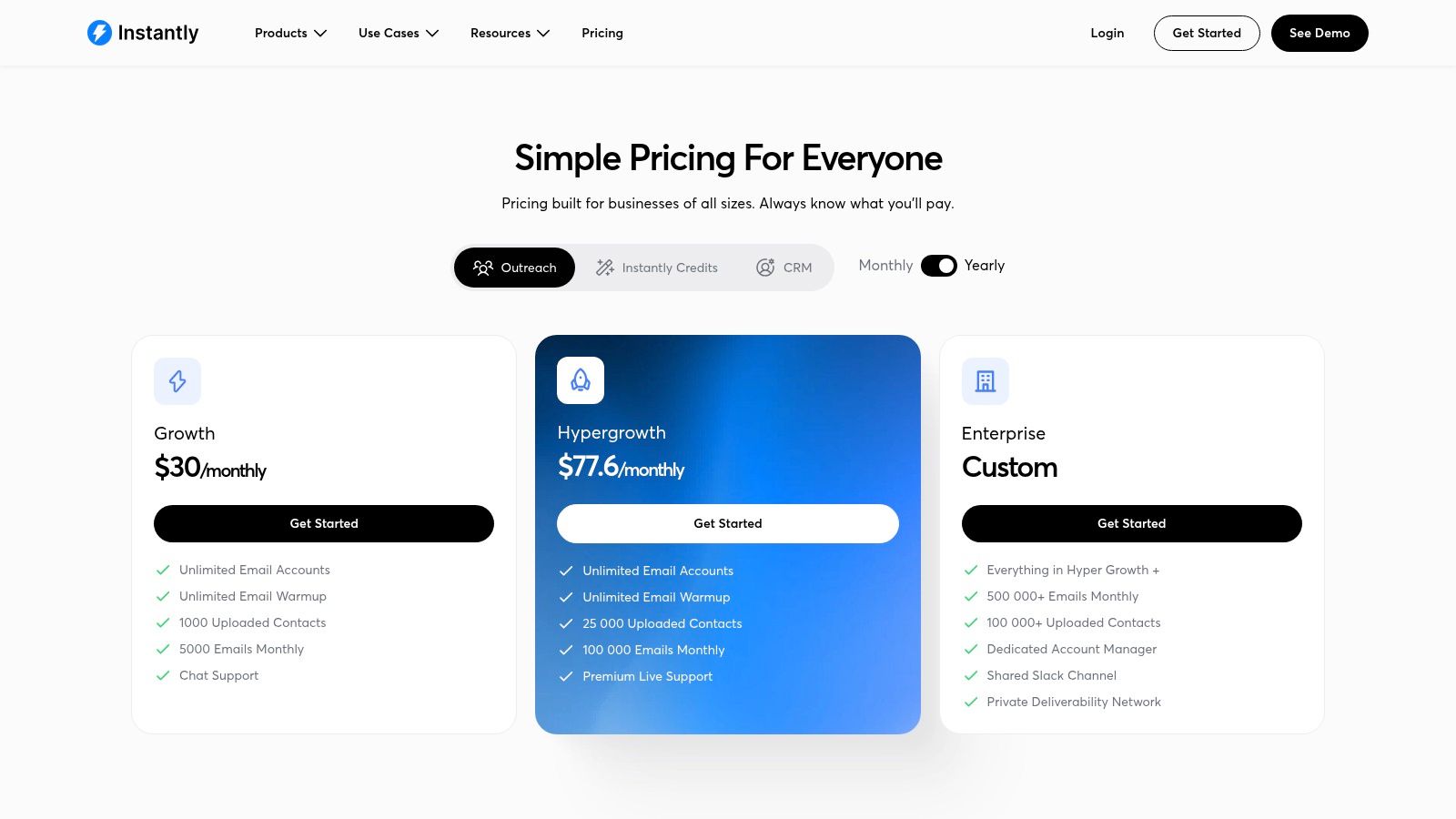
Unlike all-in-one platforms, Instantly is laser-focused on the sending and deliverability aspects of lead generation automation. It's not a lead database; you must bring your own prospect lists. This makes it a perfect component in a modular tech stack where you might use another service for lead sourcing and Instantly for the execution of the email outreach itself.
Core Features & Use Case
- Unlimited Accounts & Warm-up: The main draw is the ability to connect and warm up an unlimited number of sending accounts. This feature is central to its strategy of distributing sending volume to maintain high deliverability and avoid blacklists.
- Campaign & Deliverability Tools: Includes standard sequencing and A/B testing, but adds critical reputation safeguards. Features like inbox rotation and bounce detection help automate the technical side of email health.
- Agency & Team Features: Built with agencies in mind, it offers separate workspaces and centralized billing, simplifying client campaign management and reporting from a single dashboard.
Pricing & Implementation
Instantly’s pricing is straightforward, with tiers based on the number of active leads and emails sent per month. The entry-level Growth plan offers substantial value, including the unlimited accounts and warm-up features. Higher tiers like Hypergrowth unlock more sending volume and advanced analytics. Since it lacks a native database, implementation requires connecting it to your lead source, which can be done via CSV uploads or a tool like Make for automated workflows from platforms like Apollo.io or a CRM.
- Website: https://instantly.ai/pricing
- Best For: Agencies and sales teams focused on high-volume cold email outreach.
- Limitation: It is purely an email-sending tool; it has no native lead database or multi-channel (e.g., calls, social) capabilities.
9. lemlist
lemlist is a multichannel outreach platform that focuses on making personalized cold outreach straightforward and effective. It's built for founders, sales teams, and agencies who need to quickly launch automated sequences across email and LinkedIn without getting bogged down in technical complexity. The platform's main differentiator is its built-in, practical guidance on email deliverability, including domain warm-up and reputation management, which is integrated directly into the workflow. This makes it one of the better lead generation automation tools for users who prioritize inbox placement.
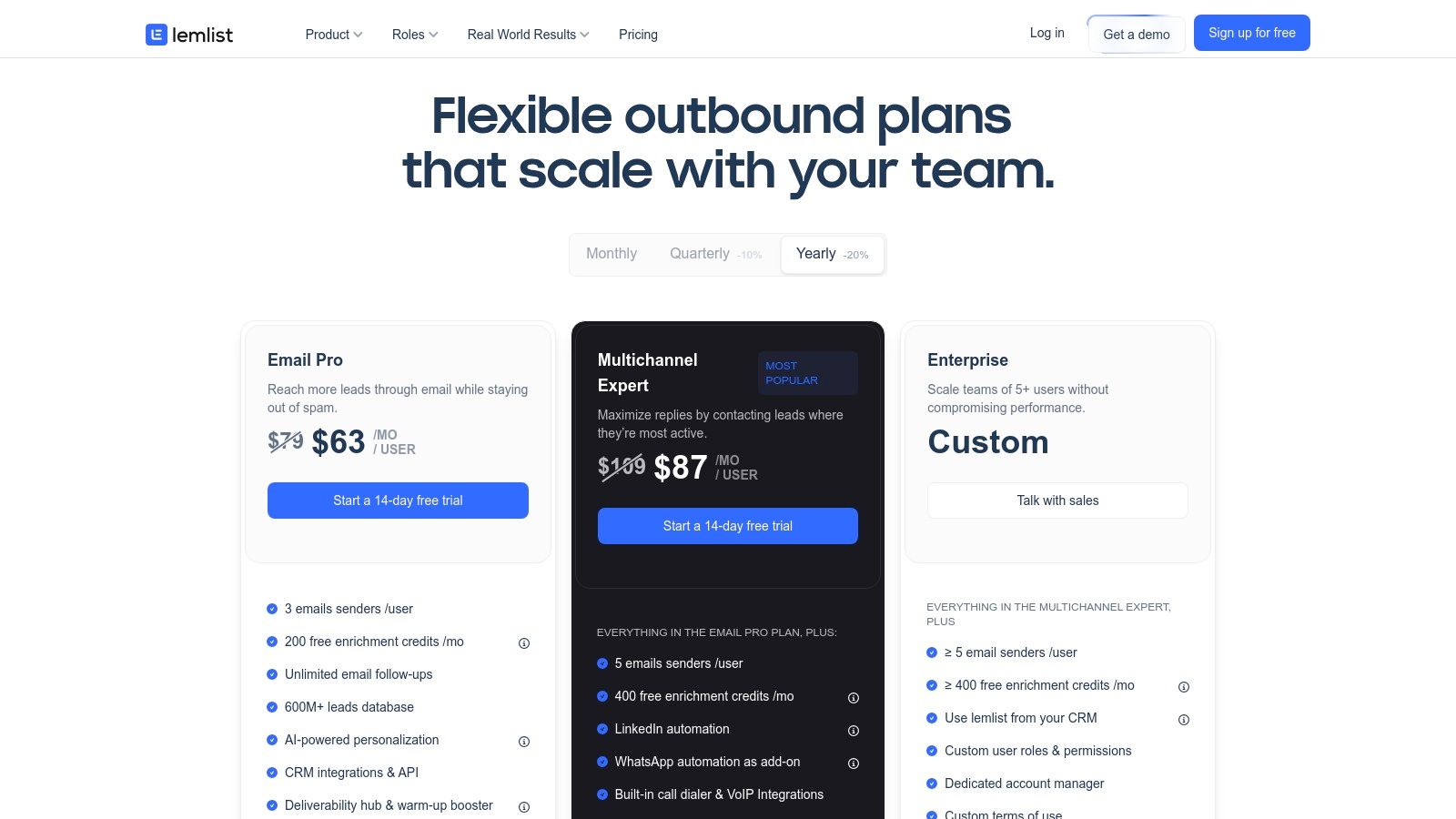
The platform provides an opinionated and guided workflow, which is excellent for teams that want to follow a proven process. It combines email automation with LinkedIn tasks like profile visits and connection requests, allowing you to create a multi-pronged approach to engaging prospects. Personalization is a core component, with features for adding custom images and variables to make messages stand out.
Core Features & Use Case
- Multichannel Sequencing: Build and automate outreach campaigns that combine email sends, LinkedIn profile visits, and connection requests. The sequence builder is visual and easy to follow.
- Deliverability & Warm-up (lemwarm): lemlist provides native tools to warm up new email accounts, monitor domain health (SPF, DKIM, DMARC), and automatically manage sending volume to protect your sender reputation.
- Personalization at Scale: Go beyond
{{firstName}}with dynamic image personalization, custom landing pages, and liquid syntax to create highly tailored messages for different segments of your list.
Pricing & Implementation
lemlist's pricing is tiered, offering plans for email outreach and more advanced multichannel capabilities. It’s important to review the plan limits carefully, as the packaging for contacts and features has evolved. While it has native integrations with popular CRMs like HubSpot and Salesforce, its true power for custom workflows is unlocked with a tool like Make, which can connect it to lead enrichment tools or internal databases. The setup is guided and relatively simple, especially for the core email and warm-up functions.
- Website: https://www.lemlist.com/pricing
- Best For: Founders and small sales teams wanting a guided, all-in-one outreach and deliverability tool.
- Limitation: It is less flexible for building complex, custom stacks compared to using separate, best-in-class tools for data enrichment and sending.
10. Reply.io
Reply.io is a multichannel sales engagement platform designed for teams looking to scale their outreach across email, LinkedIn, SMS, and calls. Its primary strength is consolidating these channels into a single, unified interface, allowing sales teams to execute complex, multi-step cadences without juggling different applications. The platform is built to help standardize outreach processes and provides the tools to measure what works across every touchpoint.
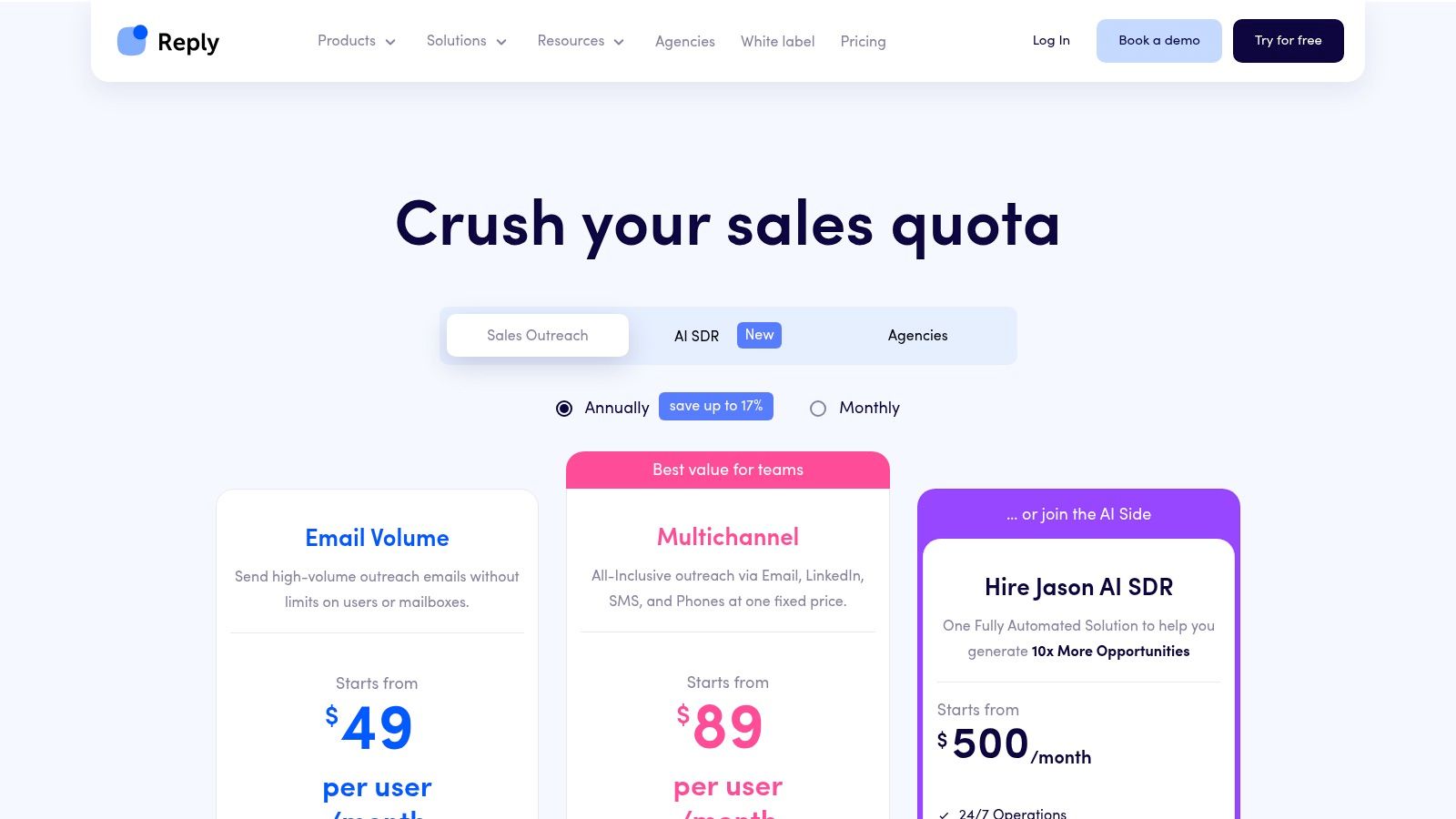
This tool is especially valuable for sales teams that want to automate more than just email. Reply's AI capabilities help with drafting personalized messages and constructing sequences, while its optional "AI SDR" assistant can take on parts of the outreach process, making it a strong contender among lead generation automation tools.
Core Features & Use Case
- Multichannel Sequencing: Build and automate outreach cadences that combine automated emails, LinkedIn tasks (profile views, connection requests, messages), SMS messages, and call tasks, all from one dashboard.
- AI-Powered Personalization: The platform’s AI assists in writing emails, creating sequences from simple prompts, and suggesting improvements to messaging, which helps maintain quality while increasing output.
- Agency & Team Management: Reply.io offers robust features for agencies, including client workspaces and white-label options, making it ideal for managing outreach campaigns on behalf of multiple clients.
Pricing & Implementation
Reply.io follows a per-seat pricing model, with different tiers based on feature access and user roles. Plans are available for individuals, businesses, and agencies, but costs can accumulate for larger SDR teams. While the platform has a learning curve for its advanced features, it offers native integrations with popular CRMs like Salesforce and HubSpot. It also provides an API for custom connections, allowing it to be integrated into a larger marketing and sales stack using tools like Make.
- Website: https://reply.io/pricing/
- Best For: Sales teams and agencies needing a unified platform for multichannel outreach.
- Limitation: The per-seat pricing can become expensive for large teams, and mastering its full feature set requires a dedicated training effort.
11. Smartlead.ai
Smartlead.ai is a specialized cold email platform built for high-volume outreach, making it a powerful tool for agencies and sales teams focused on scaling their email campaigns. Its core distinction is an infrastructure designed to maximize deliverability by automatically rotating sending inboxes and warming them up. This approach to lead generation automation allows users to send thousands of emails per day while minimizing the risk of landing in spam folders or getting accounts blacklisted.
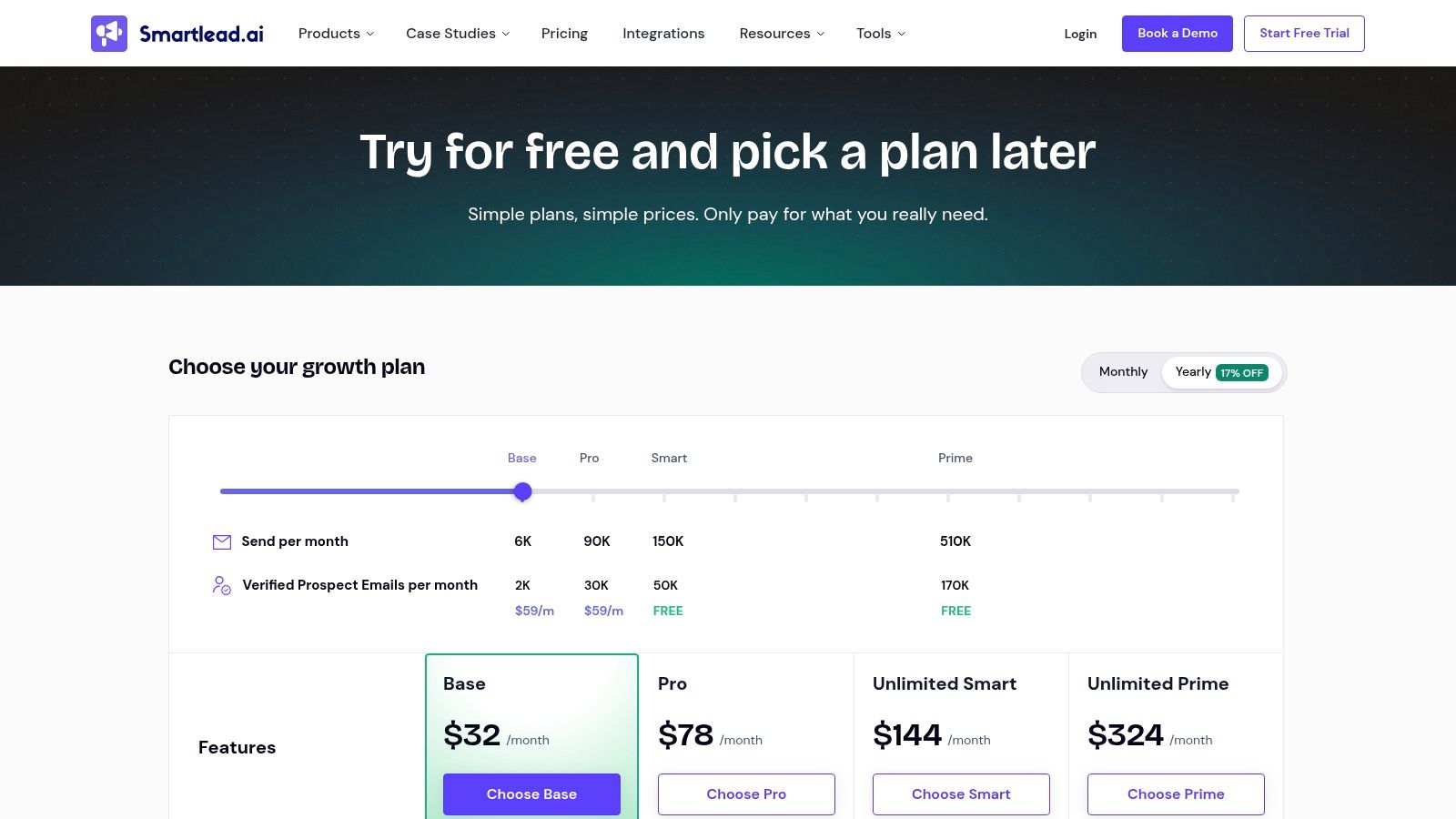
This platform is ideal for users who already have their own lead lists and need a robust engine to execute their outreach strategy. It separates the sending infrastructure from the data source, giving teams the flexibility to use their preferred lead providers while relying on Smartlead to handle the technical complexities of mass emailing.
Core Features & Use Case
- Unlimited Sender Warm-up & Rotation: Connect a large pool of email accounts and let Smartlead automatically warm them up and rotate them during campaigns. This is its key feature for maintaining high deliverability at scale.
- AI-Personalized Sequences: The platform includes an AI feature to generate unique email variations for each prospect, helping to avoid spam filters that detect repetitive content and adding a layer of personalization.
- Agency & Team Workspaces: Manage multiple clients or campaigns within separate workspaces, with dedicated reporting and sender management for each. This is crucial for agencies running outreach on behalf of others.
Pricing & Implementation
Smartlead offers tiered pricing based on the number of active leads, email accounts, and features needed, with plans like Basic, Popular, and Pro. The unlimited warm-up feature is a major draw across all plans. It lacks a native prospect database, so you must bring your own leads from sources like Apollo.io, ZoomInfo, or custom lists. Implementation is centered on connecting your email accounts (Google, Outlook, etc.) and then integrating with your CRM via webhooks or a tool like Make for more advanced workflow automation.
- Website: https://www.smartlead.ai/pricing
- Best For: Agencies and sales teams managing high-volume cold email campaigns.
- Limitation: The user interface can feel less polished than competitors, and as a pure sending tool, it requires you to source your own contact data.
12. PhantomBuster
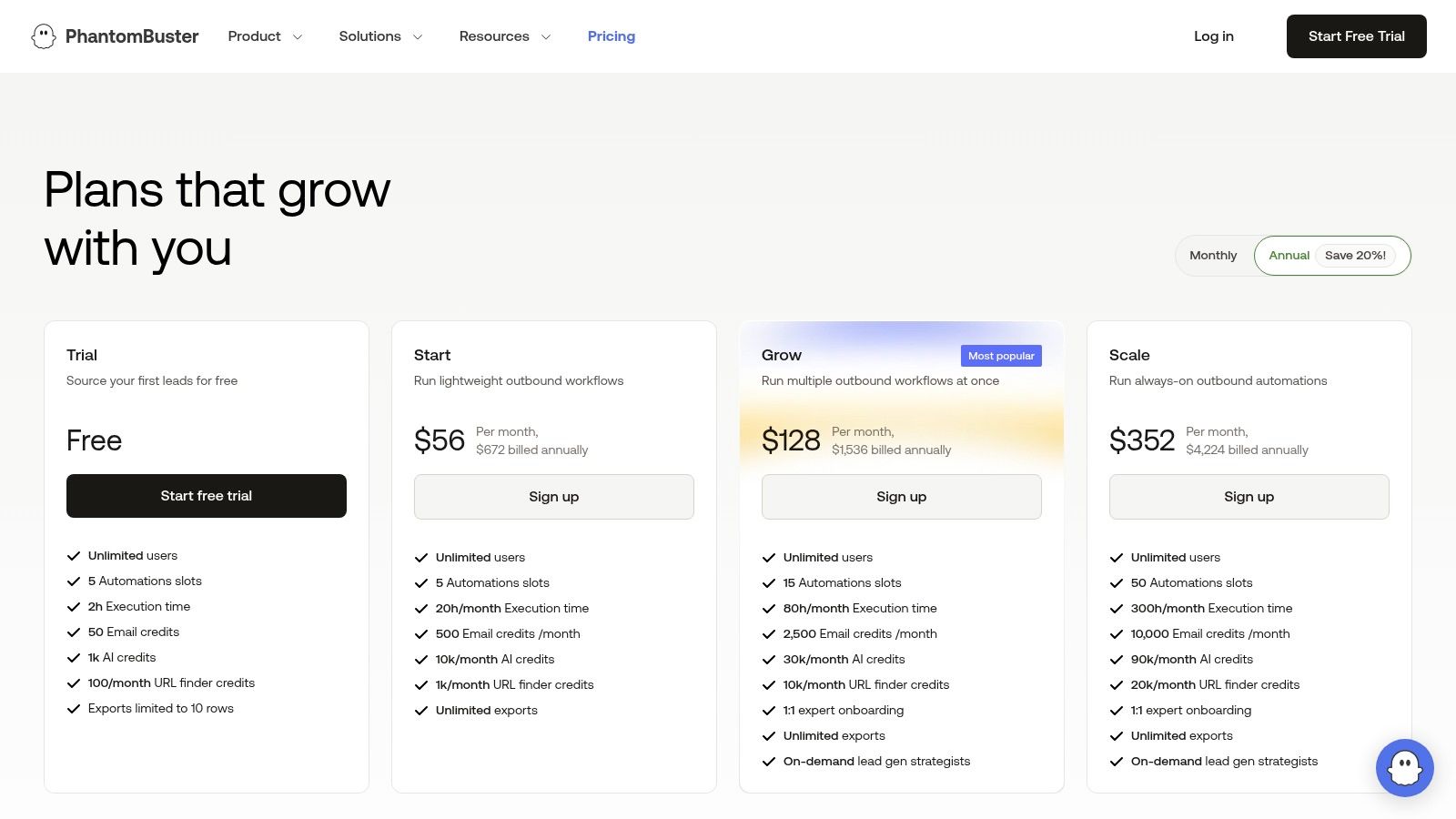
PhantomBuster is a cloud-based automation and data extraction platform designed for teams that need to build custom lead generation pipelines. It operates through "Phantoms," which are prebuilt automations that perform specific actions like scraping profiles, auto-following accounts, or extracting data from social media platforms, websites, and APIs. Its strength is in its versatility, allowing users to chain these Phantoms together into complex workflows for lead capture, enrichment, and outreach without writing code.
This tool is a powerful asset for marketers and sales teams who need to source leads from platforms without robust, native export functions, like LinkedIn, Twitter/X, and Instagram. For example, you can create a workflow that automatically scrapes attendees of a LinkedIn event, enriches their profiles with professional email addresses, and then sends the clean list to your CRM.
Core Features & Use Case
- Prebuilt Automations & Workflow Builder: With over 100 "Phantoms" for platforms like LinkedIn, Sales Navigator, Google Maps, and Twitter/X, users can quickly deploy scrapers and automation agents. The workflow builder allows you to connect these Phantoms in sequence to create sophisticated, multi-step lead generation automation.
- Data Enrichment: Integrated capabilities, including email discovery credits through Dropcontact, allow you to enrich scraped data directly within your workflows, turning partial profiles into actionable lead records.
- Safety and Scheduling: The platform includes built-in rate limits and scheduling controls to mimic human behavior and reduce the risk of account restrictions on social platforms. It also supports using proxies for added security.
Pricing & Implementation
PhantomBuster offers a free trial and paid plans based on execution time per day, the number of automation "slots" available, and email discovery credits. The pricing model requires careful planning; workflows that run frequently or for long durations will consume your execution time quickly. While it is more affordable than building in-house scrapers, scaling can become expensive if not managed efficiently. Integration is primarily done via webhooks, CSV exports, or direct pushes to CRMs like HubSpot and Salesforce. For more advanced connections, a tool like Make is essential for routing data between PhantomBuster and the rest of your tech stack.
- Website: https://phantombuster.com/pricing
- Best For: Teams needing to build custom scraping and lead capture workflows across various web platforms.
- Limitation: Workflows can break if a target website changes its UI, and users must manage the terms-of-service risks associated with web scraping.
12 Lead-Gen Automation Tools Comparison
| Product | Core offering | Target audience | Key strengths | Pricing & value |
|---|---|---|---|---|
| MakeAutomation (Recommended) | Hands-on AI & automation agency: n8n & custom integrations, Voice AI agents, CRM/recruitment automation, SOPs, docs | Growth-stage founders, sales/marketing leaders, ops & talent teams | End-to-end co-build + coaching; published ROI metrics (open/reply, efficiency, cost savings); free ROI/readiness tools | Subscription: $6.2k/mo or $5.2k/qtr (quarterly commit); 50% downpayment; delivery-based balance |
| Apollo.io | Outbound platform: large contact DB + sequencing, enrichment, automation | B2B SDRs, demand gen, small–mid sales teams | 275M+ records; sequencer with A/B/testing; native CRM integrations | Credit-based tiers; flexible plans but credits affect total cost |
| ZoomInfo (SalesOS) | Enterprise B2B data, intent, and engagement platform | Large US sales orgs & enterprises | Deep NA contact coverage, direct dials, intent & visitor ID | Opaque, contract-only pricing; annual commitments common |
| Cognism | Sales intelligence with verified mobile numbers and compliance focus | Teams prioritizing mobile accuracy and compliance (strong EMEA) | Verified mobile data; intent/job-change signals; CRM enrichment | Quote-based pricing; can be premium for smaller teams |
| 6sense | ABM + intent-driven platform with orchestration across channels | Mid-market & enterprise ABM teams | Predictive intent, account ID, cross-channel orchestration | Custom enterprise pricing; significant implementation effort |
| Demandbase | Unified ABM/GTM: data, ads, personalization, sales intelligence | Growth-stage to enterprise aligning marketing & sales | Strong ABM workflows; ad and site personalization modules | Quote-only; modular pricing can be expensive |
| Clay | Data orchestration & enrichment workspace for bespoke workflows | Ops/Rev teams building custom research & personalization flows | Spreadsheet-like builder; multi-source enrichment; flexible templates | Credit/action model; requires ops overhead to maintain |
| Instantly | High-volume cold-email platform with warm-up & deliverability tools | Agencies and growth teams needing high-volume sending | Unlimited accounts (paid); warm-up, IP sharding, agency controls | Tiered pricing; advanced tiers can get costly with volume |
| lemlist | Multichannel outreach (email + LinkedIn) with deliverability help | Founders, SDRs wanting fast multichannel setup | Simple multichannel sequences; deliverability/domain setup guidance | Subscription tiers with plan limits; data/credit packaging varies |
| Reply.io | Multichannel engagement (email, LinkedIn, SMS, calls) with AI | Teams scaling cadences across channels and agencies | Broad channel support; AI message drafting; analytics | Per-seat pricing; costs scale with team size |
| Smartlead.ai | Cold-email platform for scale with warm-up & rotation | Agencies and growth teams managing many inboxes | Deliverability-focused features; inbox rotation & verification | Tiered plans; support/UI quality varies—test before migrating |
| PhantomBuster | Cloud automations for scraping, enrichment, and lead capture | Teams building custom lead pipelines and enrichment flows | 100+ prebuilt automations; workflow builder; CRM pushes | Execution-hour/slot limits per plan; cost-effective vs in-house build |
From Tools to Systems: Your Next Step in Automation
We have navigated a detailed list of twelve powerful lead generation automation tools, from comprehensive data providers like ZoomInfo and Apollo.io to specialized outreach platforms like Instantly and Smartlead.ai. But the journey doesn't end with selecting a piece of software. The true objective is to move from a collection of individual tools to a cohesive, automated system that produces a predictable flow of qualified leads.
The most common mistake is believing the tool itself is the solution. In reality, a tool is just an enabler. An ABM platform like 6sense is only as good as the ICP and intent data strategy feeding it. A data enrichment tool like Clay only delivers value when its outputs are correctly mapped into a sequence-ready CRM. The real power lies in the connections between these platforms, creating an assembly line where leads are identified, enriched, and engaged without constant manual intervention.
Synthesizing Your Stack: From Theory to Practice
Thinking about your business stage is critical. An early-stage startup doesn't need the enterprise-grade complexity of Demandbase. A simple, effective stack might combine PhantomBuster for social scraping, Apollo.io for contact data and sequencing, and a MakeAutomation workflow to tie it all together and push clean data into a basic CRM. This approach focuses on agility and cost-effectiveness.
In contrast, a growth-stage company experiencing scaling pains might need a more robust configuration. Their stack could involve Cognism for high-quality EU/UK data, Clay for deep, multi-source enrichment, and a dedicated sequencing tool like Reply.io for managing multi-channel outreach across a larger sales team. Here, the focus shifts to data quality, scalability, and creating distinct workflows for different market segments.
Before you commit to a subscription, consider these crucial implementation factors:
- Integration is Everything: A tool that doesn't connect with your existing CRM or workflow is a data silo waiting to happen. Native integrations are good, but a platform like MakeAutomation opens up possibilities for connecting otherwise incompatible tools, ensuring seamless data flow.
- Data Quality Over Quantity: More contacts are not always better. Prioritize tools that provide verified, accurate data (like Cognism or ZoomInfo) to protect your domain reputation and improve your team's efficiency. Garbage in, garbage out is the cardinal rule of lead generation.
- Process Documentation: What happens if your main "automation person" leaves? Your lead generation process should be documented, with clear rules for how data moves from one stage to the next. This turns your ad-hoc efforts into a valuable, repeatable company asset.
- Scalability and Cost: The "best" tool today might not be the best one in twelve months. Look at the pricing tiers and feature sets of platforms like Smartlead.ai or Instantly. Can they support the number of inboxes and the sending volume you anticipate in the future? Projecting future costs is just as important as evaluating current ones.
Choosing the right lead generation automation tools is the foundational first step. The second, more critical step is orchestrating them into a documented, efficient, and scalable system. This is where the focus shifts from managing software to building a true growth engine. The ultimate goal is to create a machine that works for you, freeing up your team to do what they do best: building relationships and closing deals.
Ready to turn your collection of tools into a predictable revenue system? The experts at MakeAutomation specialize in designing and implementing the exact lead generation workflows we've discussed. Visit MakeAutomation to see how we can build a custom, scalable automation engine for your business.