Lead generation best practices for B2B & SaaS success
In the competitive B2B and SaaS market of 2026, relying on outdated lead generation tactics is a recipe for stagnation. To achieve significant growth, businesses must move beyond generic advice and adopt a systematic, automated approach. This guide cuts through the noise to deliver 10 proven lead generation best practices that integrate AI, automation, and strategic precision.
We will explore actionable frameworks designed to eliminate costly manual workflows, qualify prospects with high accuracy, and build a predictable sales pipeline. For businesses ready to scale, these are not just tips, they are essential components of a modern growth engine.
Each practice is broken down with real-world examples and clear implementation steps. You will learn how to connect systems, automate outreach, and build a scalable lead-generating machine that operates with minimal human intervention. The goal is straightforward: to help you reclaim valuable time and maximize your return on investment by focusing on what truly works. Let's get started.
1. AI-Powered Lead Scoring and Qualification
Manually sifting through leads to find the sales-ready gems is a drain on resources. AI-powered lead scoring automates this process by using machine learning algorithms to analyze prospect data and predict their likelihood to convert. This approach moves beyond simple point-based systems by evaluating complex patterns in behavioral data, company firmographics, and engagement history to produce a dynamic, predictive score.
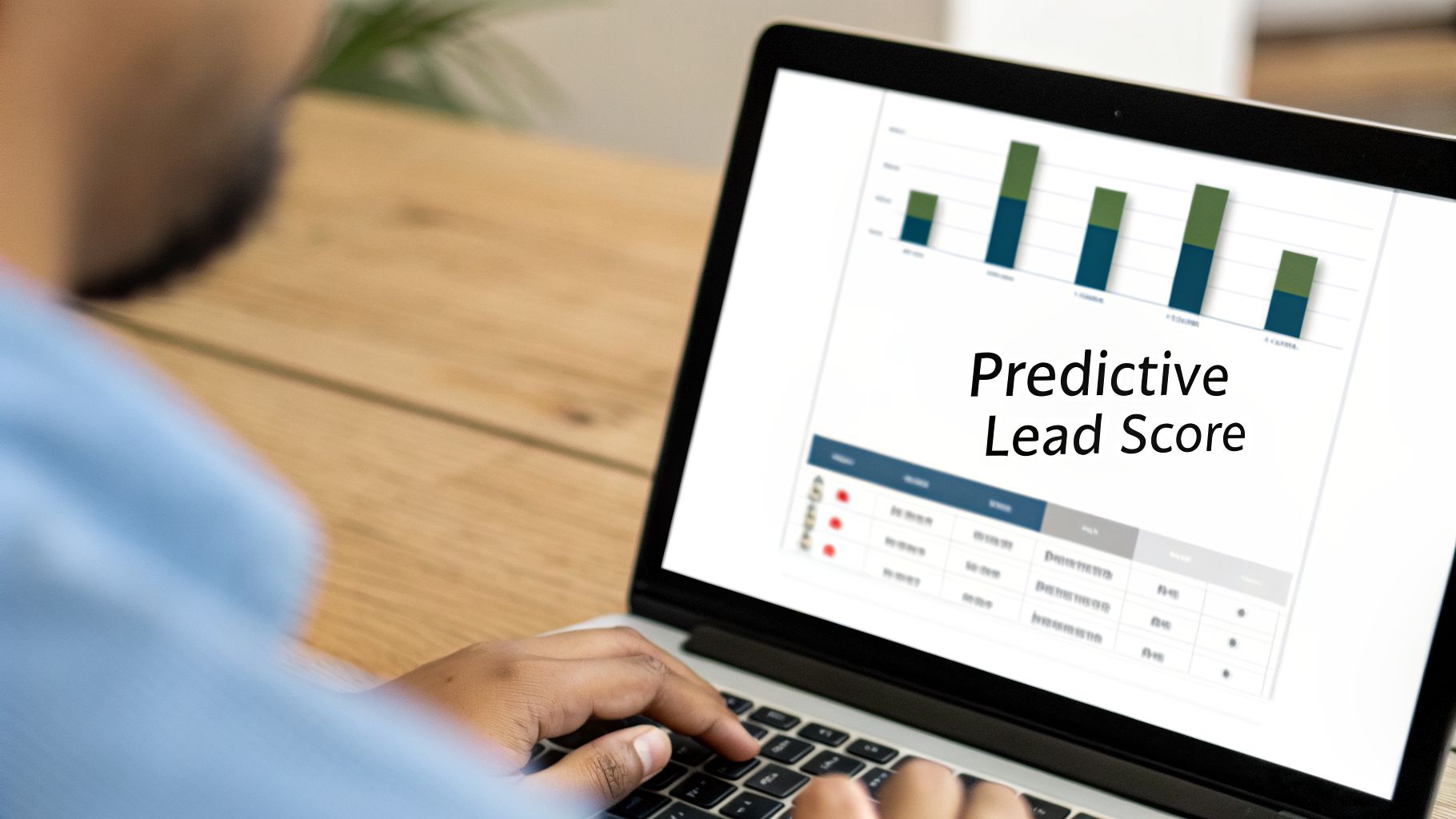
The primary benefit is efficiency; your sales team can focus its energy exclusively on high-value opportunities identified by the system. This method is one of the most effective lead generation best practices for B2B and SaaS companies managing a high volume of inbound inquiries. Platforms like HubSpot and Salesforce Einstein use this technology to help businesses prioritize their pipelines and shorten their sales cycles.
How to Implement AI-Powered Scoring
To get started, follow a structured approach to ensure your model is accurate and effective from day one.
- Train with Ideal Profiles: Begin by feeding the algorithm data from your best existing customers. This teaches the model what a high-quality lead looks like.
- Set Clear Handoffs: Establish specific score thresholds that trigger a lead's transfer from marketing to sales, ensuring alignment between teams.
- Use Negative Signals: Program the model to recognize disqualifying traits, such as non-business email domains or activity from student researchers, to weed out poor-fit leads early.
- Audit and Refine: Regularly compare the AI's predictions against actual sales outcomes (closed-won and closed-lost deals) to fine-tune the model’s accuracy. For a deeper dive into this process, explore these lead scoring best practices to build a solid foundation.
2. Voice AI Agents for Inbound and Outbound Lead Generation
Imagine scaling your sales development team without hiring more people. Voice AI agents make this possible by handling inbound inquiries and conducting outbound prospecting calls around the clock. These intelligent systems qualify leads, answer common questions, schedule meetings, and nurture prospects 24/7 without human intervention. They can manage thousands of conversations simultaneously, dramatically increasing outreach capacity.

The core advantage is scalability; an AI agent can perform the repetitive top-of-funnel tasks that consume a significant portion of a sales rep's day. This frees up your human team to focus on closing deals and managing complex relationships. For B2B companies with long sales cycles, this is one of the most effective lead generation best practices for keeping prospects warm. Platforms like Aircall and Five9 use AI to automate call center operations and improve lead qualification.
How to Implement Voice AI Agents
To deploy voice AI successfully, a structured setup focused on conversation quality and continuous improvement is key.
- Train with Top Performers: Use recordings of your best sales conversations to train the AI. This teaches the model effective language, objection handling, and qualification questions.
- Establish Human Escalation: Always provide a clear and seamless path for a prospect to speak with a human agent. This prevents frustration and ensures complex inquiries are handled correctly.
- Integrate with Your CRM: Connect the voice AI directly to your CRM to instantly capture lead data, log call activities, and trigger follow-up workflows, ensuring no opportunity is lost.
- A/B Test Scripts: Continuously test different conversation flows, opening lines, and value propositions to identify what resonates most with your target audience and improves conversion rates.
3. Account-Based Marketing (ABM) with Automation
Instead of casting a wide net, Account-Based Marketing (ABM) focuses your resources on a select group of high-value target accounts. This strategy aligns marketing and sales teams to create highly personalized buying experiences for specific companies, treating each account as a market of one. When paired with automation, this approach allows B2B businesses to scale their personalized outreach and engagement efforts efficiently.
The primary advantage is a higher return on investment; marketing spend is concentrated on accounts with the greatest revenue potential. This method is one of the most productive lead generation best practices for enterprise-focused B2B companies with long sales cycles. Platforms like Demandbase, 6sense, and Terminus provide the tools needed to identify target accounts, run coordinated campaigns, and measure influence on revenue.
How to Implement ABM with Automation
A successful ABM strategy requires deep alignment between sales and marketing and a methodical approach to targeting and execution.
- Define Your Ideal Customer Profile (ICP): Analyze your best current customers to build a clear profile based on firmographics, technology used, and company size.
- Select Target Accounts: Start small by identifying 10-50 high-value accounts that match your ICP. Use intent data to prioritize those actively researching solutions like yours.
- Create Personalized Campaigns: Develop account-specific messaging, content, and landing pages. Coordinate outreach across multiple channels, including targeted ads, email, and LinkedIn.
- Measure Account-Level Metrics: Shift your focus from lead volume to account-based metrics like account engagement, pipeline velocity, and deal size to accurately gauge success.
4. Content Marketing and SEO-Driven Lead Generation
Creating valuable, optimized content that ranks in search engines attracts qualified prospects organically. This long-term strategy builds authority by answering your audience's questions, capturing leads through search, and establishing trust long before the first sales conversation. It’s an effective way to generate a consistent flow of inbound interest without paying for every click.
The core benefit is its compounding return on investment; a single piece of content can generate leads for years. This method is one of the most foundational lead generation best practices for B2B businesses with longer sales cycles, where educating prospects is critical. Companies like HubSpot and Semrush have built empires on this model, using their educational resources to attract, engage, and convert highly qualified B2B leads.
How to Implement SEO-Driven Content
To turn your content into a lead generation machine, focus on strategic creation and optimization from the start.
- Target High-Intent Keywords: Identify keywords that signal a user is looking for a solution, not just information. These "bottom-of-funnel" queries often have lower search volume but convert at a much higher rate.
- Gate Premium Assets: Offer your most valuable resources, like in-depth case studies, templates, or original research reports, in exchange for contact information through a lead capture form.
- Optimize for Snippets: Structure your content with clear headings, lists, and tables to increase your chances of winning a featured snippet (position zero) in Google, which drives significant traffic.
- Refresh Top Performers: Regularly update your highest-performing blog posts with new data, examples, and insights to maintain their search rankings and relevance.
- Embed Clear CTAs: Place clear, contextually relevant calls-to-action throughout your content, guiding readers to the next logical step in their buyer journey.
5. LinkedIn Sales Navigator and Social Selling
Cold outreach is becoming less effective, but social selling on professional networks like LinkedIn presents a powerful alternative. By using tools like Sales Navigator and employing strategic engagement, sales teams can move beyond generic pitches and build genuine relationships. This approach involves identifying ideal prospects with advanced search filters, engaging with their content, and delivering personalized messages that resonate with their specific business challenges.
The primary advantage is building trust before the sales conversation even begins. This method is one of the most effective lead generation best practices for B2B companies with long sales cycles, where relationship-building is critical. For instance, tech startups can find enterprise decision-makers, and marketing agencies can connect directly with brand managers, turning the platform into a predictable source of high-quality leads.
How to Implement LinkedIn Social Selling
To get started, a disciplined and authentic approach is essential for turning connections into customers.
- Optimize Your Profile: Your LinkedIn profile should function as a landing page. Clearly state your value proposition and use keywords your ideal customers would search for.
- Define and Segment Prospects: Use Sales Navigator’s advanced filters to build precise lead lists based on industry, company size, role, and recent job changes. Save these searches for ongoing monitoring.
- Engage Before Connecting: Before sending a connection request, interact with a prospect's posts or shared articles. This simple step warms up the introduction.
- Personalize Your Outreach: Reference a shared connection, a recent post, or a company announcement in your connection request. Avoid generic templates and explain why you want to connect. For additional guidance, review these social selling strategies to refine your technique.
6. Email Marketing Automation and Drip Campaigns
Relying on manual email follow-ups for every new lead is unsustainable and prone to human error. Email marketing automation solves this by using pre-built sequences, or drip campaigns, to nurture prospects over time. These systems send targeted messages based on specific triggers, such as a form submission, a link click, or a period of inactivity, ensuring every lead receives consistent and relevant communication.
The core advantage is scalability. You can nurture thousands of leads simultaneously without sacrificing personalization. This makes it one of the most effective lead generation best practices for keeping prospects engaged until they are ready to buy. Platforms like ActiveCampaign, HubSpot, and Marketo are known for their powerful automation capabilities, allowing businesses to guide leads through the funnel with minimal manual effort.
How to Implement Email Automation
To build effective drip campaigns, focus on segmentation and behavioral triggers to deliver the right message at the right time.
- Set Clear Conversion Goals: Define what a "win" is for each sequence. Is it a demo request, a trial signup, or a direct purchase? This goal will shape your messaging and calls to action.
- Segment Your Audience: Group leads by factors like industry, job title, or the specific content they downloaded. This allows you to create more relevant and personalized email sequences for different buyer personas.
- Use Behavioral Triggers: Initiate campaigns based on user actions. For example, if a lead visits your pricing page twice in one week, trigger a sequence that addresses common pricing questions and offers a consultation.
- Test and Optimize: Continuously A/B test subject lines, email copy, and send times to improve open and click-through rates. Monitor unsubscribe rates to identify potential issues with frequency or content relevance. For a deeper look into this strategy, you can explore guides on building automated email marketing campaigns to refine your approach.
7. Webinar and Virtual Event Lead Generation
Hosting educational webinars and virtual events allows you to attract prospects, demonstrate expertise, and capture high-intent leads in a low-pressure environment. By offering valuable content upfront, you establish authority and build trust with your audience, making this one of the most effective lead generation best practices for B2B and SaaS businesses. This strategy positions your brand as a helpful resource rather than just a product vendor.
Successful examples include HubSpot's weekly marketing webinars and Gong's interactive sales training sessions. These events consistently draw in qualified audiences by addressing specific industry pain points and providing actionable solutions. The primary benefit is the ability to engage with hundreds of potential customers at once, answer their questions in real time, and gather valuable data based on their interests and engagement levels during the session.
How to Implement Webinar Lead Generation
To turn your virtual events into a reliable lead source, focus on creating a structured and repeatable process from promotion to follow-up.
- Choose Relevant Topics: Center your webinar content around your ideal customer's biggest challenges and pain points, not just your product features.
- Promote Strategically: Begin promoting your event 2-4 weeks in advance across all channels, including email, social media, and paid ads.
- Engage Your Audience: Keep sessions to 45-60 minutes and incorporate interactive elements like live Q&A sessions, polls, and chat to maintain high engagement.
- Follow Up Effectively: Create separate, automated email sequences for attendees and no-shows. Share the recording with everyone and offer attendees a next step, like a demo or consultation.
8. Referral Marketing and Partnership Programs
Turning your existing customers and partners into a proactive sales force is one of the most effective lead generation best practices available. Referral marketing works by incentivizing your current network to recommend your product or service. Leads generated through referrals arrive with a high level of built-in trust, which often leads to faster sales cycles, higher conversion rates, and increased customer lifetime value.
The core benefit is acquiring high-quality leads at a lower cost. Instead of spending heavily on cold outreach, you are rewarding loyalty and word-of-mouth promotion. Iconic examples like Dropbox’s referral program, which fueled its exponential growth, and Amazon Associates’ affiliate network demonstrate the scalability of this model. This approach is especially powerful for B2B and SaaS companies whose products deliver clear, demonstrable value that users are happy to share.
How to Implement a Referral Program
A successful program is built on simplicity, transparency, and clear incentives. Follow these steps to create a system that encourages participation.
- Make It Effortless: Design the referral process to be completed in one or two clicks. Provide users with a unique, shareable link they can easily distribute.
- Offer Dual-Sided Incentives: Reward both the referrer for sending a new lead and the new customer for signing up. This creates a win-win scenario that boosts participation.
- Equip Your Advocates: Provide referrers with simple sales collateral, pre-written email templates, or key talking points to make sharing information about your product easy and accurate.
- Automate and Track: Use referral marketing software to automate the tracking of referrals and the fulfillment of rewards. Integrate this system with your CRM to monitor the entire lead-to-customer journey.
9. Chatbot and Conversational Marketing
Waiting for a sales rep to respond to a website inquiry is a major source of lead drop-off. Conversational marketing closes this gap by using AI-powered chatbots to engage visitors in real-time, ask qualifying questions, and guide them through the funnel instantly. This approach transforms a passive website into an active, 24/7 lead-capturing tool.
The core benefit is speed and efficiency; qualified leads can book meetings directly from the chat window without any human intervention. This makes it one of the most effective lead generation best practices for B2B and SaaS companies aiming to increase conversion rates from their existing website traffic. Platforms like Drift, Intercom, and HubSpot offer robust chatbot builders that integrate directly with your CRM.
How to Implement Conversational Marketing
To deploy a chatbot effectively, focus on creating a helpful, frictionless user experience that delivers immediate value.
- Map Conversation Flows: Design chat scripts based on different user intents and website pages. A visitor on the pricing page has different needs than someone on the blog.
- Ask Simple Qualifying Questions: Start with straightforward questions about company size, role, or primary challenge to segment visitors without causing friction.
- Integrate Meeting Schedulers: Connect the chatbot to your sales team's calendars to allow qualified prospects to book demos or calls automatically.
- Define Clear Handoffs: Program the bot to recognize when a human touch is needed and create a seamless escalation path to a live agent. To learn more about building these automated systems, see this guide on using a chatbot for lead generation.
10. CRM Automation and Lead Management Systems
Without a central system to manage prospect interactions, even the most effective lead generation best practices will result in chaos and lost opportunities. CRM automation serves as the operational backbone for scalable growth by tracking every touchpoint, routing leads to the right sales reps, and triggering follow-up actions based on prospect behavior. It provides a single source of truth for your entire pipeline.
The core benefit is creating a repeatable, efficient sales process that prevents leads from falling through the cracks. It ensures timely follow-ups and gives leadership clear visibility into performance. Tools like HubSpot and Salesforce excel at this, offering powerful workflows that automate lead nurturing, assignment, and reporting, allowing your team to focus on building relationships and closing deals.
How to Implement CRM Automation
Effective implementation requires a strategic approach that aligns the technology with your sales process.
- Map Your Process First: Before touching any software, visually map your entire sales process from initial contact to a closed deal. This blueprint will guide your CRM setup.
- Define Clear Lead Stages: Create distinct stages in your CRM (e.g., New, Contacted, Qualified, Proposal Sent) that align with your buyer's journey.
- Set Up Assignment Rules: Automate lead distribution based on criteria like territory, industry, or company size to ensure the right rep gets the lead instantly.
- Build Triggered Workflows: Create automated sequences for common scenarios, such as sending a follow-up email 24 hours after a demo request or alerting a rep when a lead revisits the pricing page.
Top 10 Lead Generation Best Practices Comparison
| Strategy | Implementation complexity | Resource requirements | Expected outcomes | Ideal use cases | Key advantages |
|---|---|---|---|---|---|
| AI-Powered Lead Scoring and Qualification | High — ML modeling, data pipelines, integration | Clean historical data, data scientists/engineers, CRM integration | Higher conversion and prioritization (e.g., ↑25–30% conv.; ↑40–50% efficiency); faster handoffs | B2B/SaaS with large lead volumes and CRM history | Prioritizes high-probability leads, scalable, reduces manual bias |
| Voice AI Agents for Inbound and Outbound Lead Generation | High — speech/NLP, telephony and compliance work | Voice platform, telephony integration, conversation designers, legal/compliance | Large increase in captured leads and lower CPL (↑200–300% lead volume; ↓60–70% CPL) | High-volume outbound/inbound calling, 24/7 capture needs | Scales calling operations, continuous capture, rich call intelligence |
| Account-Based Marketing (ABM) with Automation | Medium–High — account orchestration and personalization | Intent/firmographic data, ABM tools, coordinated sales/marketing resources | Larger deal sizes and higher close rates (↑40–50% deal size) over longer sales cycles | Enterprise/high-value account pursuit | Hyper-relevant outreach, better sales-marketing alignment, improved ROI |
| Content Marketing and SEO-Driven Lead Generation | Medium — content production + SEO implementation | Content creators, SEO tools, time investment (months) | Predictable organic lead flow over time; decreasing CPL as content compounds | Companies with longer sales cycles seeking inbound authority | Sustainable leads, thought leadership, long-term organic traffic |
| LinkedIn Sales Navigator and Social Selling | Low–Medium — account/prospect workflows and outreach | LinkedIn subscription, sales reps, content and outreach templates | Higher response rates and relationship-driven leads | B2B prospecting, recruiters, founders and account execs | Direct access to professionals, personalized outreach, relationship building |
| Email Marketing Automation and Drip Campaigns | Medium — sequence design, segmentation, deliverability | ESP/automation platform, CRM, copywriters, list hygiene | Strong ROI and improved conversions (↑20–50% with segmentation) | Nurturing pipelines, lead follow-up, re-engagement campaigns | Cost-effective, scalable personalization, measurable performance |
| Webinar and Virtual Event Lead Generation | Medium — event production and promotion logistics | Webinar platform, speakers, promotion budget, registration flows | High-intent leads and authority; can generate large event-specific lists | Product demos, thought leadership, complex/enterprise sales | Deep engagement, demonstration capability, evergreen content potential |
| Referral Marketing and Partnership Programs | Low–Medium — program design and tracking | Incentive budget, referral platform, partner management | Very high conversion and low CAC; faster closes and better retention | Companies with satisfied customers and partner ecosystems | Highest conversion rates, lowest acquisition cost, strong retention |
| Chatbot and Conversational Marketing | Medium — conversation design and NLU + integrations | Chat platform, conversation designers, CRM integration | Faster response times and higher capture (↑30–40% lead capture) | High-traffic websites, early-stage qualification, 24/7 capture | Instant qualification, improved capture rates, scalable first touch |
| CRM Automation and Lead Management Systems | High — platform configuration, workflows, governance | CRM platform, admins/consultants, training, integrations | Fewer lost leads, faster cycles, better reporting and forecasting | Organizations scaling sales ops and multi-channel lead flow | Centralized pipeline, automated routing, visibility and process control |
Build Your Automated Lead Generation Machine
We've explored ten distinct yet interconnected strategies, moving from the precision of AI-powered lead scoring to the broad reach of content marketing and the personal touch of social selling. Adopting these lead generation best practices is not about haphazardly adding more tools to your stack. The real goal is to construct a cohesive, automated system that consistently delivers qualified prospects to your sales pipeline.
Each practice we discussed, from Voice AI agents handling initial outreach to sophisticated CRM workflows nurturing leads, represents a vital component in a larger growth engine. When these elements work in concert, they create a powerful and predictable flow of new business opportunities. An automated ABM campaign can be fed by insights from LinkedIn Sales Navigator, while a successful webinar can kickstart a multi-touch email drip campaign that guides attendees toward a sales conversation.
From Individual Tactics to an Integrated System
The transition from executing isolated campaigns to running a fully integrated lead generation system is what separates good companies from great ones. The core principle is interconnectivity. Your chatbot shouldn't just answer questions; it should qualify visitors and route them directly into your CRM with the right tags. Your referral program shouldn't be a manual tracking nightmare; it should be an automated process that rewards advocates and captures new leads without friction.
This systemic approach yields compounding returns. You’re not just generating leads; you’re building an asset that works for you 24/7, reducing manual labor, cutting down customer acquisition costs, and freeing up your team to focus on high-value activities like closing deals and building customer relationships. True scalability is achieved when your lead flow is no longer directly tied to the number of hours your team puts in.
Your Actionable Next Steps
To turn these concepts into reality, start small and build momentum.
- Audit Your Current Process: Identify the single biggest bottleneck in your lead generation today. Is it qualification? Initial outreach? Nurturing cold leads?
- Select One Strategy to Implement: Choose one of the best practices from this list that directly addresses your primary bottleneck. For instance, if qualification is the issue, implementing an AI-powered scoring model is a logical first step.
- Measure and Optimize: Set clear key performance indicators (KPIs) before you begin. Track metrics like lead-to-opportunity conversion rates, time-to-conversion, and cost per qualified lead. Use this data to refine your approach.
Mastering modern lead generation is about strategic implementation and intelligent automation. It’s about building a machine that not only finds your next customer but does so with increasing efficiency over time. The result is a durable competitive advantage that fuels predictable revenue growth and positions your business for long-term success.
Ready to stop chasing leads and start building a system that attracts them automatically? MakeAutomation specializes in designing and implementing the exact end-to-end automated lead generation frameworks discussed in this article. We provide the technical expertise and hands-on support to turn these best practices into a high-performance reality for your business. Book a discovery call with MakeAutomation today and let’s build your growth machine together.