10 B2B Lead Generation Best Practices for 2026
In 2025, 69% of B2B companies are increasing their lead generation budgets. That matters for one reason. Many teams are no longer asking whether lead generation deserves investment. They are asking which systems can produce pipeline without forcing sales and marketing to add manual work every quarter.
That shift is overdue. Buyers are harder to reach, committees are larger, and cold outreach by itself rarely sustains a pipeline anymore. A rep can still book meetings with strong calls and emails, but isolated tactics break down when the rest of the journey feels disconnected. The core problem is not channel choice alone. It is orchestration.
The strongest b2b lead generation best practices now combine targeting, content, outreach, scoring, follow-up, and routing into one operating system. A webinar registration should influence outbound messaging. A product-page visit should trigger a better email sequence. A referral should bypass the generic nurture path. A high-intent account should not sit in a CRM queue waiting for someone to notice.
I see the same split over and over. Teams with random tactics stay busy. Teams with connected systems build predictable pipeline. The difference is not effort. It is design.
The list below focuses on what works in practice, what breaks when implemented poorly, and how automation changes the economics. Some methods are classic: ABM, email, content, webinars, referrals, SEO. Some are newer: Intent data, predictive scoring, CRM automation, and Voice AI for qualification and outbound. Used together, they create a lead engine that scales without becoming noisy, spammy, or impossible to manage.
1. Account-Based Marketing
ABM works best when you stop treating a lead as a single contact and start treating an account as a buying group.
For complex B2B and SaaS sales, broad top-of-funnel volume often creates a false sense of momentum. You collect form fills, SDRs chase weak fits, and the pipeline looks active until deals stall. ABM fixes that by narrowing attention to accounts matching your ideal customer profile.
Build around accounts, not contacts
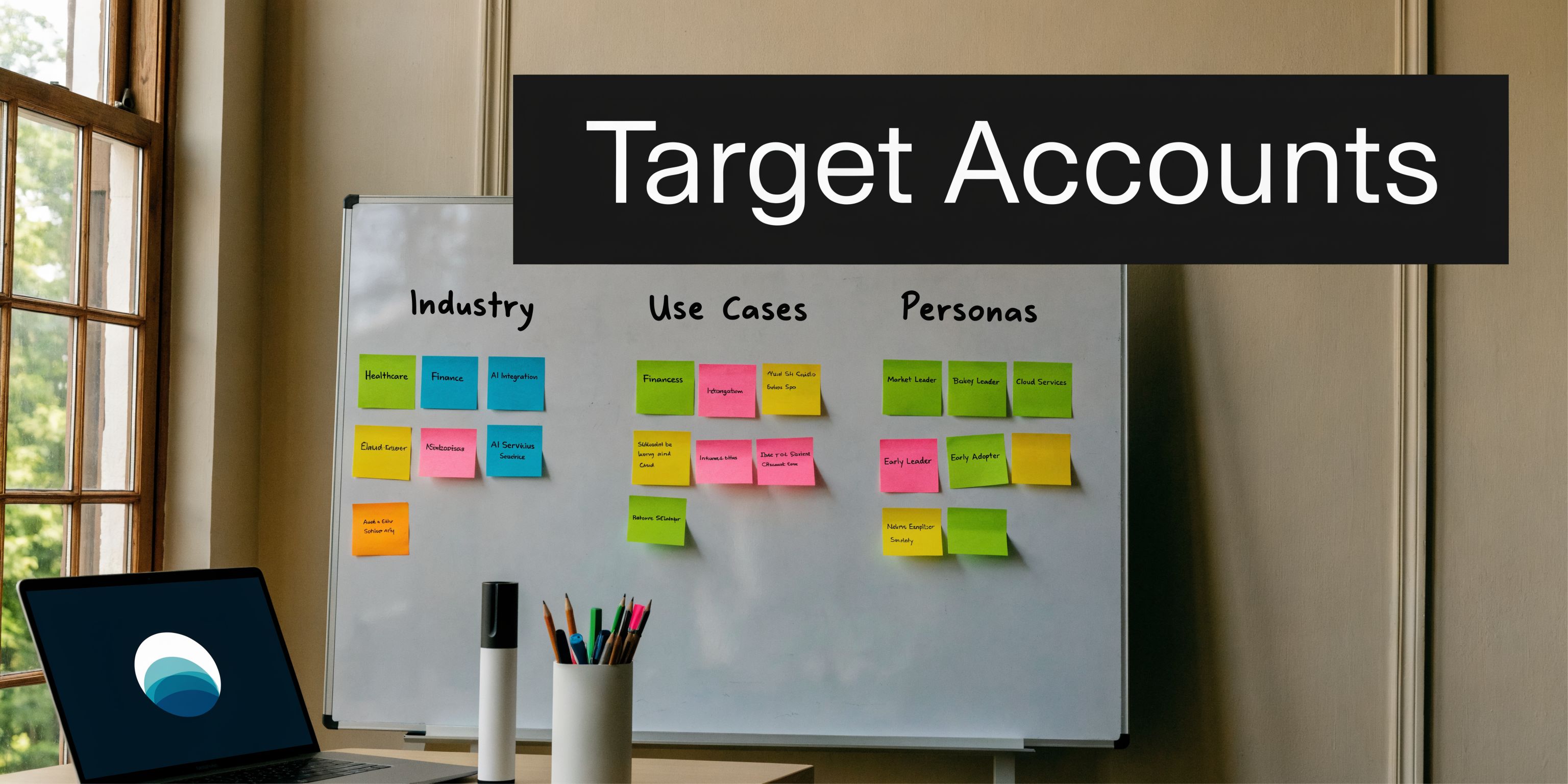
The best ABM programs begin with three layers:
- Account selection: Pick companies with the right size, problem, buying motion, and likely budget.
- Persona mapping: Identify the economic buyer, operational champion, technical evaluator, and likely blocker.
- Message alignment: Give each stakeholder different reasons to care.
A founder may respond to growth and efficiency. An ops leader may care about workflow risk. A revenue leader may care about response time, attribution, and sales capacity. Same product, different angle.
Intent signals sharpen this. Website behavior, content consumption, and CRM activity help sales teams prioritize the accounts already showing movement. That is where ABM starts to outperform generic outbound. You are not just personalizing copy; you are timing outreach to actual interest.
What works and what does not
ABM fails when teams over-personalize before they prove account quality. Writing custom campaigns for weak-fit accounts wastes time quickly.
It also fails when marketing tracks individual leads while sales works accounts. Use account-level metrics instead. Meetings booked inside target accounts, engaged stakeholders, progression by account, and pipeline velocity tell the truth more quickly than raw lead count.
If you want a practical outbound layer to support ABM, these outbound lead generation strategies are the right complement.
Strong ABM feels coordinated from the buyer side. LinkedIn touchpoints, email, retargeting, and sales calls should feel like one conversation, not four unrelated campaigns.
Real examples are easy to spot in the market. Terminus helped push ABM into enterprise SaaS workflows, HubSpot has adapted ABM for larger sales motions, and 6sense popularized pairing account prioritization with AI-driven signals. The common thread is discipline. Fewer accounts. Better research. Cleaner follow-through.
2. LinkedIn Lead Generation & Outreach Automation
Social media is now used by 78% of B2B organizations for lead generation, while cold calling sits closer to 33%. That shift explains why LinkedIn has become a core operating channel for B2B pipeline, especially for teams selling into defined accounts with multiple stakeholders.
Used well, LinkedIn does three jobs at once. It helps you find the right buyers, gives you live context before outreach, and creates light-touch familiarity before an email or call. That matters because outreach performs better when the prospect has seen your name, your point of view, or your company before the first ask.
The mistake is treating LinkedIn like a volume channel. It works better as part of a connected system with ABM targeting, CRM automation, and outbound sequencing.
Build the workflow before you scale the messages
LinkedIn outreach usually breaks at the setup layer. Sales reps target broad lists, profiles do not explain what problem they solve, and message sequences ignore timing, account priority, and buying signals.
A workable process is more disciplined:
- Start with account and persona filters: Use Sales Navigator to narrow by title, seniority, headcount, industry, geography, and recent company changes.
- Check for context before outreach: Review posts, hiring activity, job changes, funding, product launches, or mutual connections.
- Send a connection request with a reason: Reference a relevant trigger or operational problem, not a generic intro.
- Keep the first exchange light: Ask a question tied to fit or priority. Save the full pitch for later.
- Sync every touch into the CRM: Sales needs one record of what happened across LinkedIn, email, and calls.
That last step is where modern teams separate themselves. If LinkedIn activity stays trapped in an individual rep's inbox, marketing cannot score engagement properly, managers cannot see account progress, and follow-up gets fragmented across channels.
Use automation for coordination, not imitation
Automation helps with list building, enrichment, task creation, reply routing, and sequence triggers. It also helps enforce pace. For example, a team can auto-assign leads by territory, push LinkedIn engagement into Salesforce or HubSpot, and trigger an email step only after a profile visit or accepted connection.
It should not write five vague messages and send them to 500 contacts.
I usually recommend a simple rule. Automate everything a rep would never want to do manually twice. Keep human control over message angles, account judgment, and hand-raisers. That trade-off protects reply quality and reduces the risk of burning a good market with recycled copy.
Tools like Apollo.io, Salesloft, Lemlist, and Hyperise can support that workflow, but the stack matters less than the logic behind it. A smaller, well-sequenced list with relevant triggers will outperform a larger list pushed through brittle automation.
What strong LinkedIn outreach looks like in practice
A good LinkedIn motion feels coordinated. An SDR sees that a target account just hired a new RevOps lead. Marketing has already served thought leadership content to that account. The SDR visits the profile, sends a short connection request tied to the operational change, and the CRM logs the interaction. If the contact accepts but does not reply, the system schedules a follow-up email with a related case study. If the contact engages, the account score increases and sales gets a clear signal to prioritize outreach.
That is the modern version of LinkedIn prospecting. It is not a standalone tactic. It is one layer in a full-stack lead generation system that connects targeting, content, outreach, CRM data, and later-stage qualification.
The practical trade-off is speed versus credibility. Higher send volume can create more surface area, but lower-volume, account-aware outreach usually creates better conversations and cleaner pipeline. LinkedIn earns its place when it supports the rest of the engine, not when teams expect it to carry pipeline alone.
3. Content Marketing & Thought Leadership
Content marketing generates more than three times as many leads as outbound marketing and costs 62% less, according to the Content Marketing Institute. That is why strong B2B teams treat content as pipeline infrastructure, not a publishing calendar.
The key distinction is intent. A generic article can bring traffic. A well-structured content asset helps a buyer define the problem, compare options, and reach sales with sharper questions. That difference shows up later in pipeline quality, sales cycle length, and conversion rate by source.
Build content from buying friction, not keyword volume alone
The best content roadmap usually starts in sales calls, onboarding calls, and loss reviews. If prospects repeatedly ask about implementation timelines, data migration risk, stakeholder buy-in, or how to measure ROI, those topics deserve priority over another surface-level trend post.
That approach also creates a cleaner bridge between classic demand generation and modern automation. One practical sequence looks like this:
- Publish a diagnostic article that explains the problem in plain terms.
- Offer a deeper asset such as a webinar, checklist, or comparison guide for readers showing stronger intent.
- Push that engagement into segmented nurture using automated email marketing campaigns tied to content behavior.
- Update lead scores in the CRM based on what the account consumed.
- Trigger SDR follow-up or Voice AI qualification only after the account crosses a meaningful engagement threshold.
That is how content becomes part of a full-stack lead gen system. It supports ABM targeting, improves outreach relevance, and gives automation better signals to act on.
Use formats that match buying stage
Different formats do different jobs. Blog posts and SEO pages capture early research. Webinars, product explainers, and use-case walkthroughs help with evaluation. Case studies, ROI tools, and implementation guides support late-stage consensus.
Analysts at the Content Marketing Institute have reported that B2B marketers rank webinars among their strongest top-of-funnel and lead quality formats, and video continues to gain adoption because complex ideas are easier to explain visually. The trade-off is production effort. A polished webinar or customer roundtable takes more coordination than a blog post, but it also gives you more reusable assets: clips for LinkedIn, follow-up emails, sales enablement snippets, and retargeting audiences.
Thought leadership needs operational depth
Thought leadership earns attention when it changes how a buyer evaluates a decision. Category commentary alone rarely does that.
Strong examples usually include a clear point of view, evidence from actual campaigns or customer work, and explicit trade-offs. If you are arguing for ABM over broad lead capture, show where it works, where it slows volume, and what has to be true in the CRM for the motion to scale. If you are writing about AI in lead generation, explain what should stay automated, what still needs human review, and where poor data will break the system.
Buyers can tell the difference between expertise and repackaged opinions.
A good content engine also compounds. One webinar can become an article, a short video series, an SDR follow-up asset, a sales deck insert, and an account-specific nurture path. That reuse matters because content ROI usually comes from distribution and orchestration, not from publishing frequency alone.
Good content does more than attract attention. It gives your CRM, scoring model, and outbound team better context so the entire revenue system gets smarter.
4. Email Outreach & Drip Campaign Automation
Email still sits at the center of many B2B pipeline systems because it connects cleanly to CRM data, sales workflows, website behavior, and outbound sequencing. That utility is also the risk. Teams can send large volumes fast, which makes weak targeting, poor data, and bad timing scale just as fast.
The channel works best as part of a coordinated system, not as an isolated sequence. ABM can define the account list. Content engagement can shape the message. CRM automation can route replies and suppress bad-fit leads. Voice AI and calling can pick up the conversation when email intent is clear but the buyer has not booked a meeting.
Triggers beat fixed cadences
A seven-step sequence is not a strategy. Trigger logic is.
I see the same mistake in underperforming programs. Teams spend hours tweaking subject lines when the underlying issue is that the email arrived before the account showed any relevant intent, or after the buying window had already passed.
A useful outbound or nurture flow usually includes a clear reason for contact, one pain point in the buyer’s language, and one next step. The trigger should determine the message:
- High-intent page visit: Follow up with context tied to that page and the likely buying question behind it.
- Content download: Send education that helps the lead make progress, then branch based on engagement.
- Reply classification: Tag positive interest, soft objections, referrals, and out-of-office replies differently inside the CRM.
- Bounce and unsubscribe handling: Suppress records immediately so bad data does not keep cycling through your system.
If you are building this logic, this guide to automated email marketing campaigns is directly relevant.
Better segmentation fixes more problems than better copy
Email performance often gets blamed on creative. In practice, segmentation usually breaks first.
Company size, sales motion, role, active pain point, existing tools, and prior engagement should shape the sequence. An operator evaluating workflow automation needs different proof than a founder exploring growth experiments. A target account already touched by LinkedIn outreach should not get the same opener as a cold prospect imported from a list.
AI can assist in these situations. Use it to summarize account research, suggest variants by persona, classify replies, and flag leads whose behavior matches a known pattern. Do not use it to mass-produce generic personalization tokens that read like software wrote them. Buyers notice. Trust drops, and reply quality drops with it.
Deliverability is an operating discipline
Good email programs are built on constraints.
Verified addresses, domain warm-up, sending limits, suppression rules, and real-time validation protect sender reputation and keep the CRM cleaner. Ignore those mechanics and inbox placement falls, reply rates fall, and sales starts questioning copy that was never the core issue.
The practical trade-off is simple. Tighter controls reduce raw volume. They usually improve pipeline quality, protect the domain, and make automation safer to scale. That is the version worth building.
5. Webinars & Virtual Events Lead Generation
Webinars work because they force a useful exchange. The buyer gives attention and contact data. You give specificity.
That alone filters better than many top-of-funnel assets. Someone willing to register for a live or on-demand session about a narrow operational problem is often closer to a real evaluation than someone casually reading a broad blog post.
Pick topics buyers would attend during work
The strongest webinar topics sit in the middle of urgency and action. “Trends” is often too vague. “How to fix low-quality demo bookings from paid traffic” is sharper. “How to route hand-raisers in HubSpot without SDR bottlenecks” is sharper still.
Good webinar programs often share a few traits:
- Practical title: Promise a problem solved, not a vague discussion.
- Qualified registration: Ask a small number of fields that help sales segment follow-up.
- Fast post-event workflow: Route attendees, no-shows, and high-intent questions into different next steps.
- Repurposing plan: Turn the event into clips, email follow-up, blog summaries, and sales enablement.
Gong, HubSpot Academy, Drift, Zapier, and ConvertKit all show useful versions of this playbook. The best ones do not treat the webinar as a single event. They treat it as a content asset plus an intent signal.
Follow-up decides whether the webinar produced pipeline
Attendance alone is not the win. The follow-up architecture is.
A contact who attended the full session and asked a technical question should not receive the same generic replay email as someone who registered and never showed up. Segment by behavior. If the event discussed a specific workflow problem, the follow-up should continue that conversation with a related asset, a customized outreach note, or a direct meeting invitation.
As noted earlier, webinar performance remains one of the clearest indicators of quality at the top of the funnel. That is why webinars remain one of the strongest b2b lead generation best practices for teams selling nuanced offers that need education before conversion.
A webinar should create sales context. If your reps still have to start from zero after the event, the registration process collected names, not buying signals.
6. Referral Programs & Partner Ecosystems
Referrals are used by 78% of B2B marketers and can convert up to 4x better than cold leads. The gap is not awareness. It is execution.
Referral programs underperform when they live as a vague request inside customer calls or partner conversations. A buyer says they are happy. Someone says, "Let us know if you know anyone." Then the moment passes. No trigger, no handoff, no CRM attribution, and no way to tell whether referrals are producing pipeline.
The fix is to treat referrals like an operating system, not a favor. That means defining who should ask, when they should ask, what they should send, how the intro gets logged, and what happens after it lands. Teams that already use behavioral scoring can go one step further and connect referred leads to the same qualification workflows they use in their predictive lead scoring setup.
Build referral motion around success moments
The timing matters more than the incentive in many B2B sales cycles.
Ask after a measurable win. A successful onboarding milestone. A renewal conversation that went well. A project launch. A strong QBR. Those moments give the customer a real reason to make the introduction, and they give your team context for the ask.
Give people something easy to forward:
- A short intro blurb: Two or three sentences that explain who you help and what problem you solve.
- A partner or referral landing page: Useful for consultants, agencies, and integration partners who send multiple leads.
- Basic CRM tagging: Separate customer referrals, partner referrals, and affiliate-style sources so reporting stays clean.
- Clear ownership: Sales handles follow-up. Customer success or partnerships owns the relationship. Ops checks attribution and payout rules.
That last point gets missed often. If ownership is fuzzy, referred leads sit in the same queue as cold inbound and lose the speed advantage that made the introduction valuable.
Partner ecosystems create scale that one-off referrals do not
A single happy customer can send a good lead. A structured partner ecosystem can send a category of leads for years.
That is why the strongest programs usually sit at the intersection of complementary services and shared buyer journeys. Agencies, consultants, implementation partners, RevOps firms, and SaaS integration specialists often hear about the need before your pipeline ever sees it. They already have trust. Your job is to make it easy for them to identify fit, introduce you cleanly, and stay informed after the handoff.
HubSpot, Salesforce, and Zapier all show versions of this model. The common lesson is straightforward. Ecosystems work when both sides know the ICP, the handoff process, and the value exchange.
In practice, that can mean co-branded one-pagers, partner training, shared lead stages, referral SLAs, and simple feedback loops on deal status.
The trade-off is quality versus volume
Referral channels usually produce warmer conversations, but they rarely grow on autopilot.
They need enablement and governance. If you push incentives too hard, the quality drops and partners send weak-fit accounts just to trigger a reward. If you keep the program too informal, you get high trust but low volume and poor attribution. The right model depends on your sales motion. High-ticket services often perform better with relationship-driven referrals and reciprocal value. Lower-ACV SaaS can support a lighter, more standardized partner or affiliate structure.
Treat referrals as part of the full-stack system. ABM defines the account types worth pursuing. Content gives partners and customers something credible to share. CRM automation routes and tags the lead correctly. Sales follows up with context. Voice AI can even qualify referred leads quickly when speed matters and rep capacity is tight.
That is how referrals stop being "word of mouth" and start becoming a durable, measurable source of pipeline.
7. Intent Data & Predictive Lead Scoring
Only a small share of B2B buyers are actively in market at any given time. That constraint is why intent data matters. It helps teams stop treating every ICP-fit lead as equally ready and start prioritizing accounts showing real purchase research.
Intent data and predictive scoring work best as an operating system, not a reporting layer. ABM defines the accounts worth watching. Content and website behavior generate usable signals. CRM automation turns those signals into routing, follow-up, and suppression rules. In more advanced setups, Voice AI can qualify high-scoring inbound leads or re-engage warm accounts before rep capacity becomes the bottleneck.
Score timing and fit together
Firmographic fit alone produces a bloated priority list. Behavioral activity alone can flood sales with curious but unqualified contacts.
The model needs both.
A practical scoring framework usually includes:
- Fit signals: Industry, company size, geography, tech stack, role, and use case
- Intent signals: Topic research, competitor comparisons, review-site activity, repeat visits to solution or pricing pages
- Engagement signals: Webinar attendance, high-value content consumption, email replies, demo-page return visits
- Recency weighting: Last-week activity should count more than activity from last quarter
- Action thresholds: Scores should trigger clear next steps, not sit in a dashboard
If you want a useful starting structure, this guide to lead scoring best practices covers the mechanics well.
The trade-off is accuracy versus usability. A model with 40 variables may look smart in a RevOps doc and still fail in the field because sales cannot explain it, trust it, or act on it quickly. A simpler model with fewer inputs often wins early because it creates consistent behavior across marketing, SDRs, and account executives.
Build scoring around actions your team can take
Scoring should change what happens next.
A target account that spikes on pricing-page visits and webinar attendance should trigger an SDR task, an account alert in the CRM, and possibly an ABM audience sync. A high-fit lead with low current intent should go into nurture, not into a rep queue where it dies after one call. An account showing broad research activity across several contacts may deserve coordinated outreach from sales, paid media, and lifecycle email at the same time.
That is also where many teams get intent data wrong. They buy the feed before they define the response. The platform is not the strategy. The strategy is deciding which signals matter, what confidence threshold counts as real buying motion, and which workflow each score should trigger. The broader shift toward using active research signals to improve qualification is outlined in this intent data and qualification overview.
Start with a model sales can challenge. Then compare scores against real pipeline creation, meeting quality, and close rates. If the score never changes rep behavior, it is just decoration.
8. Interactive Content & Converters Quizzes, Calculators, Assessments
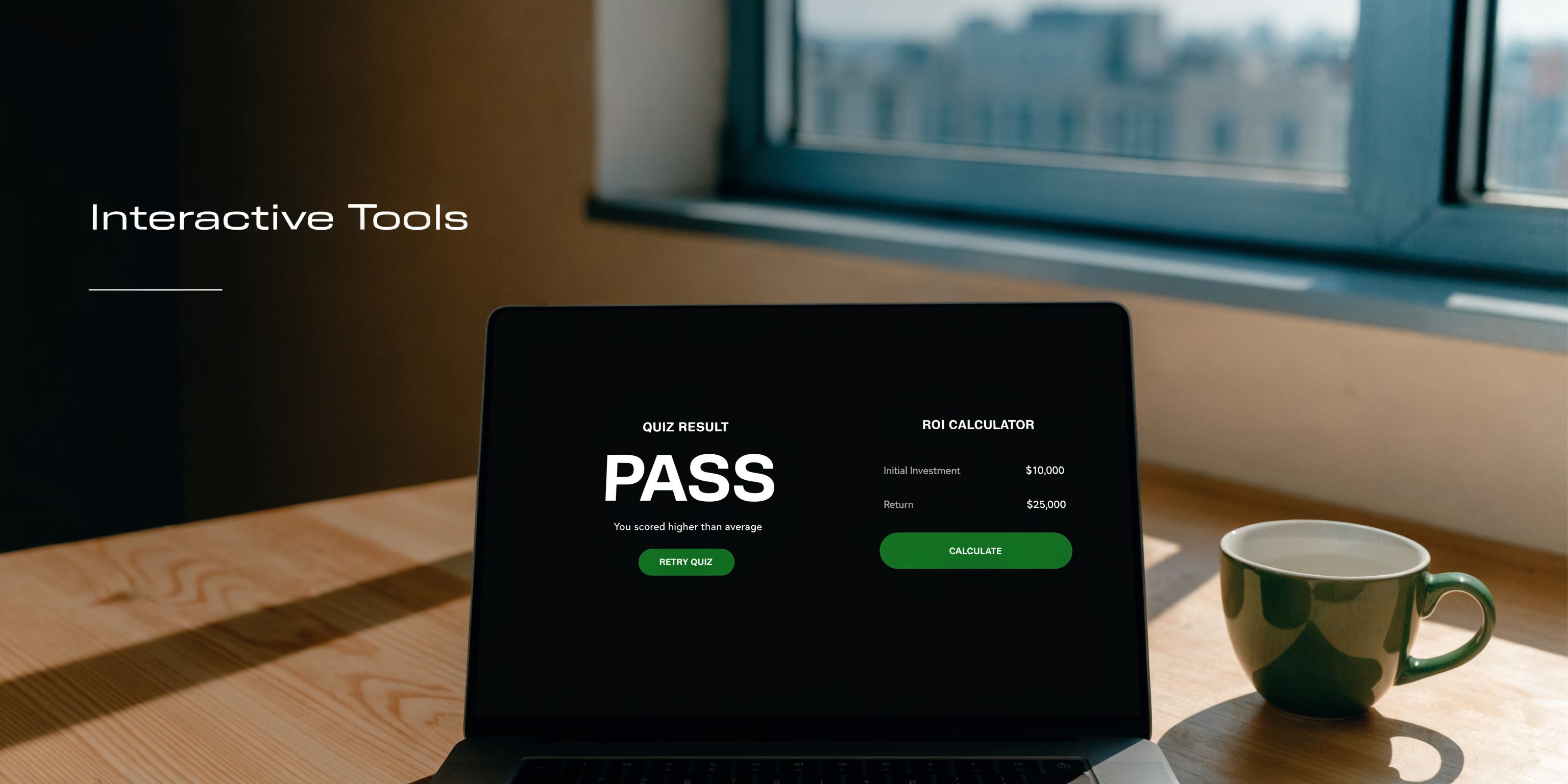
Interactive content works when it helps the buyer reach a decision they could not reach from static content alone.
That is the standard, not novelty, not “engagement.” A calculator, assessment, quiz, or grader should compress thinking for the buyer and reveal information your team can use later.
Give value before you ask for the handoff
The strongest interactive tools solve one specific evaluation problem.
A revenue operations firm might build a lead response audit. A martech company might build a CRM cleanup cost calculator. A workflow automation provider might offer an assessment that identifies where manual handoffs are blocking SQL progression.
Useful examples already exist across the market. HubSpot’s grader tools, Salesforce ROI calculators, Drift assessments, Neil Patel analyzers, and Unbounce builders all follow the same principle. They produce a result the buyer can act on.
A few practices help:
- Keep inputs tight: Ask only for what improves the result.
- Tie questions to segmentation: Every answer should help qualify pain, urgency, or fit.
- Personalize follow-up: Use the response profile to change the next email or SDR outreach.
- Make the output reusable: A downloadable summary often helps buyers share internally.
The trap to avoid
Many interactive tools become glorified forms. The buyer answers questions, gets a vague result, and then hits a lead gate. That creates friction without value.
A better design gives a meaningful result first, then asks whether the user wants a deeper breakdown, benchmark conversation, or customized recommendation. This is especially effective in B2B because the first user often needs to persuade someone else internally. Good tools help them do that.
Interactive content is also a clean bridge between marketing and sales. Marketing captures structured data. Sales inherits context. Instead of “someone downloaded an ebook,” the CRM now shows “this account said onboarding delay, CRM fragmentation, and slow follow-up are their biggest issues.” That is a better starting point for outreach.
9. SEO & Organic Search Lead Generation
Organic search remains one of the few lead gen channels that can keep producing qualified pipeline months after the initial work is done. Analysts at Thomasnet found that multichannel lead generation reduces cost per lead by 31%, and SEO earns its place in that mix because it captures active demand, supports retargeting audiences, and gives sales a steady stream of educated prospects.
The catch is speed. SEO rarely gives the immediate control of paid media or outbound, and early results can look disappointing if the team tracks traffic instead of revenue contribution.
Rank for commercial questions, not just broad interest
A common B2B SEO failure pattern is simple. The team publishes top-of-funnel educational content, traffic climbs, and sales sees little change because the visitors were never close to a buying decision.
Pipeline-focused SEO starts with commercial intent. Go after queries tied to vendor evaluation, implementation planning, integration concerns, pricing logic, ROI justification, and category comparison. A search like "best CRM for multi-location field sales" or "how to integrate call tracking with HubSpot" usually has more pipeline value than a broad query about sales productivity.
Content structure matters as much as keyword choice. Build clusters that connect problem-aware articles to comparison pages, service pages, case studies, and conversion points. Keep technical SEO clean, but do not overinvest in technical work while commercial pages remain thin. I have seen teams spend months fixing minor crawl issues while high-intent pages still lacked proof, pricing context, or a clear next step.
SEO should feed the CRM, not just Analytics
The primary benefit arises from connecting organic behavior to downstream actions.
If someone lands on a category page, comes back through a comparison article, and then requests an implementation checklist, that sequence should shape follow-up. Pass source data, entry page, returning sessions, and high-intent pageviews into the CRM. Score those actions differently from a casual blog visit. Route accounts that show repeat buying signals into the right nurture, SDR queue, or ABM workflow.
That operating model matters more than raw sessions. The goal is driving targeted traffic that converts, then handling that traffic with enough context that marketing automation and sales outreach feel timely instead of generic.
SEO also strengthens the rest of the system. ABM teams can use search-informed content to support account outreach. Email nurtures perform better when prospects have already found relevant pages organically. Webinar, referral, and outbound programs all convert more efficiently when the site already answers the questions buyers ask during evaluation. SEO does not need to close deals by itself. It needs to make every other channel work harder.
10. Voice AI, Intelligent Calling & CRM Automation Lead Qualification & Outbound
Speed decides a large share of inbound pipeline. The teams that respond first, qualify cleanly, and route fast usually create more meetings from the same demand gen budget.
Voice AI, intelligent calling, and CRM automation help on that front when they are built into the rest of the revenue system. They should sit on top of your ABM targets, form flows, intent signals, webinar registrations, and outbound sequences. This provides the true value. You are not adding another channel. You are tightening the handoff between interest, qualification, and sales action.
Here is the product in action:
Where Voice AI fits
Start with warm and high-intent moments.
A prospect fills out a demo form, asks for pricing, registers for an event, or returns to a high-value page after opening multiple emails. A voice agent can respond in minutes, confirm basic fit, capture qualification data, answer a narrow set of common questions, and book the right next step. That workflow protects rep time and raises the odds that serious buyers speak with sales while interest is still high.
Outbound use cases can work too, but the margin for error is tighter. I usually recommend using AI calling for first-pass outreach, callback attempts, reactivation, or simple qualification against a defined account list. It should not run complex discovery, objection handling, or deal strategy. Those conversations still belong with trained reps.
The supporting stack matters just as much as the caller. Gong can help teams review call quality and patterns. Revenue.io and Chorus.ai support coaching and conversation analysis. HubSpot, Salesforce, and Pipedrive handle routing, logging, ownership, and follow-up rules. Without that CRM layer, the call happens but the system does not learn.
Build the workflow before you write the script
Teams get into trouble when they start with prompts and skip operating rules.
Map the path first. What triggers a call. Which lead sources qualify for immediate outreach. What fields must be captured before a meeting is booked. Which answers should increase score, lower priority, or send the lead into nurture. Who owns the account after qualification. How should the system behave if the contact asks for pricing, procurement details, or a technical question the bot should not answer.
A few rules keep implementation practical:
- Start with one use case: Demo requests, webinar follow-up, and inbound callback requests are safer than broad cold outbound.
- Set clear escalation points: Route to a human when the buyer asks a complex question, shows strong purchase intent, or objects in a way that needs judgment.
- Keep compliance explicit: Consent, disclosures, opt-outs, call recording rules, and audit logs need legal review and active oversight.
- Pass every signal into the CRM: Call outcomes, transcript tags, no-answer attempts, scheduling status, and qualification answers should update lifecycle stage, owner, and next-step automation.
- Score behavior across channels: A pricing-page visit plus webinar attendance plus a successful qualification call should be treated differently from a single ebook download.
That last point is where this strategy becomes more than an efficiency play. Voice AI works best inside a full-stack lead gen system. ABM narrows who matters. Content and SEO create intent. Email and LinkedIn create repeat touches. CRM automation decides when to trigger outreach, when to suppress it, and when to hand the account to sales. Voice adds speed and coverage to the system.
The trade-off is straightforward. More automation gives you faster response times and better data capture, but it also raises the cost of mistakes. A weak script, bad routing logic, or poor consent handling can create a bad buyer experience at scale. Start narrow, review transcripts every week, and tune the workflow based on real calls instead of vendor demos.
Used well, this setup does three things. It reduces lead decay, keeps low-fit conversations away from quota-carrying reps, and gives sales a cleaner record of what happened before the first human meeting. That is why mature teams treat voice and CRM automation as infrastructure, not a novelty.
B2B Lead Gen: 10-Strategy Comparison
| Item | Implementation complexity | Resource requirements | Expected outcomes | Ideal use cases | Key advantages |
|---|---|---|---|---|---|
| Account-Based Marketing (ABM) | High: detailed research & coordination | High: dedicated teams, data & targeting tools | Higher win rates and larger deal sizes | Enterprise B2B & SaaS with long sales cycles | Personalized outreach; strong sales-marketing alignment |
| LinkedIn Lead Generation & Outreach Automation | Moderate: tooling + messaging strategy | Moderate: Sales Navigator, automation, content | Quality decision-maker leads; direct outreach | B2B prospecting, SMB to mid-market sales | Verified professional access; relationship building |
| Content Marketing & Thought Leadership | Moderate–High: strategic planning and production | High: writers, designers, SEO specialists | Long-term inbound leads; authority and trust | Brand building, top-of-funnel education, enterprise & SMB | Sustainable traffic; credibility and reusable assets |
| Email Outreach & Drip Campaign Automation | Moderate: segmentation and automation setup | Moderate: email platform, clean lists, copywriting | High ROI; scalable nurture and conversions | Lead nurturing, cold outreach, ABM support | Measurable, cost-effective, highly scalable |
| Webinars & Virtual Events Lead Generation | High: production, scheduling, promotion | High: speakers, event platform, promotion budget | Qualified, engaged prospects; demo-ready leads | Product demos, thought leadership, mid/late funnel | Self-qualifies attendees; interactive engagement; recordings |
| Referral Programs & Partner Ecosystems | Moderate: program design and partner ops | Low to Moderate: incentives, tracking, partner enablement | High conversion and faster deal velocity | SaaS with customer base, channel expansion | High-trust referrals; low CAC; higher LTV |
| Intent Data & Predictive Lead Scoring | High: data integration and model tuning | High: intent feeds, analytics, tooling subscriptions | Prioritized high-probability leads; faster closes | Enterprise sales, SDR prioritization, ABM | Data-driven prioritization; improved sales efficiency |
| Interactive Content & Converters (Quizzes, Calculators) | Moderate: UX/dev and logic design | Moderate: developers, designers, analytics | Higher engagement; qualified leads with profile data | Lead capture, qualification, mid-funnel engagement | Strong engagement; personalized lead insights |
| SEO & Organic Search Lead Generation | High: technical SEO + sustained content effort | High: SEO specialists, content production, link building | Sustainable high-intent traffic and long-term leads | Long-term growth, inbound lead generation | Cost-effective over time; compounding authority |
| Voice AI, Intelligent Calling & CRM Automation | Very high: AI training and complex integrations | High: AI platforms, CRM, compliance overhead | Scalable qualification; faster response and routing | High-volume outreach, inbound handling, SDR augmentation | 24/7 scaling; consistent qualification; reduces manual work |
From Practices to Pipeline Automating Your Growth
The best b2b lead generation best practices do not work as isolated tactics for long. A team can get temporary wins from outbound email, a strong webinar, a referral push, or a good quarter of SEO execution. But pipeline becomes predictable when those pieces start feeding each other.
That is the operating principle behind modern lead generation. ABM sharpens the target list. LinkedIn and email open the conversation. Content and webinars educate buyers before the first sales call. Referrals lower trust barriers. Intent data and predictive scoring tell the team where urgency is rising. Interactive tools collect better qualification data. SEO captures active demand. Voice AI and CRM automation make sure follow-up happens.
Without that system, every channel leaks.
A practical place to start is not “launch everything.” It is to audit where your current process breaks. Many growth-stage teams have one of four issues:
- leads enter the funnel but do not get qualified quickly enough
- sales spends much time on poor-fit accounts
- marketing generates activity that sales does not trust
- follow-up depends on manual discipline instead of automation
Fix the first bottleneck, then connect the next one.
If your team already has traffic and forms, start with lead scoring, routing, and CRM workflows. If outbound is active but inconsistent, improve list quality, segmentation, and multichannel sequencing. If you have decent demand but weak trust, invest in authority assets such as webinars, content, and partner-led referral motions. If response time is a key issue, explore Voice AI and automated qualification before hiring more people.
The economics of this matter. Better systems reduce wasted touches, improve speed to lead, and help sales stay focused on the accounts most likely to move. That is why many teams are pairing lead generation with workflow design rather than treating it as a campaign problem.
It also changes how channel performance should be judged. The question is no longer “which channel got the lead?” A better question is “which sequence of touchpoints created qualified pipeline?” Organic search may create the first visit. A webinar may build trust. LinkedIn may open the reply. Email may book the meeting. CRM automation may keep the lead from going cold. The pipeline came from the system.
One channel worth evaluating inside that broader system is Meta Ads for Lead Generation Automation, especially when paid social is part of your nurture and retargeting mix rather than treated as a standalone lead source.
If you want to operationalize these practices, MakeAutomation is relevant because the company focuses on AI, CRM automation, workflow design, lead generation systems, and Voice AI implementation for B2B and SaaS teams. That kind of support is useful when the challenge is no longer “what should we try?” but “how do we connect this into a working pipeline?”
The teams that win in 2026 will not necessarily be the loudest marketers or the highest-volume outbound shops. They will be the teams that respond faster, route better, personalize intelligently, and keep every good lead moving. That is what turns tactics into pipeline.
If you want help building a lead gen system instead of managing disconnected tools, talk to MakeAutomation. They help B2B and SaaS teams design CRM automation, lead routing, outreach workflows, scoring logic, and Voice AI processes that turn proven practices into day-to-day execution.