
How to Manage Client Expectations Without Losing Your Sanity
If you want to get client expectation management right, it starts with a simple, powerful idea: understand what they truly want, and then be relentlessly clear about scope, timelines, and what you’ll deliver. This isn’t a one-time conversation; it's a continuous process built on a solid onboarding system, regular check-ins, and a game plan for when things inevitably go sideways.
Understanding What Clients Really Expect Today

Before you can steer the conversation, you have to know what your clients are already thinking. The real secret to managing expectations isn't about pushing back on demands—it's about getting to the root of their needs. Today's clients aren't trying to be difficult; they’re just looking for a reliable partner who is transparent and communicates well.
Think about it. Their benchmark for good service is set by every other interaction they have. If their pizza app shows them exactly where their driver is, they’ll naturally wonder why their project status is a black box. If their bank solves problems instantly through a chat window, waiting days for an email reply feels archaic. These everyday experiences create a subconscious standard for what “good” looks like.
The Reality Behind Client Demands
It's easy to assume that client expectations are always spiraling out of control. But the data tells a different story. Long-term analysis from the American Customer Satisfaction Core Index (ACSI) found that customer expectations actually dropped to 76.1 in 2022, a touch lower than they were back in 1994. The numbers suggest that clients are pretty grounded in reality; it's companies that consistently fall just short of the mark.
This is a game-changer. It means you don't have to be perfect. You just have to close that small gap by consistently doing what you promised.
The core of what clients want hasn't changed. They expect you to do what you said you would do, when you said you would do it, for the price you agreed upon. Everything else is built on that foundation of trust.
Understanding this is the bedrock of any strong client relationship. A solid client success management playbook helps you move from guessing what clients want to proactively meeting their needs. It all boils down to a few key pillars.
The Four Pillars of Effective Expectation Management
To build a framework that works, I always come back to these four core principles. They're my north star for every client interaction, from the first call to the final sign-off.
| Pillar | Core Principle | Key Actions |
|---|---|---|
| Clarity | Be ruthlessly specific. | Define scope with a fine-toothed comb. Use visual aids. Get written sign-off. |
| Communication | Over-communicate by default. | Set a regular reporting cadence. Send updates before they have to ask for them. |
| Competence | Be the expert in the room. | Offer confident recommendations. Explain your process. Execute with professionalism. |
| Candor | Own the bad news. | When problems arise, be upfront. Present a solution, not just the problem. |
By grounding your approach in these pillars, you can craft proposals and kick-off meetings that align everyone's vision from day one, paving the way for a partnership that actually works.
Setting Clear Boundaries from the First Conversation
That first discovery call? It’s more than just a sales pitch. It's the starting gun for the entire client relationship, and it's where expectations are born. Get this wrong, and you're signing up for months of scope creep, miscommunication, and frustration. Nailing this conversation is your single best defense against future headaches.
Your job here is to stop being an order-taker and start acting like a strategic partner. This shift begins with active listening—and I don't just mean hearing what the client is asking for. You need to dig in and find out why they're asking for it. A client might say they need a new website, but what they’re really chasing is a 20% increase in qualified leads.
That little distinction changes everything. It turns a simple checklist of deliverables into a shared business goal.
Moving from Requests to Goals
Getting to that deeper understanding means asking better questions. Ditch the generic stuff and focus on questions that get to the heart of their motivations and uncover potential landmines down the road.
Here are a few questions I always keep in my back pocket:
- "Fast forward a year from now. If this project is a massive success, what specific number on your business dashboard has changed?"
- "What have you already tried to fix this, and what happened?"
- "Who else needs to sign off on this? What are their biggest worries?"
- "What does your ideal communication and reporting cadence look like for something like this?"
The answers you get are gold. They don't just clarify the project's real purpose; they also bring hidden assumptions about timelines, stakeholders, and communication styles out into the open.
Defining the Rules of Engagement
Once you’re aligned on the big-picture goals, it’s time to get tactical and set some ground rules for how you'll work together. Don't just assume you're on the same page about communication, feedback, or response times. Spell it out.
A classic mistake is assuming your client’s definition of "urgent" is the same as yours. If you don't define it, you're implicitly agreeing to be on call 24/7.
To do this well, it helps to build a team culture around a set of essential customer service guidelines that everyone on your side knows and lives by. This ensures every client gets a consistent, professional experience right from day one.
The Art of the Gentle Pushback
Sooner or later, a client will ask for something that's just not realistic—whether it’s the scope, the timeline, or the budget. How you handle this moment is critical. The trick is to never just say "no." Instead, you reframe their request by explaining the consequences.
For example, a client wants to launch a huge new feature in two weeks. A flat "That's impossible" just creates conflict.
Try this instead:
"I love the energy here! To hit that two-week deadline, we'd need to pull two developers off the main platform build, which would push our original launch back by a month. The alternative is to stick with our current plan and slot this new feature into the next sprint. Which of those options aligns better with your business priorities right now?"
See the difference? This approach validates their excitement, educates them on the trade-offs, and puts the decision back in their hands. You're not the bottleneck; you're the guide helping them make smart choices with limited resources. It also sets a precedent for how future requests will be handled, connecting every new idea back to its impact on time and money. By the way, this is where tracking your team's time becomes invaluable. For a deeper dive, check out our guide on how to track billable hours.
Building a Bulletproof Client Onboarding Process
A handshake in sales doesn't mean much if the promises made get lost in translation on their way to the delivery team. This handoff is often the first place a new client relationship starts to show cracks. The single best way to prevent this is with a structured, deliberate onboarding process. It's the moment you stop talking about the work and start showing them how the work will get done.
This initial experience is more important than you might think. New research shows that a staggering 84% of customers now believe the experience a company provides is just as critical as its products. The problem? Only 51% feel that companies actually get what they need. That’s a massive gap between expectation and reality, and a solid onboarding plan is built to close it. You can see the full research on these customer expectations to grasp just how pivotal this stage is.
A great onboarding experience is so much more than a welcome email. It’s a systematic process of getting everyone on the same page, confirming goals, clarifying who does what, and setting the communication rhythm for the entire engagement.
This is all about setting firm, clear boundaries from the get-go.
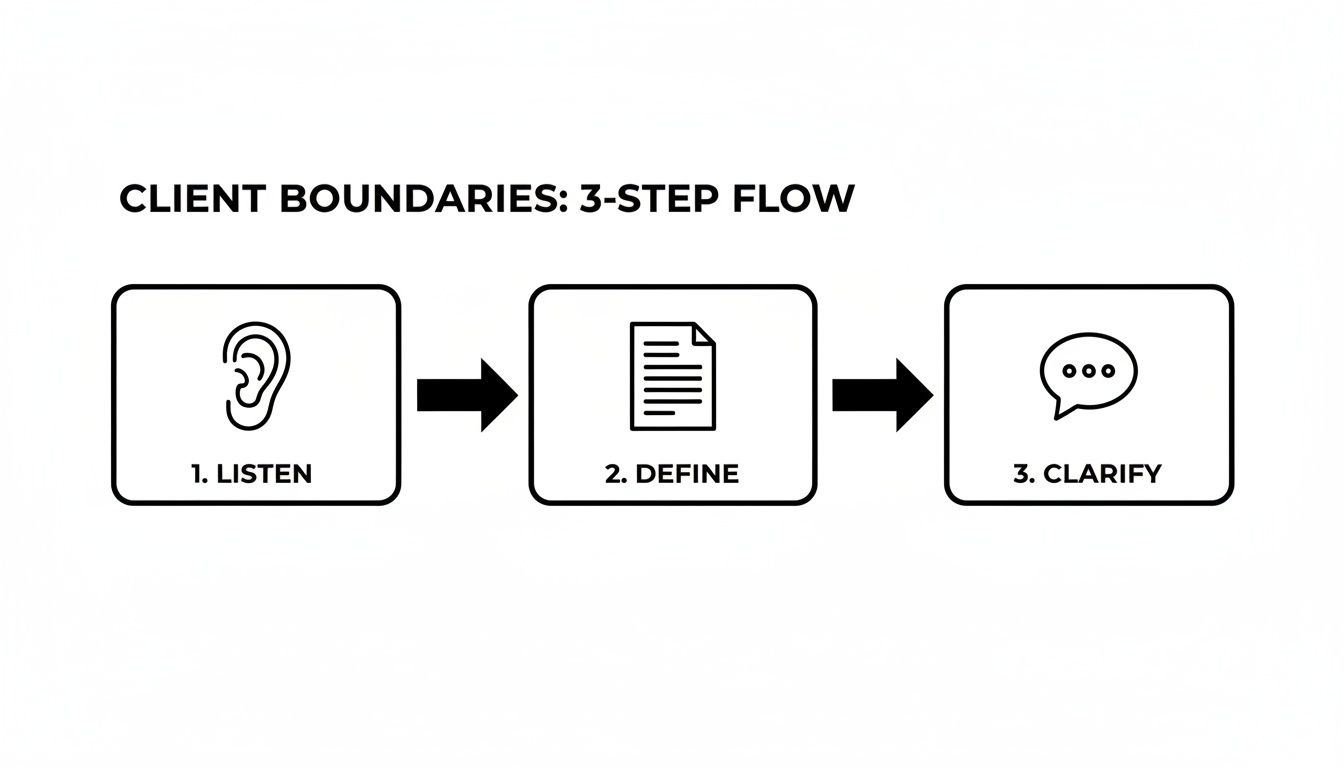
By moving from listening to defining and then clarifying, you leave nothing up to interpretation. Verbal agreements become documented project realities.
The Kickoff Meeting Agenda That Sets the Tone
The kickoff meeting is the heart of your onboarding. It’s your first—and best—opportunity to get everyone in the same room (virtual or otherwise) to re-commit to the mission. Don't treat this like a simple meet-and-greet; it’s a working session with a purpose.
A truly effective kickoff meeting needs to nail three things:
- Re-Confirm the "Why": Kick things off by restating the core business goals you uncovered during the sales process. This brings everyone back to the ultimate objective, lifting the conversation above a simple checklist of deliverables.
- Introduce the Players: Go around the room and introduce your team and their specific roles. Just as importantly, find out who the key decision-makers are on the client’s side. This simple act prevents a lot of future confusion about who to contact for what.
- Establish the "How": This is where you lay down the rules of engagement. Talk through your communication channels ("We use Slack for quick questions and a weekly email for formal updates"), meeting schedules, and how the feedback and approval process will work.
The goal of the kickoff isn’t to impress, but to align. A successful meeting ends with both sides having absolute clarity on what happens next, who is responsible for it, and when it’s due.
Your client should walk away from this meeting feeling confident and clear, not overwhelmed.
Systematizing the Onboarding Experience
Consistency builds trust. You can't just leave onboarding to chance or let it change with every new account manager. Creating a standardized checklist is one of the most important client onboarding best practices because it ensures every single client gets the same high-quality start.
Your checklist should be full of tangible action items that you follow for every new client, without exception.
- Internal Handoff Meeting: Before you ever meet with the client, your sales and delivery teams need to huddle. Sales must transfer all their notes, context, and any "soft" information they've gathered about the client's personality or specific priorities.
- Welcome Packet: Send a digital welcome packet ahead of the kickoff. This should include the meeting agenda, short bios of your team, and links to key documents or project management boards.
- System Access and Setup: Get the client set up with access to all the necessary tools—like your project management software, shared drives, or communication channels—before work officially begins. Double-check that their permissions are correct.
- Automated Welcome Sequence: A simple email automation can make you look incredibly professional from day one. Trigger a short series of welcome emails. The first can confirm the kickoff time, and later ones can introduce team members or share helpful resources.
By building a repeatable system, you eliminate guesswork and make sure no critical steps are ever missed. This methodical approach proves to the client that you're a well-oiled machine they can depend on, setting a powerful precedent for the entire relationship.
Mastering Proactive Communication and Reporting

Once a project kicks off, the single biggest threat to client trust is silence. It’s a simple truth I’ve learned over years of managing accounts. A lack of updates doesn't create peace; it creates a vacuum. And clients will almost always fill that void with their own anxieties and assumptions.
The key to managing expectations during delivery is shifting from a reactive "I'll tell them when it's done" mindset to a proactive one. Your goal is to create a predictable rhythm of updates that keeps clients feeling informed and confident. When they know a report is coming every Friday, they're far less likely to send that "Just checking in…" email on Wednesday.
This isn’t about non-stop communication. It's about consistent, valuable communication.
Establishing Your Communication Cadence
There’s no magic, one-size-fits-all schedule for client updates. The right approach always depends on the project's complexity and the client's personality—something you should have a good feel for after onboarding.
What you need is a clear plan, not just random check-ins. In today's market, expectations for responsiveness are incredibly high. A study from Coveo found that 52% of customers want a reply within just one hour, and they become 2.4x more loyal when their issues get resolved quickly. On top of that, 89% of customers absolutely hate repeating their problems to different people. This data paints a clear picture: a unified, proactive strategy is non-negotiable.
Having a structured communication plan gets everyone on the same page from the start. Below is a practical example you can adapt for your own clients.
Sample Client Communication Plan
A well-defined schedule transforms communication from a chore into a strategic tool that reinforces your value. It sets clear expectations for when and how you'll connect, which builds a foundation of trust.
| Communication Type | Frequency | Objective | Primary Channel |
|---|---|---|---|
| Weekly Status Update | Every Friday | Provide a concise summary of progress, next steps, and any immediate blockers. | Email or Project Management Tool |
| Bi-Weekly Sync Call | Every other Wednesday | Discuss strategic progress, review upcoming milestones, and answer questions. | Video Call (30 mins max) |
| Monthly Performance Report | First business day of the month | Present detailed KPIs, analyze results against goals, and outline the focus for the next month. | PDF Report + Call |
| Urgent Issue Alert | As needed | Immediately notify the client of a critical issue impacting scope, timeline, or budget. | Phone Call + Email Summary |
With a framework like this, you’re no longer just reporting; you're actively guiding the relationship and proving your reliability week after week.
Crafting Updates That Actually Add Value
The content of your updates is just as critical as their frequency. A vague report is almost as bad as no report at all. Your messages need to be clear, concise, and focused on what the client truly cares about: progress and results.
Every status update, whether it's a quick email or a formal report, should answer three core questions:
- What did we accomplish this week? (Highlight wins and completed tasks.)
- What are we working on next? (Provide clarity on upcoming priorities.)
- Are there any roadblocks or risks? (Flag potential issues before they become big problems.)
A great progress report doesn't just list tasks. It connects the work completed directly back to the client's business goals, reminding them of the value you're delivering every step of the way.
For a deeper dive, our guide on client communication best practices offers more strategies for making every interaction count.
Navigating Difficult News with Transparency
Sooner or later, you're going to have to deliver bad news. A deadline will slip, a budget will get tight, or an unexpected technical issue will pop up. How you handle these moments is a true test of your client relationship.
The absolute worst thing you can do is hide and hope it goes away. It won't. Your first instinct has to be picking up the phone.
When sharing bad news, I stick to a simple framework:
- Be Direct and Timely: Don't wait. Address the issue as soon as you have a clear understanding of it. Letting a client find out from a missed deadline is a rookie mistake.
- Own the Situation: Even if it’s not technically your fault, you own the communication. Take responsibility for finding a solution and avoid the blame game at all costs.
- Present a Plan: Never show up with just a problem. Come prepared with a clear analysis of the impact and one or two potential solutions. This proves you're in control and focused on moving forward.
For example, imagine a key team member's unexpected absence will delay a milestone. The conversation should sound something like this:
"Hi [Client Name], I'm calling to give you a heads-up on a potential delay. [Team Member] is out sick, which impacts our original timeline for the feature launch. I've looked at our options, and here are two ways we can adjust: we can either push the launch by three days, or we can re-prioritize and launch a scaled-back version on time. What works best for your immediate priorities?"
This approach instantly turns a potential crisis into a collaborative problem-solving session. It builds trust, even when things go wrong.
Navigating Scope Creep and Difficult Conversations
Let's be honest: no matter how airtight your initial project plan is, scope creep is going to happen. It almost always starts with something small—a seemingly harmless "can you just…" request that pops up in an email or at the end of a call.
But those tiny additions have a way of piling up, quietly pushing timelines and eating into your budget. The way you handle these moments is what separates the pros from the amateurs and is a masterclass in managing client expectations.
The goal isn't to shut down new ideas. Instead, you need a clear, professional process for handling them. When a new request lands on your plate, your first move is simply to pause. Fight that instinct to give an immediate "yes" just to be agreeable.
Your go-to response should be something confident and collaborative, like: "That's a really interesting idea. Let me run this by the team so we can figure out the impact on our timeline and budget. I'll get back to you with a few clear options."
That one sentence works wonders. It shows you value their input, immediately sets the expectation that changes have consequences, and gives you breathing room to analyze the request properly instead of committing to something you'll regret.
From Casual Request to Formal Change Order
After you've had a moment to evaluate the request, it's time to formalize it with a change order. This isn’t about bogging things down with paperwork; it's about creating absolute clarity for everyone involved. A change order is just a simple document that puts the new request and its impact down in black and white.
It needs to clearly lay out:
- The Scope Addition: A specific description of the new work.
- The Impact on Timeline: Exactly how many more days or weeks this will add to the project.
- The Additional Cost: The precise price for the new work, broken down if needed.
- Approval Section: A space for the client to sign off, officially acknowledging the adjustments.
Presenting this document isn't a confrontation; it's a straightforward business discussion. You're not saying "no." You're saying, "Yes, we can absolutely do that for you. Here is exactly what it will take." This approach respects the client's idea while protecting your team's sanity and the project's bottom line.
Scope creep isn't the client's fault—it's a process failure. A solid change order process turns a potential conflict into a structured, professional negotiation that keeps everyone aligned.
By making this your standard operating procedure, you train clients to see that every request involves a trade-off. It shifts their thinking from making casual asks to making strategic business decisions.
De-escalating Frustration with Empathy
Hard conversations are just part of the job. A client might be upset about a delay, unhappy with a deliverable, or just stressed about results. When things get heated, our first instinct is to get defensive. You have to fight that urge with everything you've got. The second you start defending, you've stopped listening.
Your first priority is to de-escalate the situation. I've found a simple three-part approach focused on acknowledgment and teamwork works best.
- Listen Actively: Just let them talk. Don't interrupt. Take notes and show them you're hearing every single word.
- Acknowledge Their Feelings: Start your response by validating their emotion, even if you don't agree with the facts. A simple phrase like, "I can hear how frustrated you are, and I completely understand why you feel that way," can instantly lower the temperature. It shows you're on their side.
- Co-create the Solution: Once they feel heard, pivot the conversation toward the future. Ask a collaborative question: "Okay, I understand the problem. From your perspective, what would a great outcome look like from here?"
This question is incredibly powerful. It breaks the cycle of blame and invites them to help build the solution. It transforms the dynamic from a tense confrontation into a partnership. You're not just fixing a problem anymore; you're working with them to get things back on track—and that's the heart of truly effective client management.
A Few Common Questions, Answered
Even with the best game plan, managing client expectations means you'll run into some tricky situations. Let's tackle a few of the most common questions I hear from teams out in the trenches.
What’s the Biggest Mistake to Avoid When Setting Expectations?
Hands down, the biggest mistake is being vague. It’s easy to do, especially early on in the sales process. You promise things like "we'll boost your results," but you never actually define what that means.
That kind of ambiguity creates a dangerous gap. The client’s imagination fills in the blanks, painting a picture of success that might be miles away from what you can realistically deliver. So when their version of "boosted results" doesn't happen, they're disappointed, even if you did phenomenal work.
The fix? Get specific. From day one, you need to define concrete deliverables and measurable KPIs. Get it all down in a detailed Statement of Work (SOW) that both you and the client review and sign. That document isn't just a formality; it's the anchor you can always come back to when things get fuzzy.
How Do I Reset Expectations Mid-Project?
This calls for a direct, honest conversation. The absolute worst thing you can do is try to fix a major misalignment over a long, winding email thread. That just leads to more confusion. You need to schedule a dedicated meeting to get on the same page.
But don't walk into that meeting empty-handed. First, gather your data. Show the project's progress, pull up the original goals from the SOW, and be ready to explain why there's a disconnect. This isn't about placing blame; it's about providing clear context.
Once you’re in the meeting, follow a simple framework:
- Acknowledge their concerns. Start by showing them you're listening and you get where they're coming from.
- Use the data. Gently bring the conversation back to the original SOW and the scope you both agreed on.
- Propose a clear action plan. Lay out exactly how you're going to get things back on track.
The key is to own the conversation. You’re not there to make excuses—you’re there to present a solution. It shows real leadership and reinforces your commitment to getting the job done right.
How Can Automation Help Me Manage Client Expectations?
Think of automation as your secret weapon for consistency. It helps you deliver a polished, professional experience every single time, without someone on your team having to manually hit "send" on every little update.
For example, you can set up an automated email sequence for onboarding. This way, every new client gets the exact same critical information right when they need it. You can also automate reminders for upcoming deadlines or have your project management tool fire off a weekly progress summary. These small, consistent updates keep clients in the loop and dramatically cut down on those "just checking in" emails.
At MakeAutomation, we live by this. We automate our own repetitive communication so our team can focus on the high-value, strategic conversations that actually move the needle for our clients. It's a game-changer.
What Should I Do with a Client Who Is Never Satisfied?
We've all had them. For the client with perpetually unrealistic expectations, you need to be firm, fair, and professional. And your signed SOW is your best friend here.
When a new, out-of-scope request pops up, bring the conversation right back to that document. Don't just wing it. Kick off your formal change request process immediately. This should clearly spell out the extra time, resources, and cost involved.
Often, just showing the client the work required to fulfill their "small" request is enough to bring their expectations back down to earth. If the pattern continues and starts to drain your team or kill your profitability, it might be time for a frank conversation about whether the partnership is a good fit for either of you long-term.
Ready to stop fighting fires and start building scalable, automated systems that keep your clients happy? At MakeAutomation, we help B2B and SaaS companies implement the exact frameworks and automations needed to manage projects, streamline communication, and accelerate growth. Learn how we can optimize your operations today.