
12 Best Lead Scoring Software Tools to Boost Sales in 2026
In a competitive market, not all leads are created equal. Your sales team’s time is their most valuable asset, yet countless hours are often lost chasing prospects who aren't ready to buy. This inefficient approach leads to lower conversion rates, team burnout, and missed revenue targets. The core problem is a lack of focus; without a system to separate high-potential leads from the merely curious, sales efforts become diluted and ineffective.
The solution is intelligent lead prioritization. By implementing a robust lead scoring system, you can automatically rank prospects based on their engagement, demographic data, and fit with your ideal customer profile. This allows your sales representatives to concentrate their energy where it matters most: on the leads that are most likely to close. To truly empower your sales team and implement smart lead prioritization, it's essential to establish a robust framework, starting with a single source of truth for all your customer data. This foundational step ensures scoring accuracy and consistency across your entire sales and marketing stack.
This guide provides a comprehensive breakdown of the 12 best lead scoring software platforms available today. We’ve analyzed each tool to help you find the perfect fit, whether you're a startup needing an all-in-one solution or an enterprise requiring a sophisticated, AI-driven platform. For each option, you'll find a detailed review covering:
- Core Features and Limitations: An honest look at what each platform does well and where it falls short.
- Ideal Use Case: Who the software is built for, from small businesses to large enterprises.
- Pricing and Integration: Practical details on cost and how it connects with your existing CRM and marketing tools.
We've included screenshots and direct links for every platform, making it easy for you to explore them further. Our goal is to cut through the marketing noise and give you the clear, actionable information you need to choose the right software, accelerate your sales cycle, and drive sustainable growth.
1. HubSpot
HubSpot earns the top spot as one of the best lead scoring software platforms, primarily because it embeds powerful scoring capabilities directly into a comprehensive CRM. This all-in-one approach is ideal for businesses that want marketing, sales, and service tools to work seamlessly together without complex third-party integrations. The platform offers a clear path for growth, starting with intuitive, rules-based scoring in its Marketing Hub Professional tier and scaling up to AI-powered predictive scoring in the Enterprise plan.
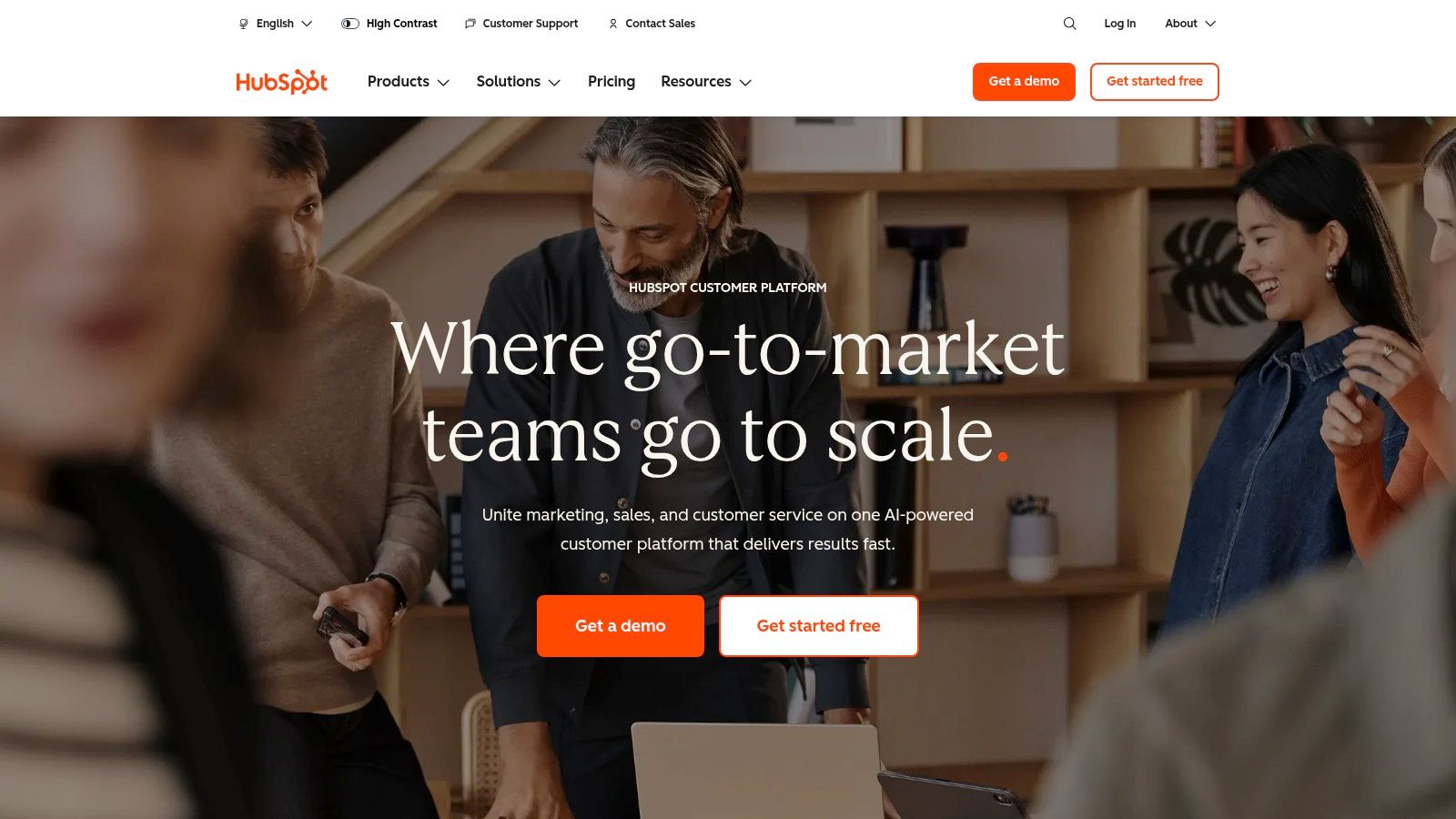
Recently, HubSpot introduced dedicated Lead & Health Scoring apps. These tools allow for more sophisticated models that separate a lead’s fit (demographics, firmographics) from their engagement (website visits, email opens). This provides a clearer, more actionable picture for sales teams. Understanding these concepts is a crucial first step, and you can learn more about the fundamentals of lead scoring before building your first model.
Key Strengths & Considerations
The platform’s major advantage is its user-friendly interface, which allows non-technical teams to build and deploy scoring rules quickly. Automation is tightly integrated, making it easy to trigger tasks, enroll leads in sequences, or change lifecycle stages based on score thresholds. However, accessing the advanced AI and predictive features requires an Enterprise-level subscription, and the associated onboarding fees can significantly increase the total cost. Migrating from older scoring properties to the new apps also requires careful planning to rebuild existing models.
- Best For: Companies already using or planning to adopt the HubSpot ecosystem for their CRM and marketing automation needs.
- Pricing: Lead scoring is available in Marketing Hub Professional (starting at $800/month, billed annually) and Enterprise (starting at $3,600/month, billed annually).
- Website: https://www.hubspot.com
2. Salesforce (Sales Cloud + Marketing Cloud Account Engagement)
Salesforce solidifies its position as an enterprise-grade choice for lead scoring by deeply integrating AI capabilities into its dominant CRM platform. Its strength lies in offering a native, data-rich environment where sales and marketing activities are unified. Through tools like Einstein AI in Sales Cloud and advanced features in Marketing Cloud Account Engagement (formerly Pardot), Salesforce delivers sophisticated scoring models that analyze both lead fit and behavioral signals directly within the ecosystem where sales teams live.
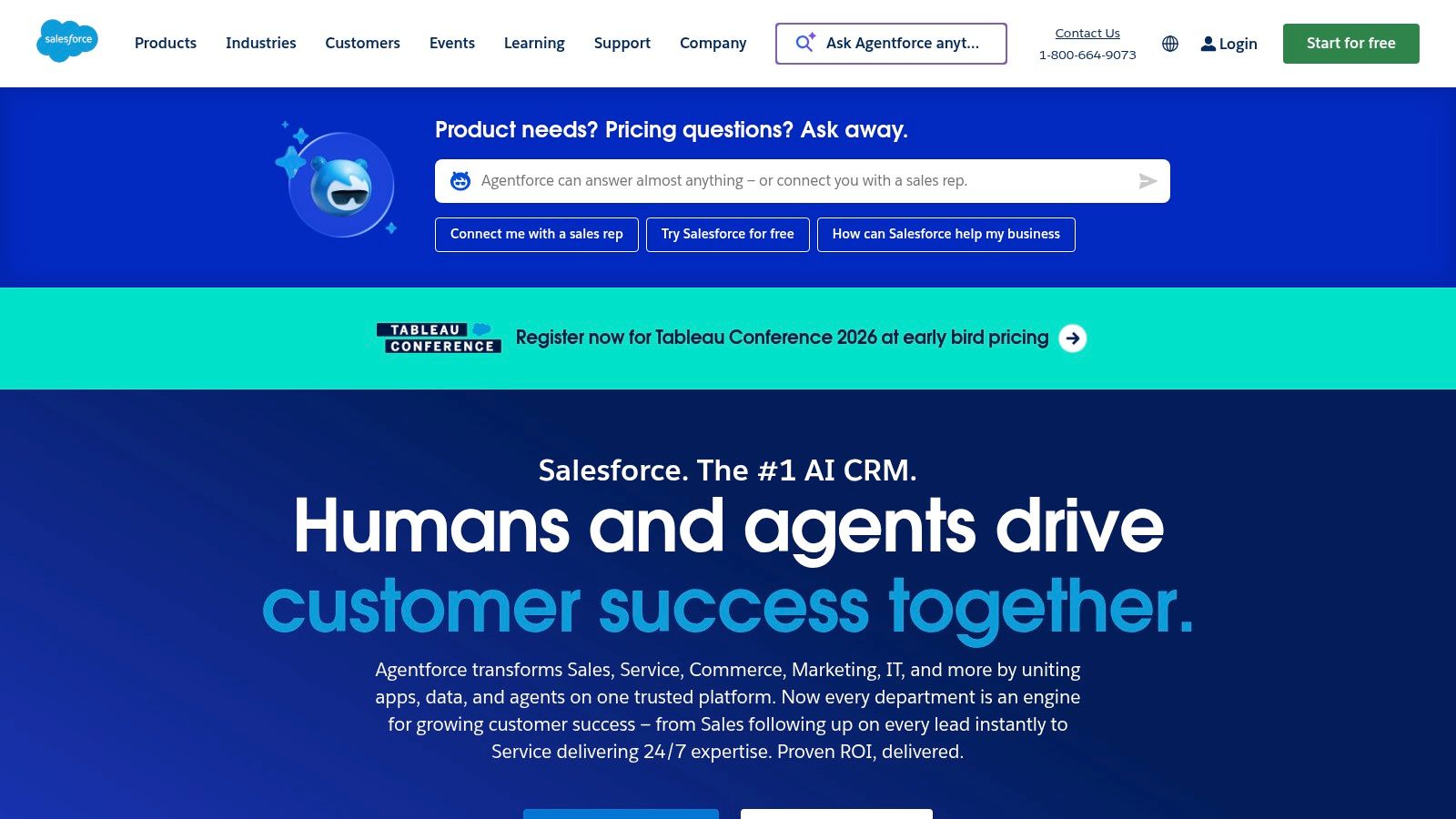
The platform’s Einstein Lead Scoring automatically analyzes historical data to identify the attributes most likely to predict conversion, moving beyond simple rules-based systems. Similarly, Einstein Behavior Scoring in Marketing Cloud Account Engagement prioritizes leads based on their engagement, such as website visits and content downloads. Implementing these powerful features effectively requires a solid strategy, and it’s wise to review lead scoring best practices to maximize their impact on your sales pipeline.
Key Strengths & Considerations
The primary advantage of Salesforce is its native integration; there’s no need to sync data between disparate systems, providing a single source of truth for all lead and customer information. This makes it one of the best lead scoring software solutions for large organizations that demand robust governance, security, and scalability. However, the functionality is often spread across different editions and add-on products, which can make the pricing structure complex and difficult to navigate. Unlocking the full suite of AI-powered scoring tools typically requires significant investment in higher-tier plans.
- Best For: Enterprise-level organizations already heavily invested in the Salesforce ecosystem seeking powerful, native AI-driven scoring.
- Pricing: Lead scoring features are available in various Sales Cloud and Marketing Cloud Account Engagement editions, with advanced AI scoring in higher-cost tiers. Contact Salesforce for detailed pricing.
- Website: https://www.salesforce.com
3. Adobe Marketo Engage
Adobe Marketo Engage secures its position as an enterprise-grade leader in the best lead scoring software category, renowned for its highly flexible and powerful marketing automation capabilities. It excels in complex B2B environments where granular control over scoring models is essential. Marketo allows businesses to create multiple scoring profiles, enabling them to track lead interest across different products or services independently and route them to the appropriate sales teams with precision.
The platform’s strength lies in its ability to manage sophisticated rules based on both demographic data and a deep well of behavioral triggers, from web page visits to content downloads. This makes it ideal for account-based marketing (ABM) strategies and long sales cycles. Properly leveraging these features is key, and understanding marketing automation best practices can help maximize the platform's potential from day one.
Key Strengths & Considerations
Marketo’s primary advantage is the sheer flexibility of its scoring engine and its native, deep integrations with major CRMs like Salesforce and Microsoft Dynamics. The extensive LaunchPoint partner ecosystem further extends its capabilities. However, this power comes with a steeper learning curve compared to more simplified, all-in-one solutions. Pricing is quote-based and positioned at a premium, making it less accessible for small businesses. The interface, while robust, can feel less intuitive for teams without a dedicated marketing operations specialist.
- Best For: Enterprise B2B companies with complex sales funnels and dedicated marketing operations teams that require granular control over multiple scoring models.
- Pricing: Pricing is customized and available upon request through a quote.
- Website: https://business.adobe.com/products/marketo/marketo-engage.html
4. Zoho CRM
Zoho CRM secures its spot on this list by offering one of the most accessible and value-packed lead scoring solutions for small and mid-sized businesses. Its strength lies in integrating both manual, rules-based scoring and AI-powered predictive scoring directly within its affordable CRM platform. This dual approach allows companies to start with simple, explicit rules and graduate to more sophisticated, AI-driven prioritization as they grow and accumulate more data.
The platform's standout feature is Zia, Zoho's AI assistant. Zia provides a "Zia Score" for leads and deals, ranking them on a 0-100 scale based on their likelihood to convert. Crucially, it also provides reasons for the score, showing which positive and negative signals influenced the ranking. This transparency helps sales teams trust the AI and understand what drives lead quality, making it a powerful tool for businesses that want AI insights without the complexity or cost of enterprise-grade systems.
Key Strengths & Considerations
Zoho CRM’s primary advantage is its exceptional affordability, bundling robust lead scoring features into plans that are significantly less expensive than many competitors. The ability to trigger workflow rules based on score changes provides powerful automation capabilities right out of the box. However, the advanced Zia predictive scoring is only available in the Enterprise and Ultimate editions. Furthermore, for Zia to function effectively, it requires a sufficient volume of historical data and a minimum number of users, which may be a hurdle for very new or small companies.
- Best For: SMBs and mid-market companies seeking a cost-effective, all-in-one CRM with both manual and AI-assisted lead scoring capabilities.
- Pricing: Rules-based scoring is available in the Professional plan (starting at $23/user/month). Zia predictive scoring is included in the Enterprise plan (starting at $40/user/month).
- Website: https://www.zoho.com/crm
5. Freshsales by Freshworks
Freshsales earns its spot on this list of the best lead scoring software by packaging powerful, AI-driven capabilities into an accessible and sales-focused CRM. Ideal for small to mid-sized businesses, it integrates its "Freddy AI" Contact Scoring directly into the platform, allowing teams to prioritize leads without needing a separate, complex tool. This native integration simplifies workflows by combining lead scoring with built-in engagement tools like telephony, email, and sales sequences.
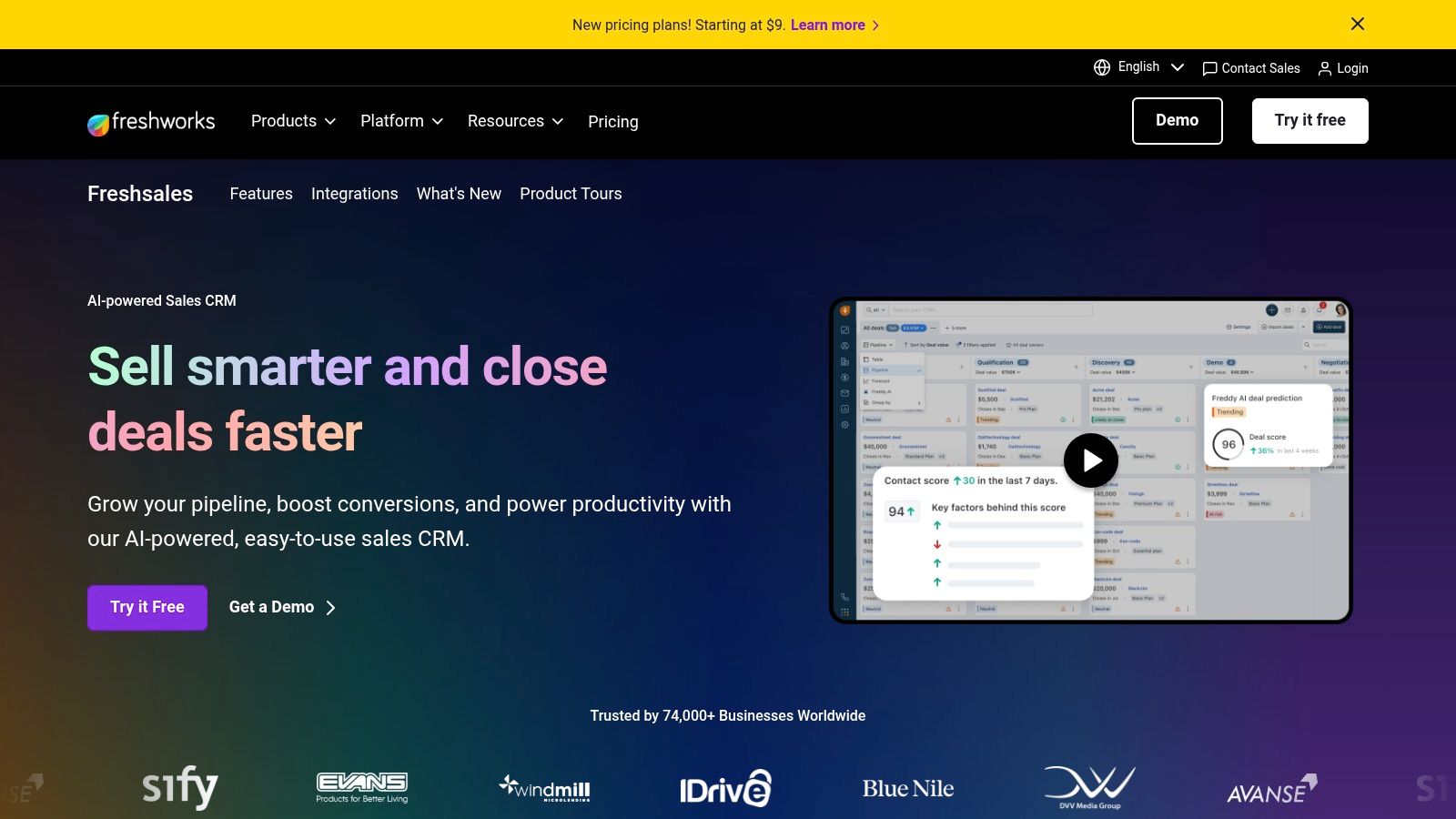
The platform’s contact scoring model analyzes both demographic data and engagement signals to predict a lead's likelihood to convert. Freddy AI automatically assigns a score from 1 to 99, providing sales reps with a clear, at-a-glance indicator of which contacts to focus on first. This approach streamlines the prioritization process, making it highly effective for fast-moving sales teams that need to act on hot leads immediately.
Key Strengths & Considerations
The primary advantage of Freshsales is its exceptional time-to-value. The clean user interface and straightforward setup mean businesses can deploy AI-powered scoring quickly, often within the 21-day trial period. This accessibility, combined with a lower entry price than many enterprise-grade competitors, makes it an attractive option for teams that want sophisticated features without the heavy investment. However, its AI capabilities, while robust, are still maturing compared to high-end, dedicated ABM suites, and accessing the Freddy AI scoring feature requires a Pro or Enterprise plan.
- Best For: SMBs and mid-market sales teams seeking an all-in-one CRM with built-in, AI-powered lead scoring and native communication tools.
- Pricing: Freddy AI Contact Scoring is available in the Pro plan (starting at $39/user/month, billed annually) and Enterprise plan (starting at $69/user/month, billed annually).
- Website: https://www.freshworks.com/crm
6. ActiveCampaign
ActiveCampaign secures its spot as one of the best lead scoring software solutions by tightly integrating scoring with its powerful marketing and sales automation engine. It is a favorite among growth-focused teams that need highly configurable models to automate nurturing sequences. Unlike platforms that offer a single lead score, ActiveCampaign allows for both "Contact" and "Deal" scoring, enabling teams to evaluate the quality of a person and the health of a specific sales opportunity independently.
The platform's strength lies in its flexibility. Users can create unlimited custom scoring rules that add or subtract points based on a vast array of triggers, such as email engagement, website visits, form submissions, and custom events. This granular control allows for the creation of sophisticated models that precisely reflect a business's ideal customer profile and buying journey. These scores can then directly trigger automations, moving contacts between lists, starting new campaigns, or creating tasks for the sales team.
Key Strengths & Considerations
The primary advantage of ActiveCampaign is how deeply its scoring is embedded within its automation capabilities. The ability to build intricate "if/then" logic based on score changes makes it exceptionally powerful for dynamic lead nurturing. Its strong integrations with email, SMS, and WhatsApp also mean that scoring can be influenced by and trigger actions across multiple communication channels. However, lead scoring is typically included in higher-tier plans, and the public pricing pages can sometimes require contacting sales for exact feature-to-plan mapping. It's crucial to verify which plan meets your specific scoring needs before committing.
- Best For: Growth teams and agencies that require highly configurable scoring models tied directly to complex automation workflows.
- Pricing: Contact and Deal scoring are available in the Sales Plus plan and above. Pricing is customized based on contact count and features, so a sales consultation is often required.
- Website: https://www.activecampaign.com
7. LeadSquared
LeadSquared carves out a unique space as one of the best lead scoring software options by focusing on vertical-specific solutions. Rather than offering a one-size-fits-all platform, it provides specialized sales and marketing automation suites for industries like education, financial services (BFSI), and healthcare. This approach embeds lead scoring directly into workflows and terminology that are immediately relevant to its target users, reducing the need for extensive customization. The platform clearly distinguishes between a lead's quality score (fit) and their engagement score (interest) right out of the box.
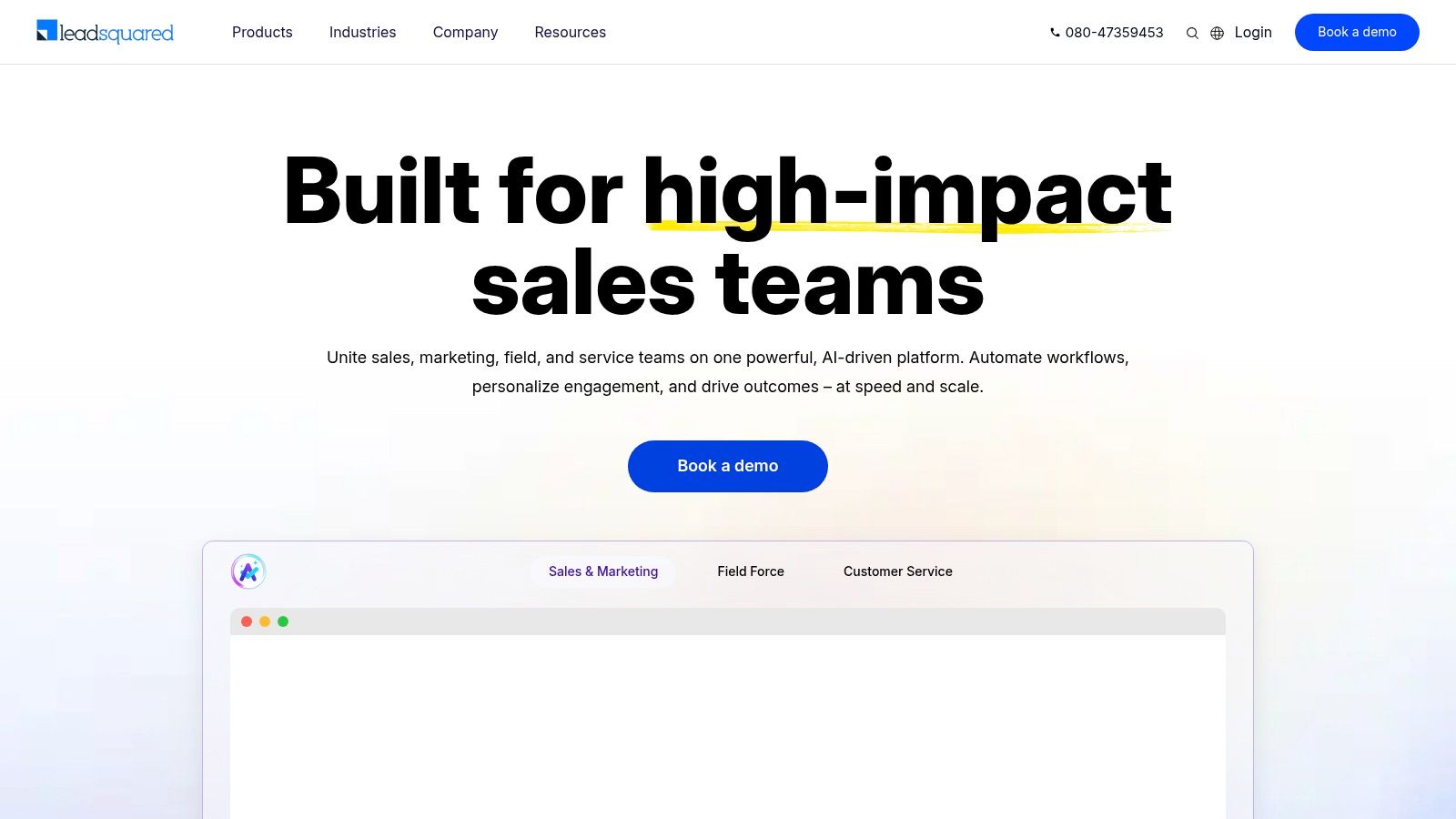
This vertical focus is particularly useful for organizations with large, distributed field sales teams, as LeadSquared combines its powerful lead management and automation with a robust mobile CRM. The system is designed to handle high volumes of leads and automate distribution and routing based on score, territory, or other predefined rules. This ensures high-priority leads are actioned quickly, a critical function in fast-moving industries.
Key Strengths & Considerations
LeadSquared’s primary advantage is its industry-specific design, which provides pre-configured tools and workflows that accelerate deployment. The clear inclusion of lead scoring in its standard packages makes it an accessible feature without requiring a top-tier plan. However, the platform's pricing structure is less transparent than many competitors. Most plans require custom quotes and annual commitments, making it difficult to gauge the initial investment without engaging their sales team directly. This hands-on, quote-based approach might be a hurdle for smaller businesses seeking straightforward, self-service options.
- Best For: High-volume B2C businesses in specific verticals like education, finance, and real estate, especially those with field sales teams.
- Pricing: Pricing is customized based on features and user count. You must contact their sales team for a detailed quote.
- Website: https://www.leadsquared.com
8. 6sense
6sense secures its position on this list as a powerful, AI-driven platform focused on predictive account-based marketing (ABM) and buyer intent. It moves beyond traditional lead scoring by identifying which accounts are actively in-market for a solution like yours, even before they visit your website. This makes it an essential tool for ABM teams who need to prioritize high-value, in-market accounts and integrate predictive scores directly into their existing marketing automation platforms and CRMs.
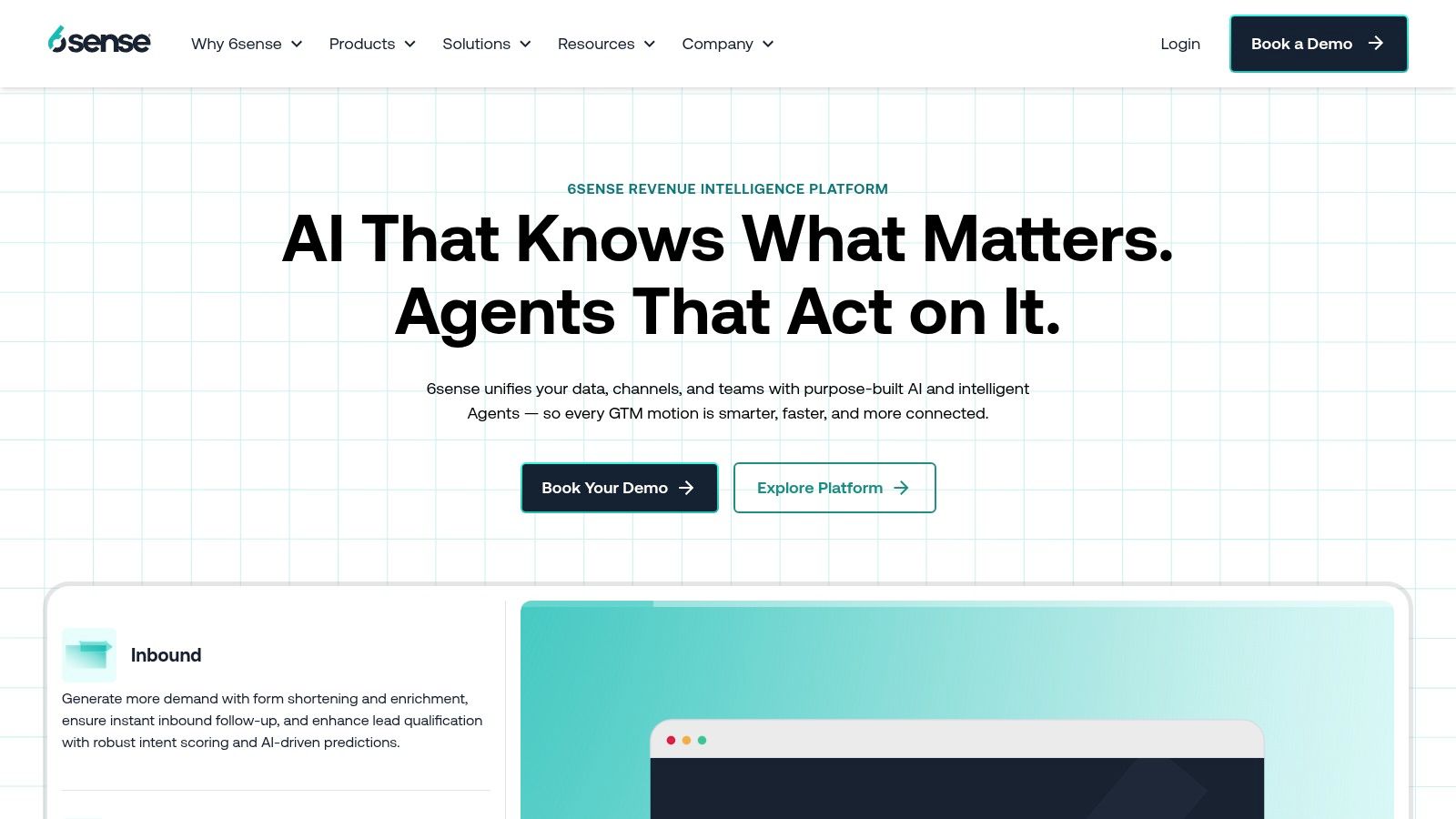
The platform's strength lies in its real-time lead scoring API, which pushes predictive data into common systems like Marketo, HubSpot, and Pardot. This allows sales and marketing teams to act on intent signals within their native workflows without logging into a separate system. The AI models analyze vast amounts of third-party intent data alongside your own first-party data to create a comprehensive view of account engagement and purchase readiness, making it one of the best lead scoring software options for enterprise-level ABM.
Key Strengths & Considerations
The primary advantage of 6sense is its enterprise-grade predictive intelligence, which provides a significant competitive edge in identifying and engaging target accounts. Its deep integrations and real-time scoring workflows ensure that sales teams receive timely and actionable insights. However, the platform's advanced predictive features and data export credits are often sold as add-ons, which can substantially increase the overall investment. Additionally, the most powerful bundles are sales-quoted, lacking the transparency of fully self-serve pricing models.
- Best For: Enterprise B2B companies with a strong focus on account-based marketing that need to identify and prioritize in-market buyers.
- Pricing: Pricing is customized and quote-based. A free Sales Intelligence tier is available to trial the platform's data and user experience.
- Website: https://6sense.com
9. Demandbase
Demandbase carves out its space as one of the best lead scoring software solutions by focusing squarely on account-based marketing (ABM). Instead of just scoring individual leads, its go-to-market platform excels at identifying and prioritizing high-value accounts that are most likely to convert. It combines unified first-party and third-party data, intent signals, and predictive analytics to power its scoring models, giving sales and marketing teams a cohesive view of an entire buying committee's engagement.
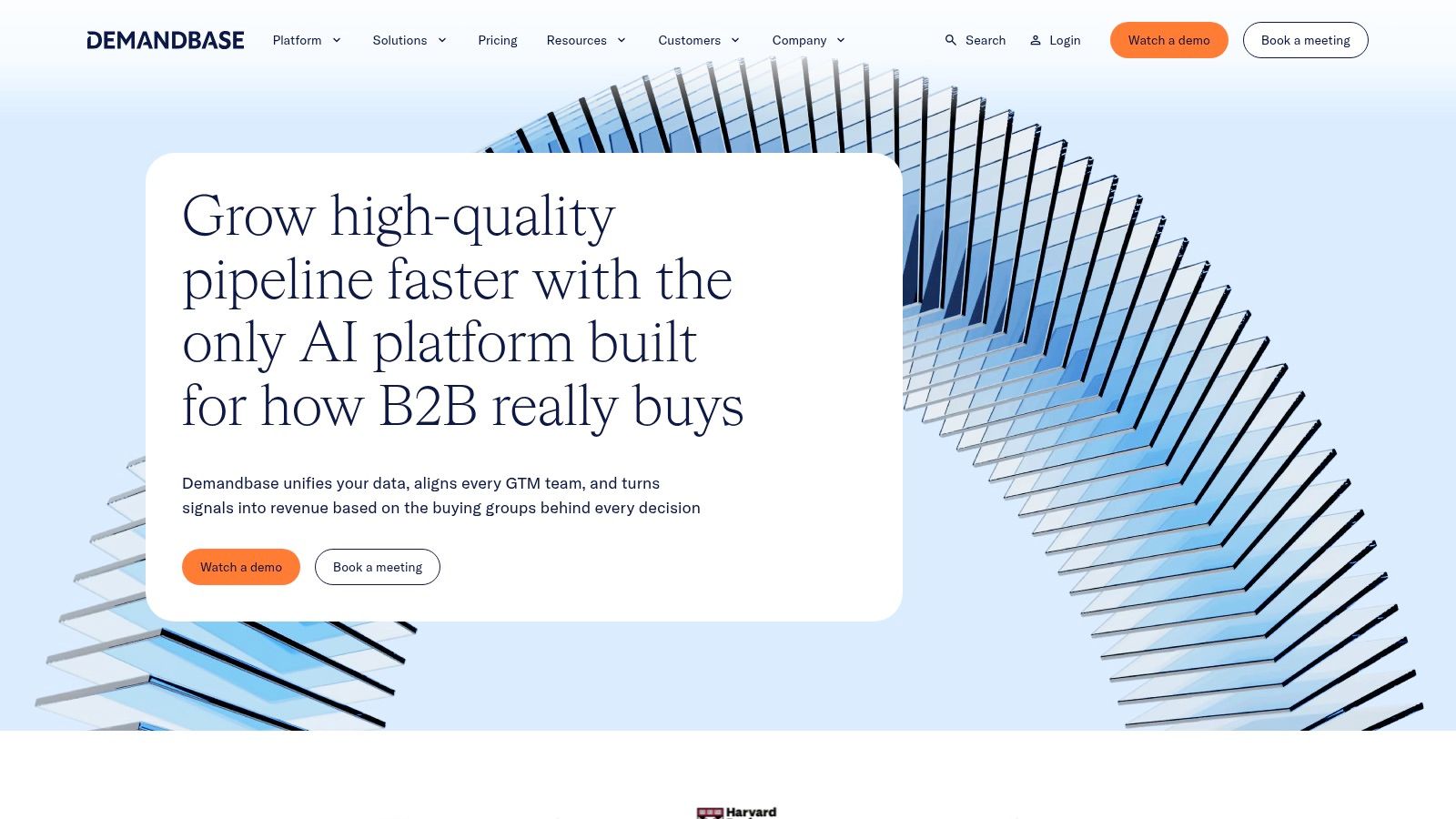
A key differentiator is Demandbase's ability to operationalize these scores directly within ABM workflows. For example, its Pipeline Predict model automatically identifies in-market accounts and can trigger targeted advertising campaigns or sales outreach sequences. The platform also offers auto-retraining for its predictive models, which by default updates every three months to ensure scores remain accurate and relevant as market dynamics shift and new data becomes available.
Key Strengths & Considerations
The platform’s greatest strength lies in its end-to-end GTM coverage, from identifying target accounts to engaging them with personalized advertising and activating sales plays. This holistic approach provides robust analytics that connect scoring directly to revenue outcomes. However, Demandbase is built for the enterprise, meaning there is no self-serve option or transparent pricing. The entire sales motion is quote-based, requiring direct contact with their sales team to understand the platform's cost and packaging structure, which may not be suitable for smaller businesses.
- Best For: Enterprise B2B companies committed to an account-based marketing strategy that requires deep account intelligence and integrated activation.
- Pricing: Pricing is quote-based and tailored to specific platform modules and company needs. You must contact their sales team for a custom quote.
- Website: https://www.demandbase.com
10. MadKudu
MadKudu is a purpose-built predictive scoring platform designed for the unique challenges of B2B SaaS and product-led growth (PLG) companies. Unlike general-purpose scoring tools built into CRMs, MadKudu focuses exclusively on delivering a clear, actionable signal that separates high-intent leads from noise. It generates a "Customer Fit" score based on firmographics and a "Likelihood to Buy" score based on behavior, combining them into an easy-to-understand A-E grade.
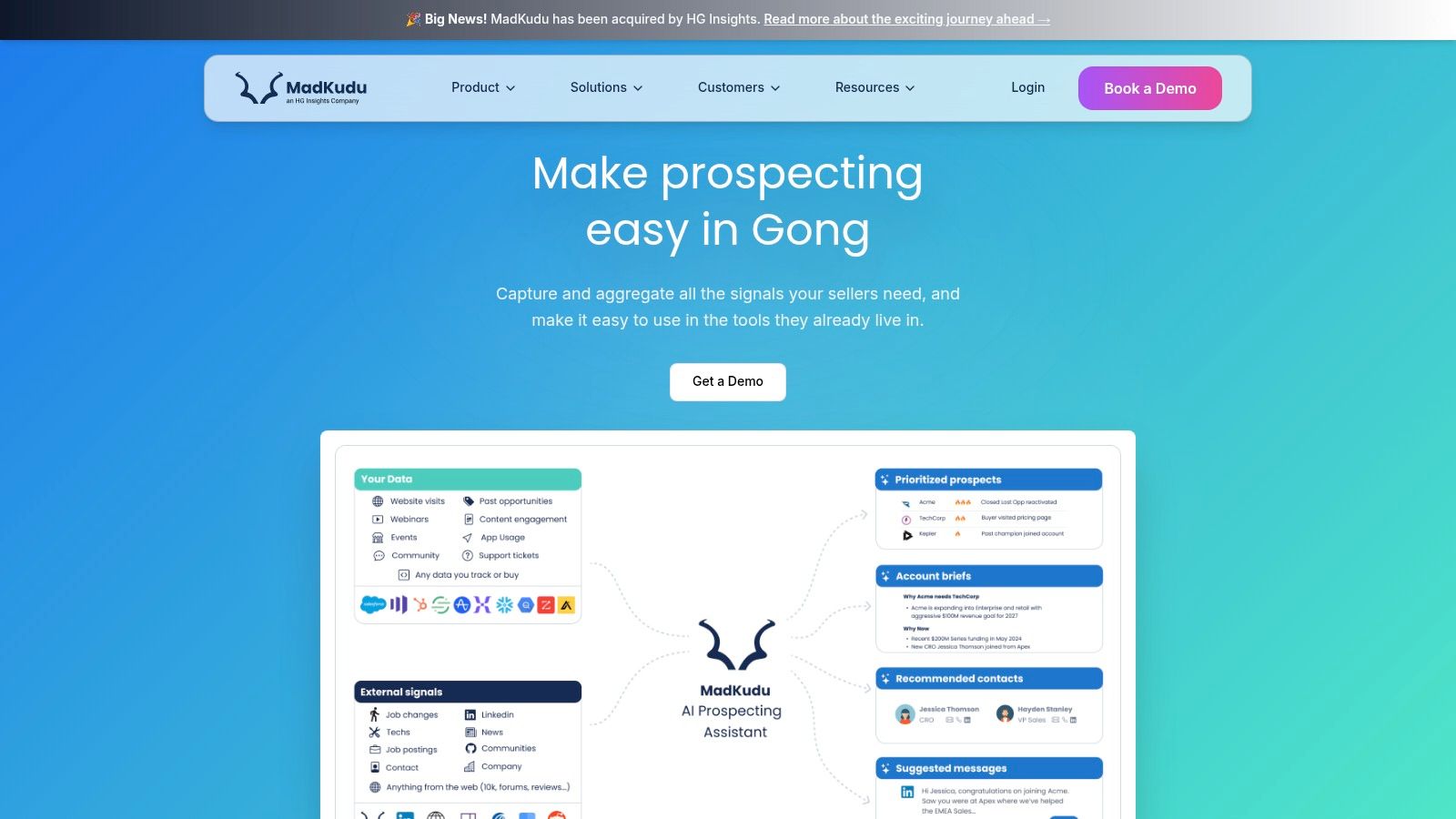
The platform stands out with its explainable AI, showing sales reps the specific signals that contributed to a lead's grade, such as "used a business email" or "works at a high-growth company." This transparency builds trust and helps teams understand the model's logic. Its ability to update scores every 4 to 12 hours ensures that sales teams act on the most current intent data, a critical advantage in fast-moving markets.
Key Strengths & Considerations
MadKudu’s primary strength is its speed to value and the clarity it provides sales development representatives (SDRs). The A-E grading system immediately tells reps where to focus their energy, eliminating guesswork and improving efficiency. Features like the Google Sheets add-on allow marketing teams to qualify lists before importing them into the CRM, maintaining database hygiene. However, this specialized power comes at a premium price compared to native, rules-based CRM features. The official pricing is quote-based, and while it's a powerful tool, it requires a significant investment that may not be suitable for early-stage companies without a high volume of leads.
- Best For: Product-led growth (PLG) and B2B SaaS companies that need to prioritize a high volume of inbound signups and MQLs.
- Pricing: Quote-based. Plans are tailored to company size, lead volume, and required integrations.
- Website: https://www.madkudu.com
11. Pipedrive
Pipedrive positions itself as a sales-first CRM, making its approach to lead scoring highly practical and accessible for sales teams. Rather than offering a complex, marketing-centric scoring engine out of the box, it provides foundational tools and relies on its robust marketplace for more advanced capabilities. This makes it an excellent choice for small to medium-sized businesses that want to implement scoring without significant administrative overhead.
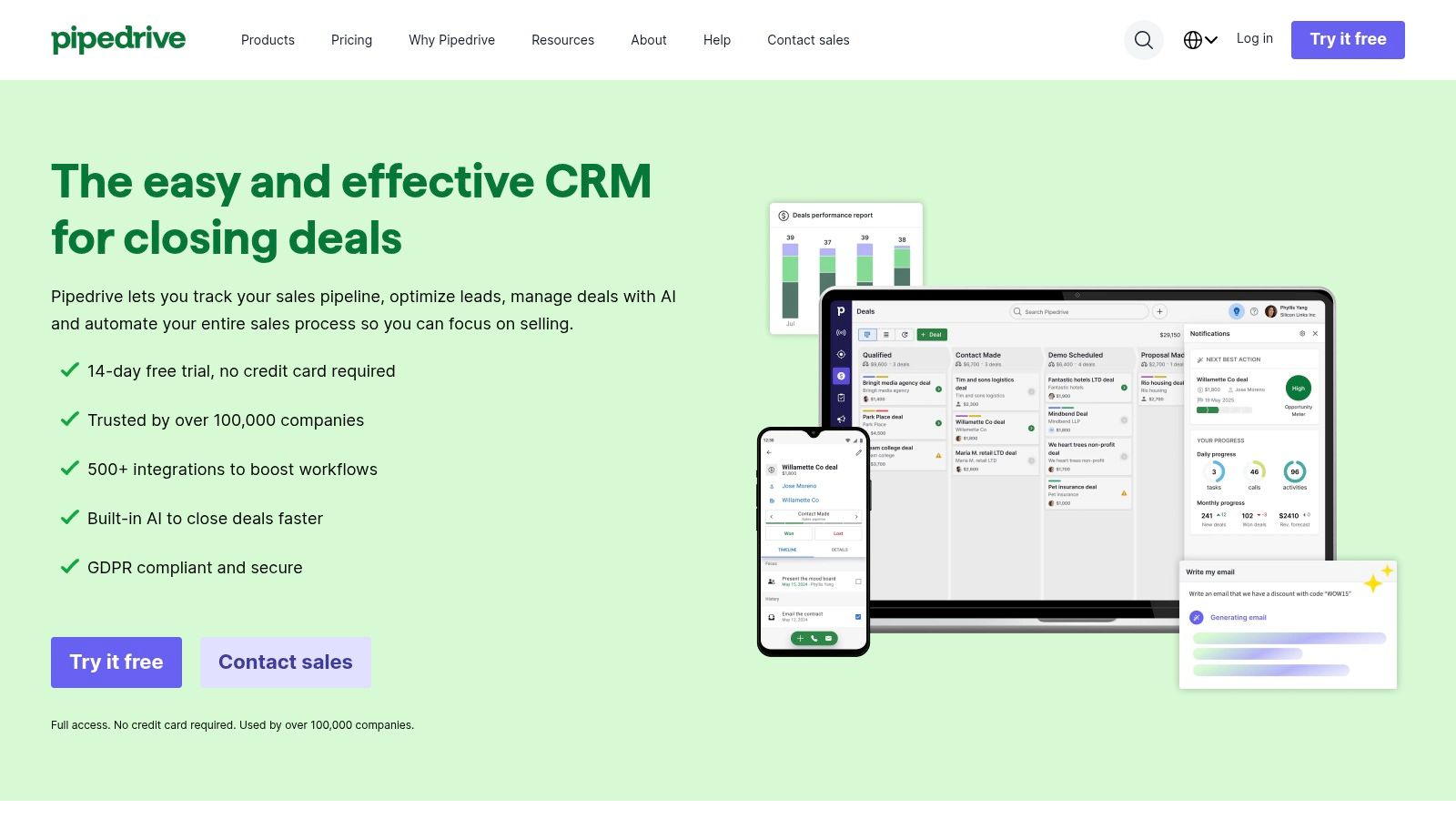
The platform’s native capabilities are centered around deal-level scoring. The 'Pulse by Pipedrive' toolkit allows teams to create custom scores (from 0 to 100) to rank active deals based on criteria like deal size, stage, and custom field data. For traditional lead scoring, users can turn to marketplace integrations or the Web Visitors add-on, which tracks engagement and helps identify hot prospects. This hybrid approach offers flexibility, allowing users to build a solution that fits their specific needs.
Key Strengths & Considerations
Pipedrive’s main strength is its clean user interface and quick onboarding, which empowers sales reps to start using its features almost immediately. The marketplace offers abundant extensions for lead enrichment and engagement-based scoring, making it easy to create a powerful, customized system. However, its native lead-level scoring is still evolving, meaning many scenarios depend on third-party add-ons. Furthermore, the most useful scoring features are gated behind the higher-tier plans, which should be considered when evaluating costs.
- Best For: SMBs and sales-focused teams that prioritize an easy-to-use CRM and want the flexibility to add scoring functionality via integrations.
- Pricing: Deal scoring is available in the Professional plan (starting at $49.90/user/month, billed annually) and higher.
- Website: https://www.pipedrive.com
12. G2 – Lead Scoring Software Category
While not a software platform itself, G2’s Lead Scoring category is an indispensable research tool for any team evaluating their options. It serves as a B2B marketplace, aggregating real user reviews, feature comparisons, and live rankings to help you discover and shortlist the best lead scoring software for your specific needs. This approach provides a meta-view of the landscape, allowing you to compare tools based on authentic user feedback rather than just vendor marketing claims.
The platform excels at helping you cut through the noise. You can filter solutions by essential criteria like company size, industry, specific integrations (e.g., Salesforce, HubSpot), and key features. This is particularly useful for identifying tools that will seamlessly fit into your existing tech stack. By leveraging G2, you can create a highly-qualified shortlist of vendors to demo, saving significant time and reducing the risk of choosing an incompatible solution.
Key Strengths & Considerations
The primary advantage of using G2 is access to unbiased, review-driven insights. Reading detailed pros and cons from actual users provides a realistic preview of implementation, ease of use, and customer support quality. However, it's important to be aware that sponsored placements can influence which vendors appear at the top of the page. Additionally, pricing information is often not listed directly on G2, requiring you to click through to individual vendor websites to get detailed quotes.
- Best For: Teams in the initial research and discovery phase of selecting lead scoring software.
- Pricing: Free to use for research and comparison.
- Website: https://www.g2.com/categories/lead-scoring
Top 12 Lead Scoring Software Comparison
| Product | Core scoring & integrations | Best for | Key strengths / USPs | Pricing / Packaging |
|---|---|---|---|---|
| HubSpot | Rules-based + AI/predictive (Enterprise); Lead & Health Scoring apps; deep Hub integrations | Marketing + sales teams wanting unified stack | Fast time-to-value; scoring tied to automations & lifecycle; strong partner network | Free → Professional → Enterprise; AI scoring in Enterprise; onboarding fees may apply |
| Salesforce (Sales Cloud + Marketing Cloud Account Engagement) | Einstein AI scoring in CRM; Pardot/Account Engagement AI; extensive AppExchange integrations | Salesforce-centric enterprises | Native AI inside CRM; admin controls & auditability; end‑to‑end insights | Edition/add-on dependent; complex bundling; many features require specific tiers |
| Adobe Marketo Engage | Rules-based & behavioral scoring; ABM features; native CRM integrations | Large B2B teams with complex funnels | Very flexible scoring models; journey analytics; large partner ecosystem | Quote-based, premium pricing; steeper learning curve |
| Zoho CRM | Rules-based scoring + Zia AI (0–100) with explanations; workflow tie-ins | SMBs wanting affordable AI-assisted CRM | Competitive pricing; Zia provides explainability for non-technical teams | Published pricing with free tier; advanced Zia in Enterprise/Ultimate |
| Freshsales (Freshworks) | Freddy AI contact scoring (Pro+); native telephony/email; multichannel engagement | SMBs that want quick setup and built-in engagement tools | Low entry price; simple packaging; quick time-to-value | Affordable tiers; AI on Pro/Enterprise; 21-day trial |
| ActiveCampaign | Unlimited custom scoring models; scoring triggers automations; contact & deal scoring | Growth teams & agencies automating nurtures | Highly configurable; scoring tightly integrated with automations; agency plans | Tiered pricing; scoring often on higher tiers—verify with sales |
| LeadSquared | Native lead quality & engagement scoring; verticalized editions; mobile CRM | Vertical teams (education, BFSI) and field sales | Packaged scoring per vertical; strong routing and deployment support | Custom/annual pricing; contact sales for quotes |
| 6sense | Predictive intent & account/lead scoring; real-time scoring API into MAPs | ABM teams prioritizing in‑market accounts | Enterprise-grade intent models; real-time MAP updates; trial Sales Intelligence tier | Add-ons for predictive/export credits; quote-based pricing |
| Demandbase | Predictive scoring with auto-retraining; unified data, intent, advertising & activation | Enterprise ABM & GTM orchestration | End-to-end ABM platform; retrainable models; ad + activation integration | Enterprise-focused, quote-based pricing |
| MadKudu | Fit + behavioral predictive scoring; A–E grades and 0–100 scores; frequent updates | PLG and B2B SaaS teams prioritizing product signals | Explainable signals; fast time-to-signal; prebuilt segments | Premium, quote-based pricing (starter figures via third parties) |
| Pipedrive | Pulse toolkit: custom deal scoring (0–100); web visitor enrichment; marketplace apps | SMB sales teams and everyday sellers | Easy to start; centralized Pulse for enrichment & sequences; clean UI | SMB pricing; Scores on Premium+; marketplace add-ons available |
| G2 – Lead Scoring Software Category | Live category rankings, Grid reports, filters by size/features; vendor links | Buyers shortlisting lead scoring vendors | Review-driven comparisons; up-to-date rankings and filters | Free to browse; vendor pricing linked on product pages |
Turn Scores into Sales with Smart Automation
Navigating the landscape of lead scoring software can feel overwhelming, but as we've explored, the right platform is the one that aligns with your specific business architecture. We've journeyed through comprehensive all-in-one solutions like HubSpot and Salesforce, designed for businesses seeking a single source of truth. We've also detailed the power of specialized, AI-driven platforms like MadKudu and 6sense, built for companies that need deep, predictive insights layered on top of their existing tech stack.
The central theme is clear: there is no single "best lead scoring software" for everyone. The ideal choice hinges on your company size, existing CRM, marketing maturity, and budget. An early-stage startup might find immense value and scalability in a tool like ActiveCampaign or Zoho CRM, which offer robust scoring features without the enterprise-level price tag. In contrast, a large organization with complex sales cycles will likely gravitate toward the sophisticated, account-based marketing capabilities of Demandbase or Adobe Marketo Engage.
Key Takeaways for Selecting Your Software
The most critical insight from this analysis isn't just about features; it's about fit and future-proofing. Before you commit, you must assess how a potential tool integrates with your core systems. A powerful lead scoring model is useless if it lives in a silo, disconnected from your CRM where your sales team operates daily.
Remember these core decision-making factors:
- Integration is Non-Negotiable: Your chosen software must seamlessly connect with your CRM (like Salesforce or Pipedrive), marketing automation platform, and sales engagement tools. Poor integration creates data gaps and manual work, defeating the purpose of the system.
- Scalability Matters: Will this tool grow with you? Consider not just your current lead volume but your projected growth over the next two years. A platform that works today might become a bottleneck tomorrow.
- Balance Simplicity and Power: Don't pay for enterprise features you won't use. Conversely, don't choose a tool so basic that your team outgrows its capabilities within a year. Find the sweet spot that meets your current needs while offering a clear path for future sophistication.
From Scoring to Action: The Automation Imperative
Choosing your software is only the first step. The true return on investment is realized when a high lead score automatically triggers a precise, immediate sequence of actions. A manual process where a sales manager reviews a spreadsheet of high-scoring leads once a day is a recipe for missed opportunities. Speed is everything.
Imagine this: a lead hits your MQL threshold. Instantly, an automated workflow assigns them to the correct sales rep based on territory, sends a personalized email from that rep, and adds them to a high-priority outreach cadence. This is the difference between a static score and a dynamic sales engine. This level of operational efficiency is what separates high-growth companies from the rest. The best lead scoring software becomes exponentially more powerful when it’s the trigger for an intelligent, automated system.
Ultimately, lead scoring isn't just about identifying your best leads; it's about engaging them faster and more effectively than your competition. By carefully selecting a tool that fits your ecosystem and wrapping it in a smart automation framework, you transform a theoretical score into tangible revenue and scalable growth.
Ready to bridge the gap between scoring and selling? At MakeAutomation, we specialize in building the intelligent workflows that connect your lead scoring software to your CRM and sales tools, ensuring no hot lead is ever left behind. Schedule a consultation to discover how we can build a seamless, automated system that accelerates your sales cycle.