10 B2B Client Communication Best Practices for 2026
In today's competitive B2B and SaaS landscape, generic check-ins and delayed email replies are costing businesses more than just client satisfaction, they are costing revenue. The difference between a thriving, long-term partnership and a churned account often boils down to the quality, timeliness, and relevance of your communication. But as a client base scales, maintaining that personal, high-touch feel becomes nearly impossible without a modern strategy. Standard approaches are no longer enough to meet heightened expectations for speed and personalization.
This is where a deliberate, systems-based approach becomes critical. Simply "being responsive" is not a scalable plan. To succeed, businesses need a repeatable framework that ensures consistency and quality across every interaction, from onboarding to renewal. This requires a shift from reactive problem-solving to proactive relationship management, powered by clear processes and intelligent tools.
This article moves beyond outdated advice to provide 10 actionable client communication best practices designed for the unique challenges of growth-stage companies. We will explore how to leverage AI, multi-channel outreach, proactive check-ins, and clear SLAs to not only retain clients but transform them into your most powerful advocates.
You will learn how to:
- Implement a multi-channel strategy that meets clients where they are.
- Establish clear response time SLAs and expectations to build trust.
- Use proactive communication and regular check-ins to prevent issues.
- Build a centralized communication hub as a single source of truth.
We will provide specific frameworks, real-world examples, and implementation steps to help you build a communication engine that fosters trust, reduces friction, and drives sustainable growth.
1. Implement Multi-Channel Communication Strategy
A multi-channel strategy moves beyond relying on a single point of contact, like email, and embraces a coordinated approach across the platforms where your clients are most active. This method involves engaging clients through their preferred channels, such as email, SMS, live chat, phone calls, and even social platforms like LinkedIn, with consistent and context-aware messaging. The core principle is to meet clients where they are, allowing them to engage on their own terms, which significantly boosts responsiveness and overall satisfaction.
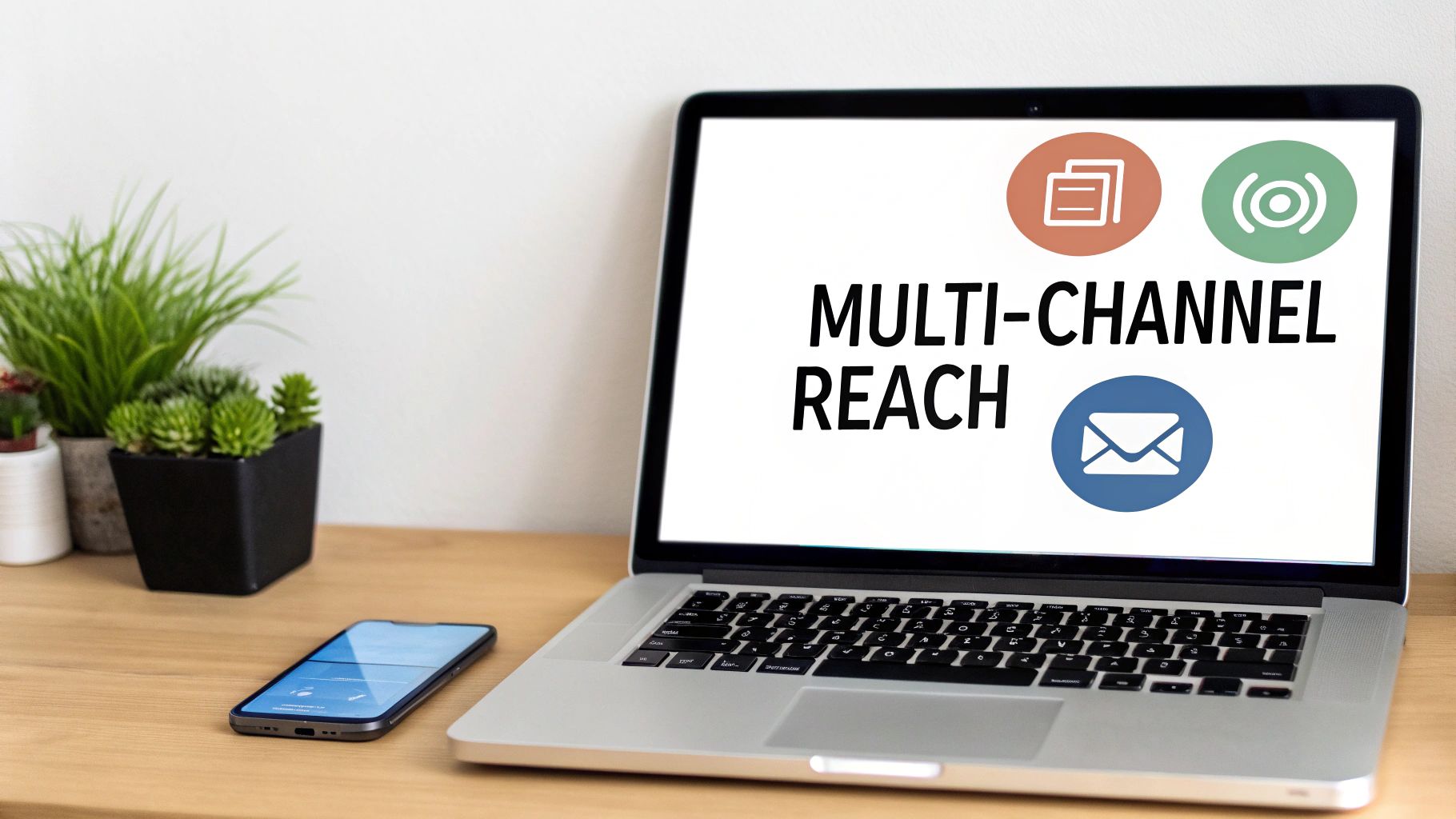
This approach is one of the most effective client communication best practices because it prevents important messages from getting lost in a crowded inbox and respects client preferences. By unifying these interactions, B2B and SaaS companies can create a seamless experience where a conversation can start on a website chat, move to email for documentation, and conclude with a quick SMS notification.
How to Implement a Multi-Channel Strategy
Implementing this strategy requires more than just being present on multiple channels; it demands integration and intelligence. Platforms like HubSpot and Salesforce offer unified inboxes that consolidate messages from various sources into a single client record, providing a complete history of all interactions.
Actionable Steps:
- Map Client Preferences: Start by surveying or analyzing existing data to determine which channels different client segments prefer for various types of communication (e.g., billing questions via email, urgent support via chat).
- Establish Channel-Specific SLAs: Define and communicate clear response time expectations for each channel. For example, promise a response within one hour for live chat, four hours for SMS, and 24 hours for email inquiries.
- Automate Cross-Channel Workflows: Use tools like Make.com to build automation sequences. For instance, an unanswered high-priority email could automatically trigger a follow-up SMS or a task for a team member to make a phone call.
- Track and Optimize: Monitor engagement metrics for each channel. If you notice high open rates but low response rates for email, while SMS gets immediate replies, reallocate resources and adjust your strategy accordingly. This data-driven approach ensures your efforts are focused on what works.
2. Personalization at Scale Using AI and Data
Leveraging AI and client data allows you to move beyond basic mail merges and deliver highly personalized communication that feels one-to-one, even when reaching hundreds of clients. This approach uses dynamic content, behavioral triggers, and predictive analytics to tailor messages based on a client’s industry, past interactions, and real-time behavior. The goal is to make every interaction relevant, which dramatically increases engagement and conversion rates.
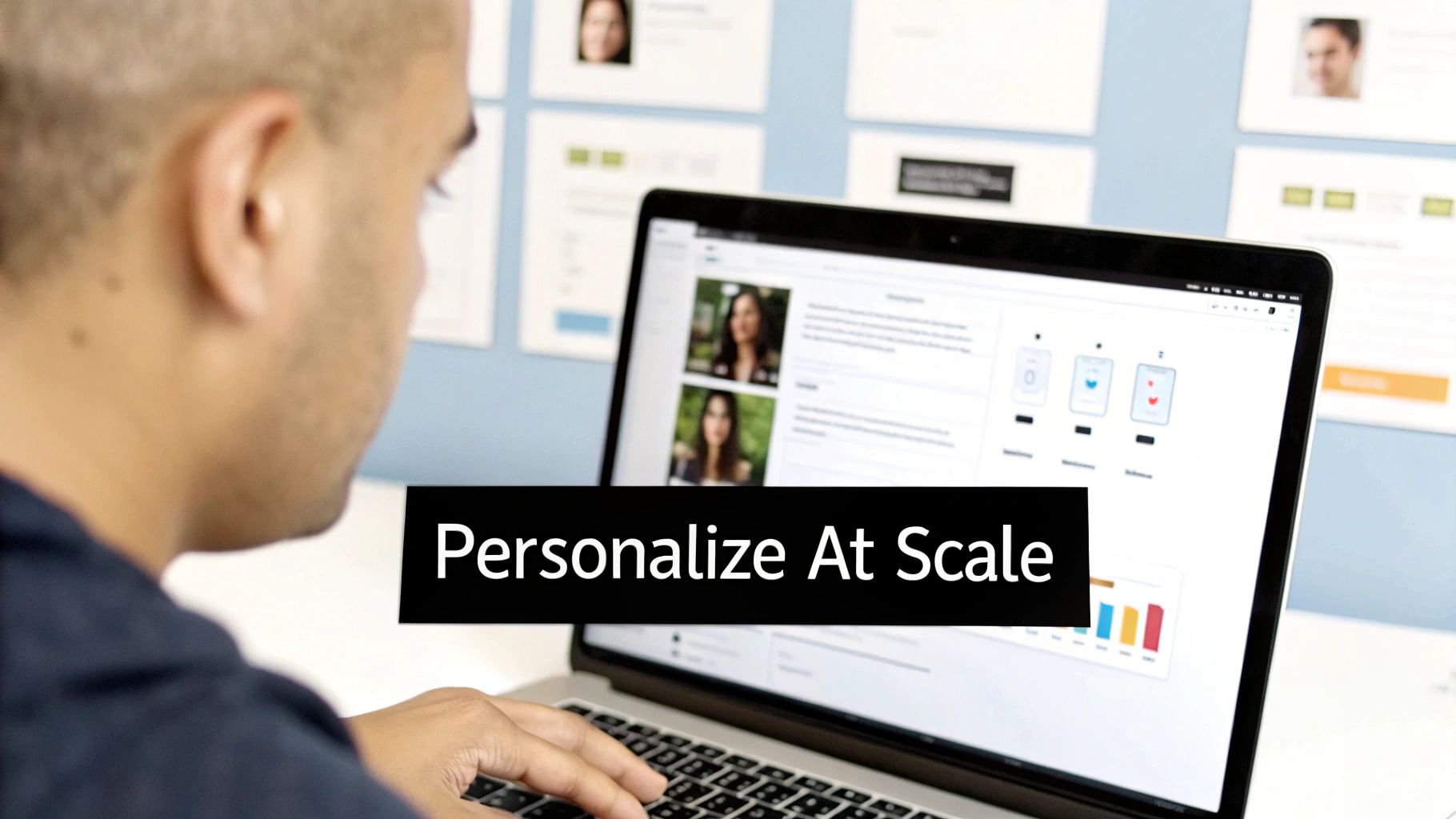
This method is one of the most powerful client communication best practices because it shows you understand a client’s unique context and challenges. Instead of sending generic updates, you can reference specific pain points, mention recent company news pulled from public data, or trigger a helpful resource based on pages they visited on your website. Platforms like Outreach.io and Lemlist excel at this, using AI to test message variations and time sends for maximum impact.
How to Implement Personalization at Scale
Effective personalization requires a solid data foundation and smart automation. Start by identifying key data points that signal client needs and then use tools to insert this information dynamically into your templates. For instance, you could use Make.com to build a workflow that pulls a prospect’s latest LinkedIn post into an email, creating an immediate, relevant connection.
Actionable Steps:
- Identify Key Variables: Begin with 3-5 core personalization variables, such as industry, company size, specific pain points, or technology used. This keeps your efforts focused and manageable.
- Implement Behavioral Triggers: Set up automated workflows that respond to client actions. For example, if a client visits your pricing page twice in one week, trigger a personalized follow-up from a sales representative within two hours.
- Create Segmented Templates: Develop industry-specific templates that address common challenges for that sector. This provides a high degree of customization without requiring a fully manual process for each message.
- Audit Data Quality: Schedule a monthly audit of your CRM data. Inaccurate or outdated information is the fastest way to ruin a personalization strategy, so ensure your data is clean and reliable.
- Use AI for Proactive Support: Integrate AI tools to anticipate needs. You can explore a list of the best AI chatbots for customer service to see how they can provide instant, personalized answers and escalate complex issues.
3. Establish Clear Response Time SLAs and Expectations
Establishing clear and achievable Service Level Agreements (SLAs) for response times transforms client communication from reactive to reliable. An SLA is a formal commitment that defines the level of service and response time a client can expect, setting a clear standard for your team. This practice builds immense trust by managing expectations, reducing client anxiety, and demonstrating your company’s commitment to professionalism and accountability.
This approach is one of the most critical client communication best practices because it prevents the dreaded "Did they get my message?" scenario. When clients know they will receive a response within a specific timeframe, they feel valued and respected. For B2B and SaaS companies, this predictability is a cornerstone of strong, long-term partnerships, turning support interactions into opportunities to reinforce your brand's reliability.
How to Implement Response Time SLAs
Implementing effective SLAs requires a balance between client needs and your team’s capacity. The goal is to set realistic benchmarks that you can consistently meet or exceed. Tools like Zendesk and HubSpot Service Hub are designed to help you create, manage, and track SLA policies, with features for automatic escalation if a commitment is at risk.
Actionable Steps:
- Define Tiered SLAs: Create different response time goals for different channels and inquiry types. For example, promise a 15-minute response for live chat, a 4-hour reply for urgent support tickets, and a 24-hour turnaround for general email inquiries.
- Automate Acknowledgments: Use automation to send an instant confirmation message acknowledging receipt of a client's request. This simple step reassures them that their message is in the queue and provides them with the expected response timeline.
- Start Conservatively: It is far better to under-promise and over-deliver. Begin with achievable SLAs that your team can comfortably meet. Once you consistently hit those targets, you can gradually tighten the response windows.
- Communicate Proactively: If a delay is unavoidable, do not stay silent. Proactively inform the client about the delay, explain the reason, and provide a new, realistic timeline. Honesty builds more trust than a missed deadline.
- Review and Refine: Regularly monitor your team’s SLA compliance. Use this data to identify bottlenecks, resource gaps, or process inefficiencies, and continually refine your approach to improve performance.
4. Segment Clients and Tailor Communication Strategy
A one-size-fits-all approach to communication is a recipe for disengagement. Client segmentation involves dividing your client base into distinct groups based on shared characteristics like company size, industry, product usage, or lifecycle stage. This allows you to tailor messaging, frequency, and channel strategy to address the specific needs and pain points of each group, making every interaction feel relevant and personal.
This is a cornerstone of effective client communication best practices because it shifts the focus from broadcasting generic updates to delivering targeted value. For example, a high-value enterprise client needs a different level of attention and detail than a self-service startup client. By segmenting, B2B and SaaS companies can significantly increase engagement, reduce churn, and build stronger, more customized relationships.
How to Implement a Segmented Communication Strategy
Effective segmentation relies on data to create meaningful groups and automation to deliver tailored messages at scale. Leading CRM and marketing automation platforms like HubSpot and Salesforce are built to facilitate this process, allowing you to define segments and trigger specific communication workflows based on client data.
Actionable Steps:
- Define Your Segments: Start simple with 3-5 key segments. Combine firmographics (e.g., industry, company size) with behavioral data (e.g., product adoption rate, support ticket frequency) to create meaningful groups.
- Create Segment-Specific Messaging: Develop messaging frameworks for each segment that address their unique challenges and goals. A segment of new users might receive educational content about core features, while a power-user segment gets invited to beta programs.
- Automate Segment Assignment: Use CRM rules to automatically assign new and existing clients to the correct segment based on predefined criteria. For instance, any client with over 250 employees and a "Technology" industry tag could be automatically placed in your "Enterprise Tech" segment.
- Review and Refine: Schedule quarterly reviews to analyze the performance of each segment. If engagement is low in one group, consider whether the messaging is off or if the segment itself needs to be split or merged with another.
5. Create Proactive Communication and Regular Check-Ins
Proactive communication moves beyond a reactive, problem-solving model to a strategic approach where you initiate contact to provide value and strengthen the relationship. This involves scheduled touchpoints, regular progress updates, and value-added interactions that occur even when there are no immediate issues. The goal is to demonstrate attentiveness, anticipate client needs, and identify potential problems before they escalate into crises, which significantly increases lifetime value.
This methodology is one of the most vital client communication best practices because it shifts the dynamic from a transactional service provider to a strategic partner. For example, SaaS companies like Stripe send congratulatory messages when a business hits a transaction milestone, while digital agencies provide weekly reports on campaign performance without being asked. This keeps your service top-of-mind and consistently reinforces its value.
How to Implement Proactive Communication
Building a proactive system requires a structured cadence and the right tools to monitor client health. It’s about creating a rhythm of engagement that feels helpful, not intrusive, and is supported by data-driven insights. Platforms like Gainsight and Planhat are built to help customer success teams manage this process at scale.
Actionable Steps:
- Establish a Tiered Check-In Cadence: Segment clients and define communication frequency accordingly. Enterprise clients might get weekly or bi-weekly check-ins, mid-market clients monthly, and SMB clients a quarterly business review.
- Automate Reporting, Personalize the Narrative: Use automation to generate performance or usage reports, but have a team member add a personalized summary. This saves time while ensuring the communication adds strategic value.
- Monitor Product Analytics for Triggers: Implement tools to track product usage. A sudden drop in adoption can trigger an automated alert for a customer success manager to reach out and offer support. This aligns with many customer success best practices.
- Schedule Standing Meetings: Book recurring check-in calls on the calendar. Standing appointments are respected and less likely to be postponed than ad-hoc requests, ensuring consistency.
- Document and Define Next Steps: Use your CRM to log every interaction. Conclude each check-in by documenting clear action items, assigning ownership, and setting a follow-up date to maintain momentum.
6. Use Video and Verbal Communication to Build Deeper Relationships
Relying solely on text-based communication like email and Slack can lead to misunderstandings and feel impersonal. Incorporating video and verbal communication adds a crucial human element, fostering stronger emotional connections and clarifying complex topics with greater efficiency. This approach involves using personalized video messages, screen recordings, and voice calls to convey tone, emotion, and context that text alone cannot capture.
This strategy is one of the most impactful client communication best practices because it humanizes your brand and cuts through digital noise. A short, personalized video can re-engage a cold lead more effectively than a dozen follow-up emails. Likewise, a screen recording explaining a technical solution is often faster and clearer than a lengthy written guide, significantly improving the client experience.
How to Implement a Video and Verbal Strategy
Integrating this approach requires choosing the right tools for the right job and training your team to use them effectively. For instance, platforms like Loom and Vidyard are excellent for asynchronous screen recordings, while BombBomb excels at embedding personalized videos directly into emails. These tools help build rapport and provide clarity without always needing a live meeting.
Actionable Steps:
- Create Video Templates: Develop short video templates for common scenarios like new client onboarding, feature explanations, or project updates. Personalize the first few seconds with the client's name and a specific detail.
- Leverage Screen Recordings for Support: Instead of writing long-winded instructions, have your support and success teams record quick screen-share videos to walk clients through solutions. This reduces back-and-forth and resolves issues faster.
- Send Follow-Up Videos: After a sales call or demo, send a brief (30-60 second) personalized video message summarizing key takeaways and next steps. This reinforces your conversation and makes a memorable impression.
- Train for On-Camera Professionalism: Ensure your team understands the basics of good video presence: proper lighting, a clean background, clear audio, and a confident speaking pace. Consistency here reflects well on your brand's professionalism.
7. Implement Feedback Loops and Act on Client Input
Implementing feedback loops means systematically collecting client input and, most importantly, acting on it. This practice moves beyond passive listening to create a dynamic cycle where client suggestions directly influence product development, service delivery, and business strategy. By establishing formal channels for feedback, such as surveys, interviews, and community forums, you show clients that their opinions are valued and integral to your growth.
This method is one of the most powerful client communication best practices because it transforms a transactional relationship into a collaborative partnership. Companies like Notion and Slack have built their product roadmaps around extensive user feedback, creating immense loyalty. When clients see their suggestions implemented, it reinforces their decision to choose your service, reduces churn, and turns them into vocal advocates for your brand.
How to Implement Effective Feedback Loops
A successful feedback system is not just about collecting data; it's about synthesizing it and closing the loop by communicating back to clients. The goal is to make clients feel heard and demonstrate that their input leads to tangible improvements. This requires a structured process for gathering, analyzing, and acting on the information you receive.
Actionable Steps:
- Establish Accessible Channels: Create easy-to-use feedback mechanisms. Send Net Promoter Score (NPS) or satisfaction surveys within 24-48 hours of key interactions, like after a support ticket is closed or a project milestone is met.
- Schedule Synthesis Sessions: Hold quarterly "feedback synthesis" meetings with key stakeholders. The objective is to analyze all collected input and identify the top three to five actionable items to prioritize for the next quarter.
- Communicate Changes: When you implement a feature or process change based on feedback, announce it. Send an email to the clients who suggested it, post on your blog, or share it in your community forum to show you’re listening.
- Create a Customer Advisory Board: For strategic insights, invite your top 10-15 customers to form an advisory board. This group can provide high-level feedback on your roadmap and business direction, ensuring you stay aligned with your most valuable clients' needs.
8. Master Asynchronous Communication for Global Teams
Asynchronous communication is a system where conversations and work progress without requiring participants to be available in real time. For B2B and SaaS companies with distributed teams or global clients, this approach moves communication from disruptive live meetings to structured, documented formats like shared documents, project management threads, and video messages. It empowers stakeholders to contribute thoughtfully on their own schedule, reducing meeting fatigue and respecting different time zones.
This method is one of the most vital client communication best practices for scaling operations globally. Instead of struggling to find a meeting time that works for teams in New York, London, and Sydney, teams can share updates, provide feedback, and make decisions through clear, written communication. Companies like GitLab have built their entire operational model on this principle, proving it enhances productivity and documentation.
How to Implement Asynchronous Communication
Effective asynchronous communication relies on discipline, clear processes, and the right tools to prevent misunderstandings. It requires a cultural shift from "instant response" to "thoughtful, documented response," where providing complete context upfront is the standard.
Actionable Steps:
- Define Communication Norms: Clearly establish when to use synchronous versus asynchronous methods. Use synchronous calls for relationship-building and complex brainstorming, but default to asynchronous for status updates, feedback requests, and non-urgent decisions.
- Use Context-Rich Tools: Leverage platforms like Loom or Vidyard to record video walkthroughs instead of scheduling a demo call. For project updates, use tools like Basecamp or Asana where all context, files, and decisions are in one thread.
- Provide Complete Information: When making an async request, provide all necessary background, links, and context so the recipient can make a decision without asking clarifying questions. Always set a clear deadline, for example, "feedback needed by Friday at 5 PM PST."
- Document Everything: Centralize all significant decisions and project context in a shared knowledge base like Notion or Confluence. This creates a single source of truth that clients and team members can reference anytime, reducing repetitive questions.
9. Build a Centralized Communication Hub and Single Source of Truth
A centralized communication hub is a unified platform, often a CRM, where all client interaction history, documents, tasks, and vital context are stored and accessible to authorized team members. This approach dismantles information silos, preventing clients from having to repeat themselves to different people in your organization. It ensures seamless handoffs and a consistent, informed client experience.
This method is one of the most foundational client communication best practices because it creates a "single source of truth." When your sales, support, and account management teams all view the same complete client story, they can provide proactive, context-aware service. This system prevents miscommunications and empowers your team to act as a unified front, which is crucial for building long-term client relationships.
How to Build a Centralized Hub
Implementing a single source of truth requires both the right technology and disciplined processes. Systems like HubSpot or Salesforce excel by combining customer data, communication logs, and project records into one view. Even tools like Notion can be configured as a centralized hub for agency SOPs and client project documentation.
Actionable Steps:
- Select an Integrated Platform: Choose a CRM with a strong integration ecosystem. The ability to connect with your email, calendar, and other tools is key to reducing manual data entry and ensuring automatic logging of correspondence.
- Establish Data Entry Standards: Create clear, mandatory guidelines for how and when to log information. Define a standardized account structure, for instance, a hierarchy of Company > Contacts > Interactions > Tasks.
- Implement Role-Based Access: Not everyone needs access to everything. Configure permissions based on roles to protect sensitive information and reduce clutter for team members. A support agent might not need access to sales contract details, for example.
- Schedule Data Hygiene Reviews: Set a recurring monthly or quarterly task to audit data quality. Incomplete records, outdated contact info, or missing interaction logs defeat the purpose of the hub and can lead to embarrassing client-facing errors.
- Train Your Team Thoroughly: The best platform is useless if it's not adopted. Conduct comprehensive training and provide ongoing support to ensure everyone understands how to use the system correctly and consistently.
10. Establish Trust Through Transparency, Honesty, and Accountability
Trust is the bedrock of any successful client relationship, and it is forged through unwavering transparency, honesty, and accountability. This practice involves communicating openly about capabilities, timelines, challenges, and even failures. By demonstrating integrity, especially when acknowledging mistakes or pushing back on unrealistic requests, you build deep credibility that transforms a transactional arrangement into a long-term partnership.
This approach is one of the most critical client communication best practices because it preempts misunderstandings and manages expectations proactively. Instead of overpromising and under-delivering, you create a culture of realism. Companies like Basecamp are famous for being transparent about features they won’t build, which, counterintuitively, strengthens user loyalty. Similarly, Tesla has publicly acknowledged production challenges, building a narrative of ambitious honesty rather than one of silent failure.
How to Build a Culture of Transparency
A cornerstone of effective communication is constantly focusing on building trust with clients through consistent, truthful interactions. This means sharing the good with the bad and always pairing problems with proposed solutions. It’s about being a partner, not just a vendor.
Actionable Steps:
- Communicate Bad News Early: Inform clients about potential issues or delays as soon as you foresee them. Waiting until the last minute erodes trust and leaves the client with no time to adapt.
- Pair Challenges with Solutions: Never present a problem without a plan. When a challenge arises, explain the situation and immediately follow up with your proposed solution or the next steps you are taking to mitigate it.
- Acknowledge Mistakes Explicitly: If your team makes an error, own it directly. Acknowledge the mistake, explain the impact, and detail the corrective actions you are implementing to prevent it from happening again.
- Learn to Say "No" Gracefully: Politely but firmly decline requests that are outside the agreed-upon scope, unrealistic, or detrimental to the project's success. Explain your reasoning clearly to maintain mutual respect.
- Schedule "Reality Check" Meetings: Hold regular check-ins specifically to review progress against the original plan. Use data and metrics to have a transparent conversation about what’s working and what isn’t.
Client Communication: 10 Best Practices Comparison
| Strategy | Implementation Complexity | Resource Requirements | Expected Outcomes | Ideal Use Cases | Key Advantages |
|---|---|---|---|---|---|
| Implement Multi-Channel Communication Strategy | Medium–High — integrations across channels and orchestration | Communication platforms, integration middleware, automation, training | Higher engagement and response rates; improved client satisfaction | B2B/SaaS outreach, lead nurturing, sales cadences | Reach clients on preferred channels; scalable outreach with personalization |
| Personalization at Scale Using AI and Data | High — data pipelines, AI models, and orchestration | Clean data infrastructure, AI tools, analytics, privacy/compliance | Increased conversion and relevance; better ROI on outreach | Large prospect lists, account-based marketing, high-volume campaigns | One-to-one feel at scale; predictive targeting and timing |
| Establish Clear Response Time SLAs and Expectations | Medium — SLA rules, monitoring, and enforcement | Ticketing/SLA tooling, staffing, monitoring dashboards, workflows | Increased satisfaction and accountability; measurable KPIs | Support teams, paid tiers, service delivery SLAs | Predictable service levels; reduces client frustration and scope creep |
| Segment Clients and Tailor Communication Strategy | Medium — segmentation logic and dynamic updates | CRM, analytics, templates, automation rules | Higher open and conversion rates; targeted resource allocation | Lifecycle marketing, targeted campaigns, prioritized support | More relevant messaging; improved engagement and reduced churn |
| Create Proactive Communication and Regular Check-Ins | Medium — cadence scheduling and automated reporting | CS tools, reporting automation, team time for check-ins | Reduced churn; earlier expansion opportunities; higher NPS | Customer success, high-touch accounts, retention programs | Identifies issues early; strengthens client relationships |
| Use Video and Verbal Communication to Build Deeper Relationships | Medium — tooling plus team training for voice/video | Video platforms, conferencing, AI voice agents, bandwidth | Faster deal cycles; stronger trust and clearer communication | Demos, complex discussions, key account outreach, onboarding | Builds emotional connection; reduces miscommunication |
| Implement Feedback Loops and Act on Client Input | Medium — collection, analysis, and action processes | Survey tools, analysis/triage workflows, product/service teams | Improved product-market fit; higher loyalty; reduced churn | Product development, service improvement, CX initiatives | Direct customer insights; fosters advocacy when acted upon |
| Master Asynchronous Communication for Global Teams | Low–Medium — norms, templates, and tooling | Documentation systems, async video, templates, knowledge base | Fewer meetings; better information retention; timezone-friendly workflows | Remote/distributed teams, global clients, deep-work environments | Reduces meeting overload; creates searchable context and clarity |
| Build a Centralized Communication Hub and Single Source of Truth | High — platform selection, integrations, and governance | CRM/platform, integrations, data architecture, governance, training | Reduced repeated explanations; seamless handoffs; faster onboarding | Scaling teams, complex accounts, multi-touch client management | Unified client context; accountability trail across teams |
| Establish Trust Through Transparency, Honesty, and Accountability | Low — culture and consistent communication practices | Leadership alignment, training, documented processes | Stronger long-term partnerships and client loyalty | Enterprise relationships, high-stakes engagements, long-term contracts | Builds credibility; reduces surprises and manages expectations |
Transforming Communication from a Task to a Strategic Advantage
The journey through these client communication best practices reveals a fundamental truth: exceptional communication is not an accident. It is the result of deliberate strategy, consistent execution, and a deep-seated commitment to understanding and serving your clients. Moving beyond generic advice, we have explored a blueprint for creating a communication ecosystem that is both scalable and deeply personal, a critical combination for success in the competitive B2B and SaaS landscape.
This isn't about simply answering emails faster or holding more meetings. It's about architecting a system where every touchpoint is intentional and value-driven. From establishing concrete response time SLAs that build trust from day one, to segmenting your client base for hyper-relevant messaging, each practice serves as a building block for a more resilient, profitable, and enduring client relationship. The shift from reactive fire-fighting to proactive engagement, facilitated by regular check-ins and robust feedback loops, is what separates market leaders from the rest.
From Principles to Action: Your Implementation Roadmap
Mastering these concepts requires a strategic shift from manual effort to intelligent systems. The goal is not to add more tasks to your team's already full plate, but to embed these practices into your operational DNA. Think of it as building a "communication engine" that runs efficiently in the background, freeing your team to focus on high-value, strategic interactions.
Here are the most critical takeaways to begin your transformation:
- Systemize First, Personalize Second: Before you can personalize at scale, you need a solid foundation. Start by implementing a centralized communication hub and defining clear, non-negotiable SLAs. This creates the structure upon which more sophisticated, tailored strategies can be built.
- Embrace Proactive Transparency: Don't wait for a client to ask a question or raise a concern. Proactive updates, transparent roadmaps, and honest accountability are the cornerstones of trust. This practice alone can dramatically reduce churn and turn clients into advocates.
- Leverage Technology as a Force Multiplier: Implementing a multi-channel strategy or building comprehensive feedback loops is nearly impossible without the right tools. Automation and AI are no longer optional luxuries; they are essential for executing these best practices consistently and efficiently across your entire client base. To truly transform communication from a mere task into a strategic advantage, consider exploring methods like how marketers write faster emails using voice typing, significantly boosting efficiency for client-facing teams.
The True ROI of Superior Client Communication
Ultimately, investing in world-class client communication best practices yields a return far beyond simple client satisfaction scores. It directly impacts your bottom line by increasing retention, unlocking upsell opportunities, and generating powerful word-of-mouth referrals. When clients feel heard, valued, and understood, they become partners in your growth. They provide the invaluable insights needed to innovate your product and the social proof required to win new business.
By adopting a structured, strategic, and technology-enabled approach, you are not just improving a business process. You are building an unshakeable competitive advantage that is difficult for others to replicate. You are creating a brand known for its reliability, its partnership, and its unwavering focus on client success. That is the ultimate goal, and it is entirely within your reach.
Ready to build the communication engine that powers your growth? The team at MakeAutomation specializes in designing and implementing the sophisticated, automated workflows discussed in this article, turning these client communication best practices from theory into reality. Visit MakeAutomation to learn how we can help you build a scalable system that delights clients and drives revenue.